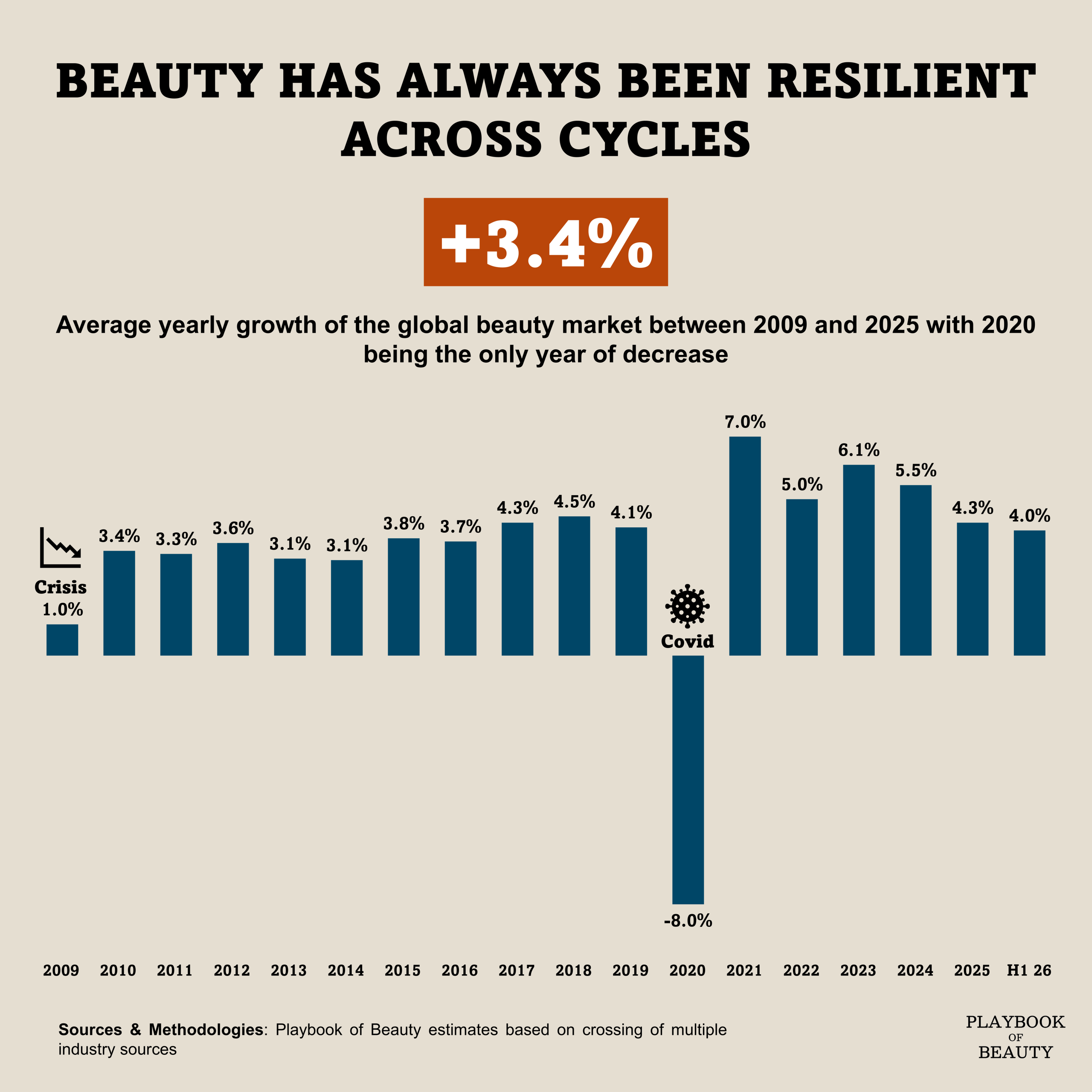
Data published by BeautyMatter and Beautyworld’s 2026 GCC in Focus report, based on Euromonitor estimates, forecasts the region’s four main beauty categories to grow from $10.5bn in 2025 to $15.9bn in 2030, a 8.6% CAGR, 2.9 points above the global average.
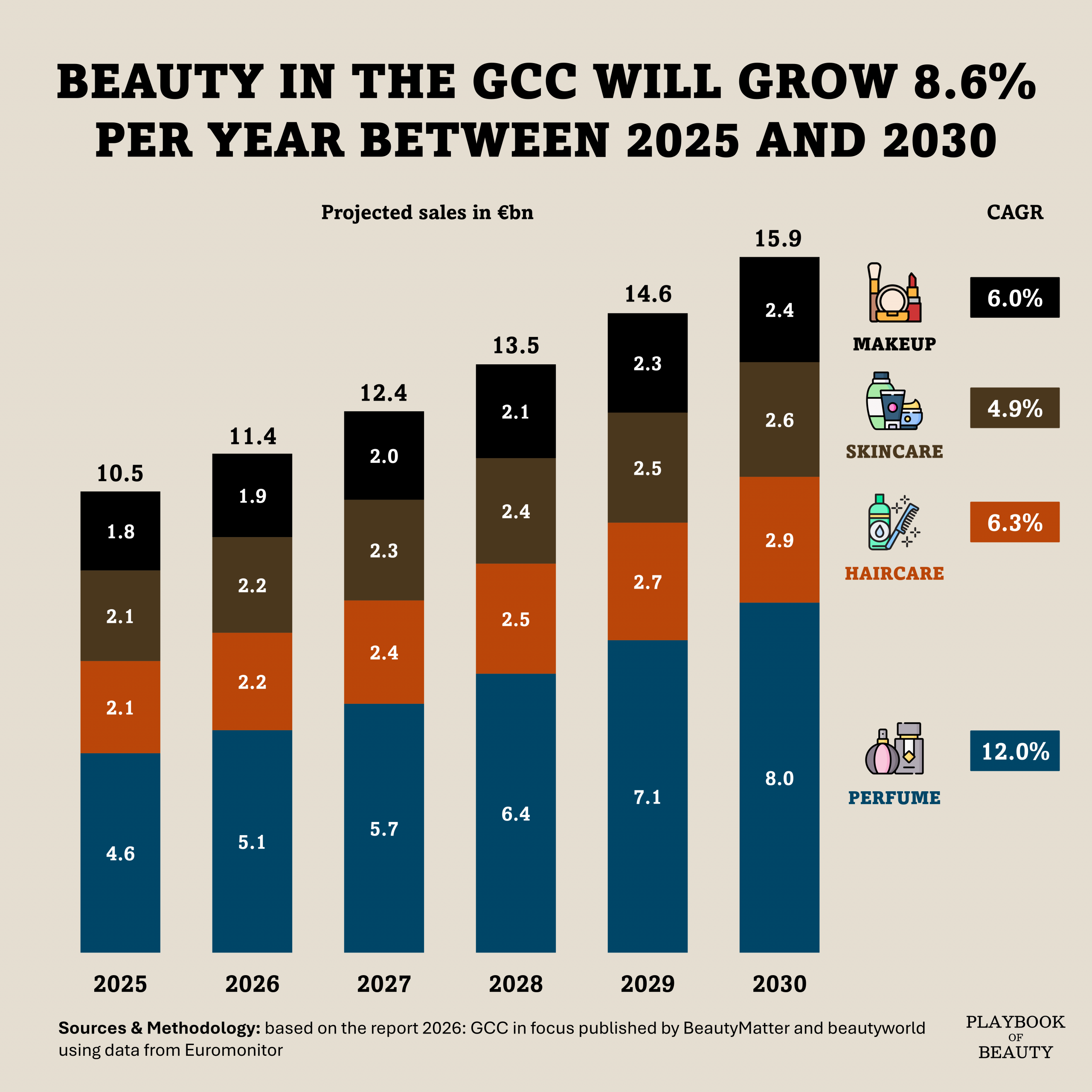
Fragrance leads the market by a wide margin. It is worth $4.6bn today, around 44% of the total, and is expected to grow 12% a year to reach $8.0bn in 2030. By then, it should account for about half of the market. Haircare should rise from $2.1bn to $2.9bn, growing 6.3% a year. Skincare will grow from $2.1bn to $2.6bn at 4.9% while makeup, the smallest segment, should grow from $1.8bn to $2.4bn at 6.0% per year.
The category mix reflects how beauty is consumed in the Gulf. Fragrance is part of daily life and culture. Haircare benefits from salon use and growing interest in treatments. Premium beauty is also growing faster than mass. In Saudi Arabia, BeautyMatter expects premium beauty to grow 75% between 2025 and 2030, compared with 32% for mass.
The war has clearly affected the market on the short term. The World Bank cut its 2026 GCC growth forecast from 4.4% to 1.3% as energy, trade, tourism and logistics were hit. Beauty companies will feel this through travel retail, freight costs and the timing of launches. L’Oréal said consumption in the Gulf weakened after the conflict began, although Saudi Arabia remained resilient and Coty estimated a 1% impact on calendar Q2 26 sales from the conflict.
At the same time, local governments are fostering local consumption and investing in the future of their tourism industry. Dubai is using a year-round retail calendar, run by the Dubai Festivals and Retail Establishment, to bring more than 1,000 brands and 4,000 retail outlets into citywide shopping festivals and promotions. Saudi Arabia raised its 2030 visitor target to 150 million after passing 100 million ahead of schedule and the UAE’s Tourism Strategy 2031 targets AED450bn in GDP contribution, AED100bn in new tourism investment and 40 million hotel guests.
These measures do not make the region immune to geopolitics, but they partially help explain why the long-term beauty opportunity remains intact.