According to a spring 2026 survey by IFOP, Beauty Tech (52%) and nutricosmetics (48%) are the top two categories that beauty executives see as most dynamic. But the most interesting insights are in the evolutions versus the same survey conducted in 2025.
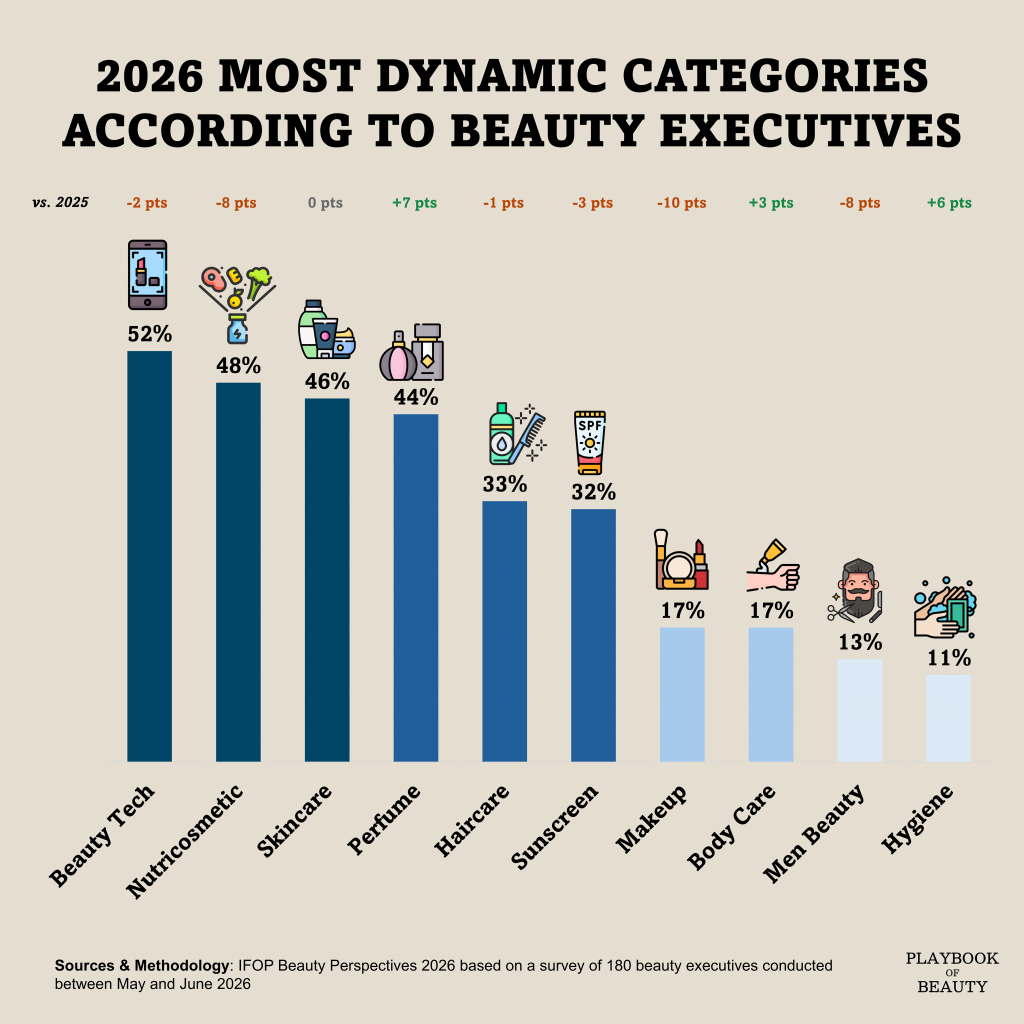
Fragrance is the biggest winner among the core categories, up 7 points to 44%. This optimism is reflected in sales data with Circana reporting that US prestige fragrance grew 5% in 2025, while mass fragrance rose 15%. McKinsey in its 2026 State of Beauty report also says fragrance has now surpassed makeup to become beauty’s third-largest core category.
Hygiene gains 6 points to 11%, while body care rises 3 points to 17%. NielsenIQ’s Global Beauty Edit 2026 identifies mood-boosting body care as a trend gaining traction. This helps explain why hygiene and body care are moving beyond basic maintenance towards products combining efficacy, sensoriality and wellbeing.
On the contrary, the sharpest fall is makeup, down 10 points to 17% as the category performance continues to trail behind the other core beauty categories since Covid. Men’s beauty also falls 8 points, despite McKinsey seeing broader male participation in beauty and self-care. One possible explanation is that men’s demand is being absorbed into mainstream skincare, haircare and fragrance rather than treated as a standalone category.
Nutricosmetics drops 8 points but remains number two. Beauty is still expanding into functional nutrition and supplements, but consumers are becoming more selective about value and efficacy. Finally, Beauty Tech slips only 2 points staying number one as adoption continue to grow driven for example by brand like Medicube that use tech to enhance the efficiency of their skincare products.
Subscribe to my newsletter for more insights on the beauty industry. Link in the comments below.