It appears the Chinese beauty market has entered a period of structural recovery, moving beyond the volatility of previous years driven by consumer’s new priorities and category diversification. According to KPMG, beauty retail sales grew by 5.1% in 2025 a rebound from a -1.1% decrease in 2024.
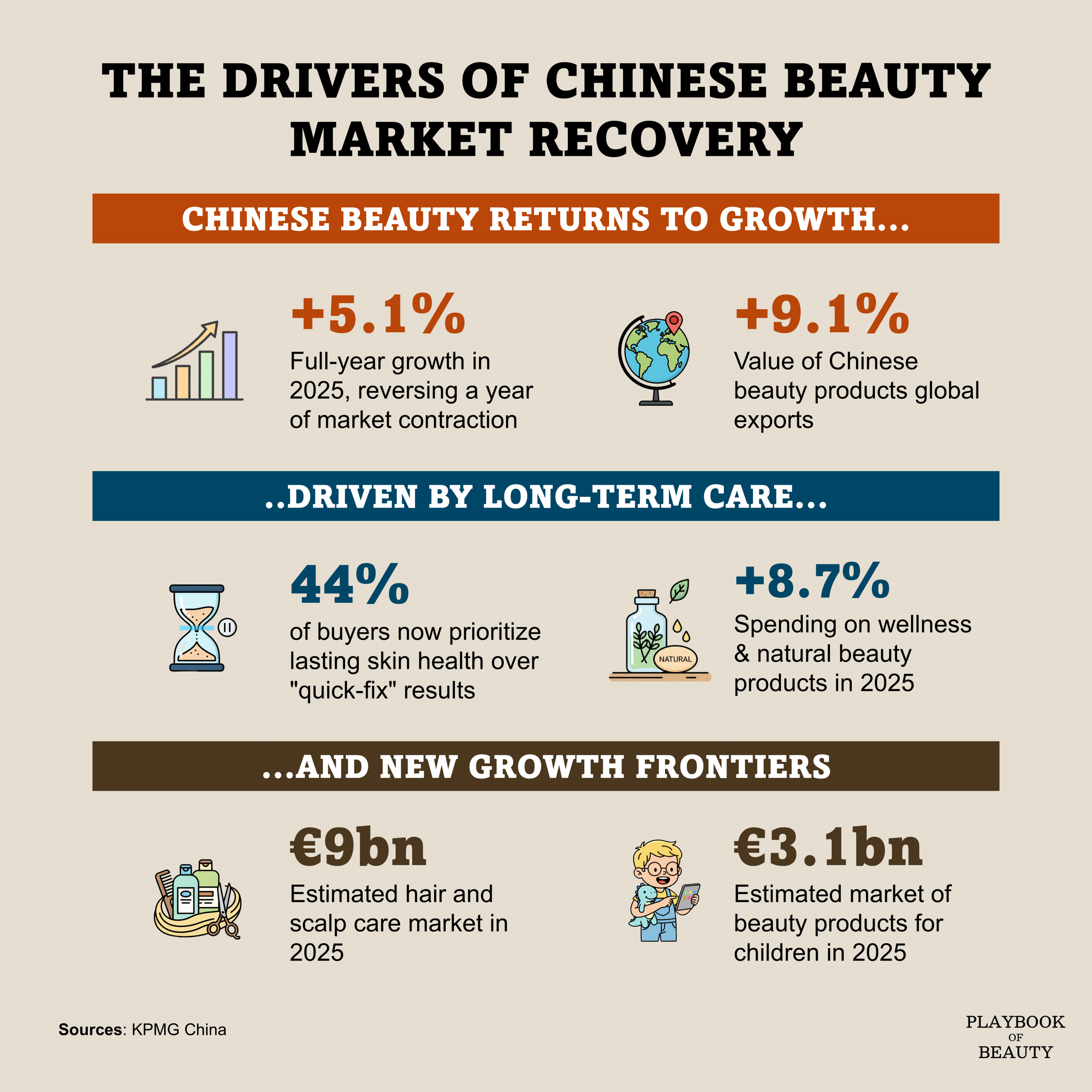
One of the primary drivers is a shift in consumer mindset toward “Long-termism.” The modern Chinese buyer is increasingly abandoning superficial trends in favor of sustainable health and welness. 44% of consumers now prioritize long-term skincare regimens, while per capita spending on wellness-focused beauty has risen by 8.7%. This “science-first” demand is allowing brands to move away from traditional mass-market advertising toward high-performance formulas, specifically in the sensitive skin and medical-grade categories. Groups like Proya and Simpcare are leveraging this by focusing on R&D.
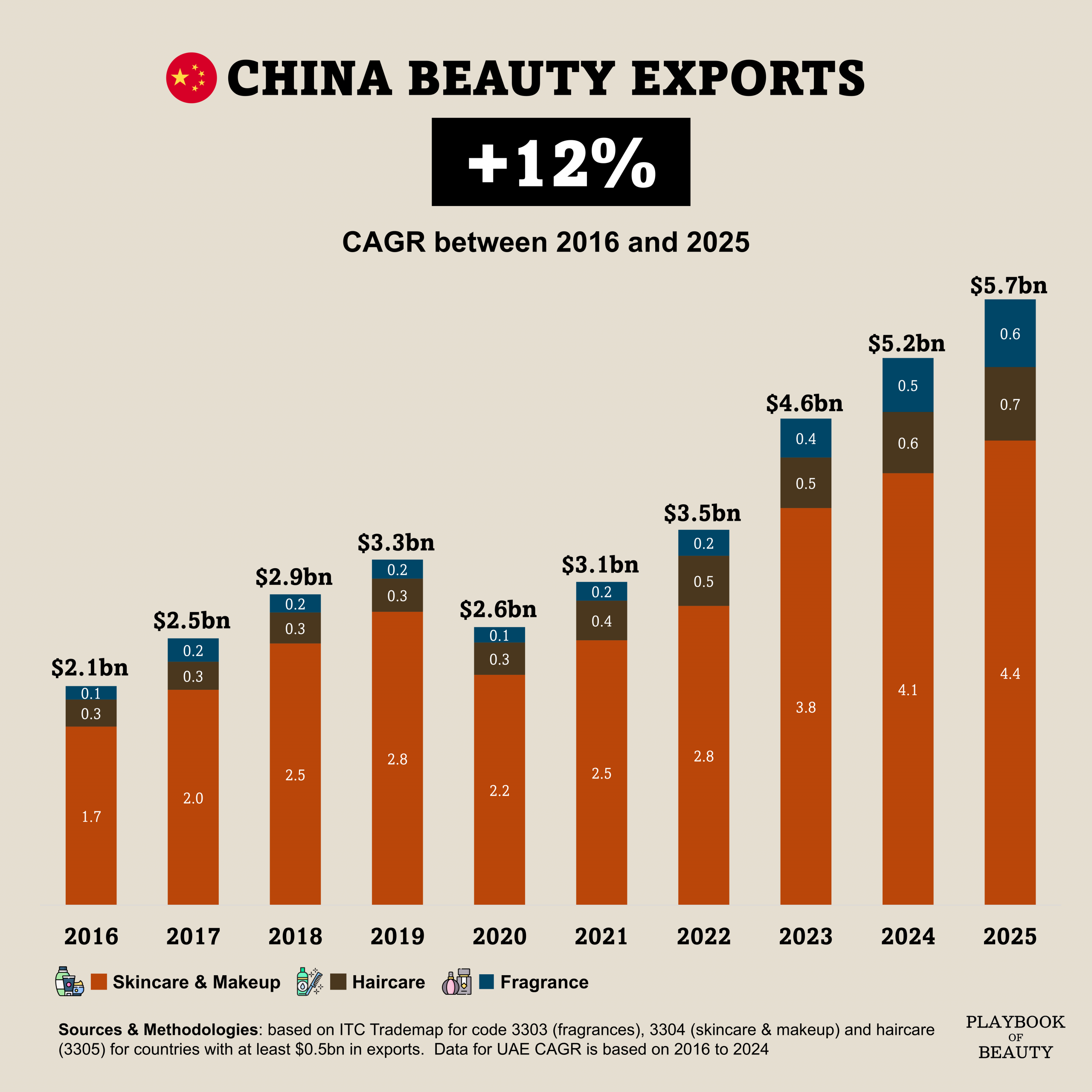
But beyond local demand, Chinese beauty has also been on the rise globally. Total beauty exports reached $7.82 billion in 2025, a 9.1% year-on-year increase. Homegrown beauty brands are no longer peripheral players and are now securing prime retail space in the West. FlowerKnows has successfully launched at Ulta Beauty in the United States, while Joy Group, the parent of Judydoll and Joocyee, has been tailoring product ranges for international skin tones.
Finally, the market is expanding into new segments. The hair and scalp care market was estimated at €9bn (RMB 69 billion) in 2025, reflecting a deepening of consumer needs beyond basic face care. Simultaneously, the “Children’s beauty” segment is emerging as a significant growth engine, with the market for kids’ beauty products estimated at €3.1bn (RMB 24bn) in 2025. This indicates a broader cultural shift where beauty rituals are being adopted much earlier in the consumer lifecycle.
I reckon for global brands, success in China now requires a 360-degree approach that balances medical-grade efficacy with a presence in these high-growth segments.