Beauty has always depended on physical experimentation. Consumers test shades, textures and finishes before making a purchase. But as beauty shopping increasingly moved online, the industry faced a new challenge: how do you recreate the confidence of in-store discovery through a screen?
That question gave rise to a new generation of beauty technology companies working at the intersection of AI, augmented reality and commerce. Among them is Arbelle, a beauty tech platform powered by more than two decades of face-tracking research from Visage Technologies. The company develops virtual makeup try-on and shade matching solutions designed for beauty brands across e-commerce, mobile and in-store environments.
I spoke with Marcus Tamminen, Managing Director at Arbelle, about the origins of the company, the business case behind beauty AR, and why the future of beauty retail may look far more interactive than today.
Every great tech story starts with a broken experience. How did you realize the beauty industry needed Arbelle?
Over the years at Visage Technologies, I started noticing more and more beauty brands reaching out to us. At that point, our face-tracking technology was already being used across various virtual try-on experiences, and it was exciting to see the beauty industry recognize its potential, too. As conversations with beauty brands increased, three main gaps became very clear.
First, brands were still not satisfied with the realism and overall quality of existing solutions on the market. They wanted experiences that felt as close to looking into a mirror as possible.
Secondly, there was a lack of proper personalization, especially in foundation matching. Even today, many consumers struggle to find the right shade, and with so many options available online, it can easily become overwhelming. And that often leads to hesitation, wrong purchases, and returns.
Finally, there was a major data gap. Many brands still lacked clear visibility into consumer behavior: for example, where consumers drop off, which products generate the most interest, or how purchase decisions are actually being made online.
Those were the major gaps Arbelle wanted to close. Today, I see Arbelle as a one-stop personalization layer for beauty e-commerce that helps brands create highly realistic virtual product experiences, guide shoppers toward the right shades.
Walk me through what happens when a customer uses Arbelle. What do they actually see and experience?
Beauty shoppers today mostly discover and research products online, but they still want the confidence that traditionally came from trying products in-store. That expectation becomes even more important as product choice and brand choice continue to grow. Arbelle was designed to recreate that confidence digitally.
With Arbelle, consumers can instantly try on any product virtually using either a selfie or a live camera feed. Just as they would in front of a mirror, they can see how a product looks on them in real time.
And using our Shade Finder, they can receive personalized product recommendations for their skin tone within seconds, without having to complete subjective quizzes or spend hours researching online.
What matters most to us here is realism. Arbelle recreates each product’s exact color and finish to make the experience feel as natural and accurate as possible. We intentionally avoid beautification filters or facial alterations to make sure what shoppers see online is what they get in real life.
Playbook of Beauty readers love numbers. What typically happens to conversion, engagement or basket size when brands integrate virtual try-on technology?
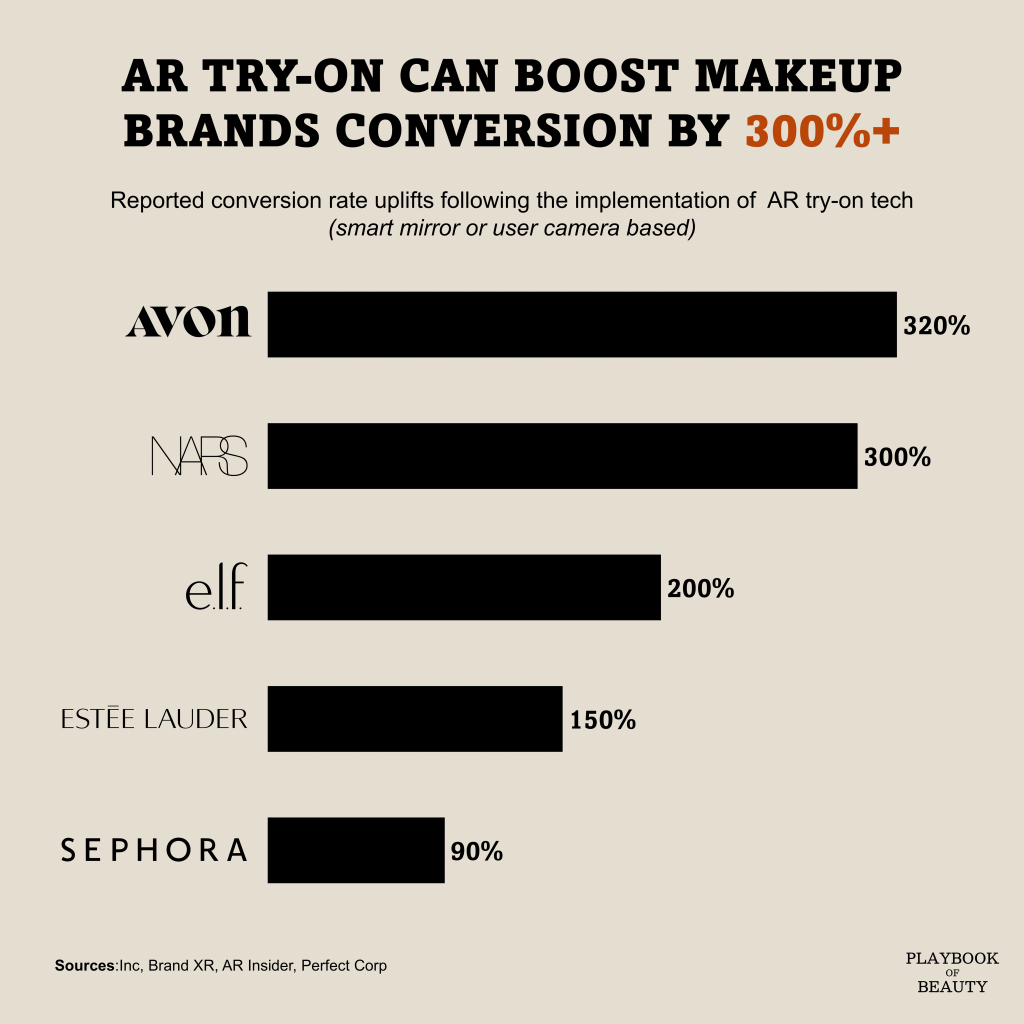
What we typically see is an increase in consumer engagement and confidence, which then naturally impacts purchasing behavior. When consumers can visualize how products will look on them, engagement tends to increase, purchase decisions happen faster, and add-to-cart rates improve as well.
We recently published a case study with Cosnova, one of Europe’s fastest-growing beauty companies. After integrating Arbelle’s technology, Cosnova saw a 90% customer satisfaction rate and a 20% increase in add-to-cart rates.
Besides the commercial results, our clients also emphasize the value of Arbelle’s analytics in helping them better understand their customers and guide product development across markets. That combination of personalization and actionable data is becoming increasingly important.
AR try-on in beauty isn’t new anymore, and the space is becoming increasingly crowded. What makes Arbelle meaningfully different?
That is true, virtual try-on is no longer something new. Today, it’s even something that most consumers expect from any brand. For us, one of the biggest differentiators has always been realism. We have invested heavily in making the experience feel as technologically accurate and natural as possible.
But Arbelle itself is much more than a virtual try-on solution. Consumers today expect convenience and confidence when shopping online, while brands face increasing competition and extremely high CAC. There is very little room left for guesswork on either side. So, a reliable virtual try-on is just one part of a much larger infrastructure. We see Arbelle as a complete personalization layer for beauty e-commerce, helping brands create more guided, personalized, and confident shopping journeys.
Who are your clients today? What types of brands or retailers are you working with, and what made them adopt this technology?
We work with both established global beauty brands, such as Essence and Catrice, and emerging brands with ambitious growth goals, such as the Italian startup City Lab.
What they typically have in common is a strong focus on innovation and customer experience. They want to create more personalized and inclusive beauty journeys while also building smarter strategies based on real customer data.
For many brands, the initial motivation is improving conversion or reducing returns. But very quickly, they also recognize the strategic value of understanding customer behavior more deeply, especially in digital environments where every interaction provides insight.
Looking back at your journey, what has surprised or rewarded you the most while building Arbelle?
One thing that genuinely surprised us was how much valuable customer data many brands still lacked, despite so much of beauty shopping now happening online. There is still a major opportunity for brands to better understand how customers discover products, choose shades, and ultimately make purchasing decisions. But what ultimately has been most rewarding is seeing how personalization consistently and directly leads to measurable business impact.
Five years from now, what will the beauty shopping experience look like?
Five years from now, consumers will no longer need to guess their shade or wonder whether a product is right for them. Beauty shopping will become significantly more personalized, intelligent, and interactive, with AI-powered guidance integrated deeply into the customer journey.
Consumers will increasingly expect experiences that are convenient, inclusive, and available instantly. The technology is already moving rapidly in that direction, and it will only continue to improve. Brands that integrate these experiences seamlessly into the customer journey will remain relevant in the market.
The takeaway is clear: beauty brands can no longer treat online shopping as a passive experience. The industry has reached a point where relying on static images and guesswork is becoming a liability, both in terms of customer satisfaction and the bottom line. We are moving into an era where the divide between the in-store experience and the digital storefront is shrinking. For brands, the goal isn’t just to add a new “tech feature” to their website but recreating the basic human need to see, test, and feel confident before a purchase.
If you are a beauty brand curious to see what modern AR can look like in practice, and what it could potentially do for engagement and conversion, you can explore and test Arbelle’s technology directly on their website.