Fifty-five percent of UK consumers say they are cutting discretionary spending. But somehow, beauty, keeps growing anyway. According to Barclays, health and beauty has now posted 60 consecutive months of growth, with UK spend up 10.7% in 2025 alone, in a retail environment where overall growth was essentially flat. The “Lipstick Effect” is real, but what’s sustaining it at this scale is more structural than psychological.
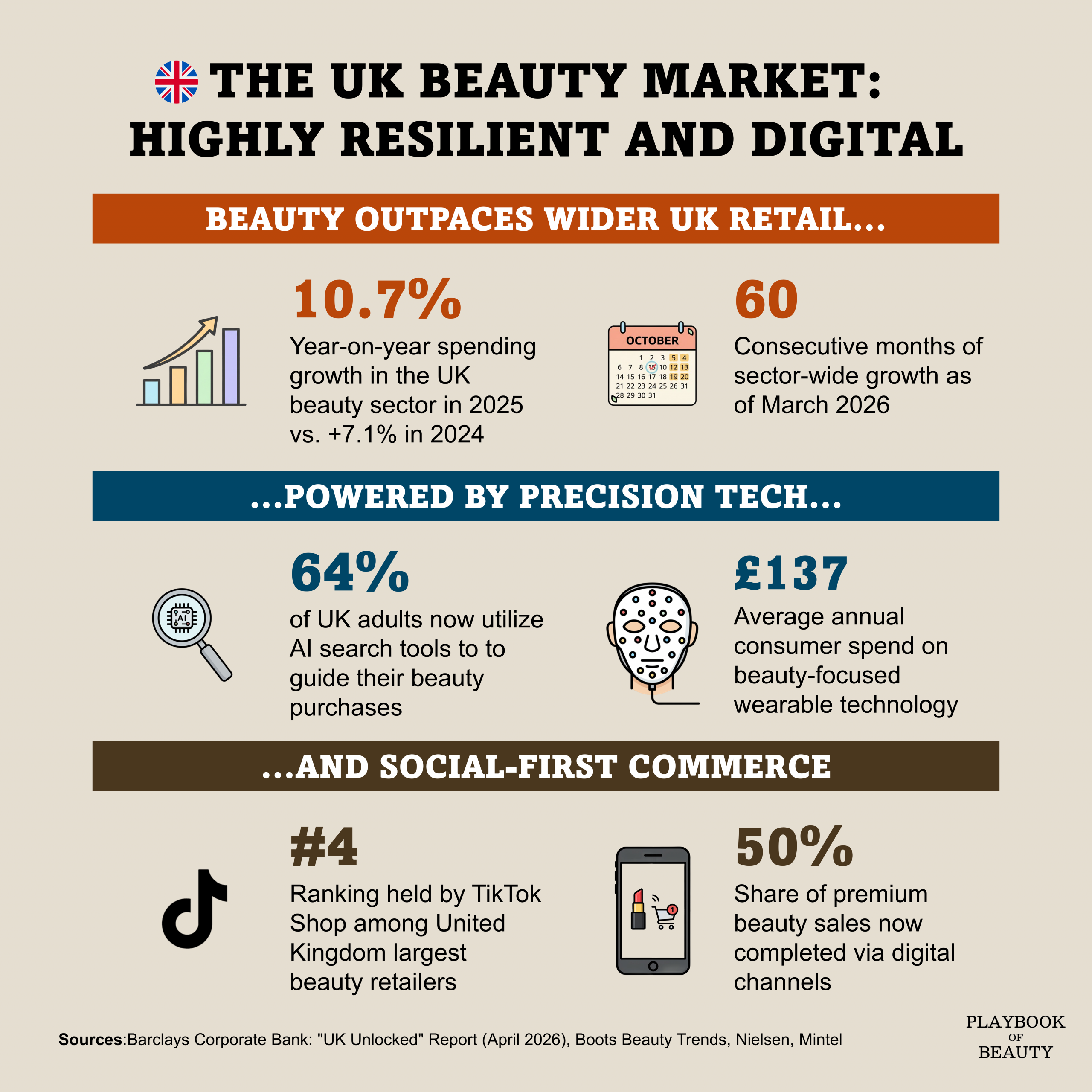
Three forces are doing most of the work. The first is tech and AI/ 64% of UK adults now use AI tools to guide beauty purchases, and 82% are actively seeking personalised formulations, per Boots’ Beauty and Wellness Trends Report 2026. The beauty tech market sits at $18 billion globally, with early adopters in the UK spending an average of £136.80 on wearables and £97.80 on beauty-specific tech. Boots notably recorded a 536% spike in LED mask sales in 2024 alone.
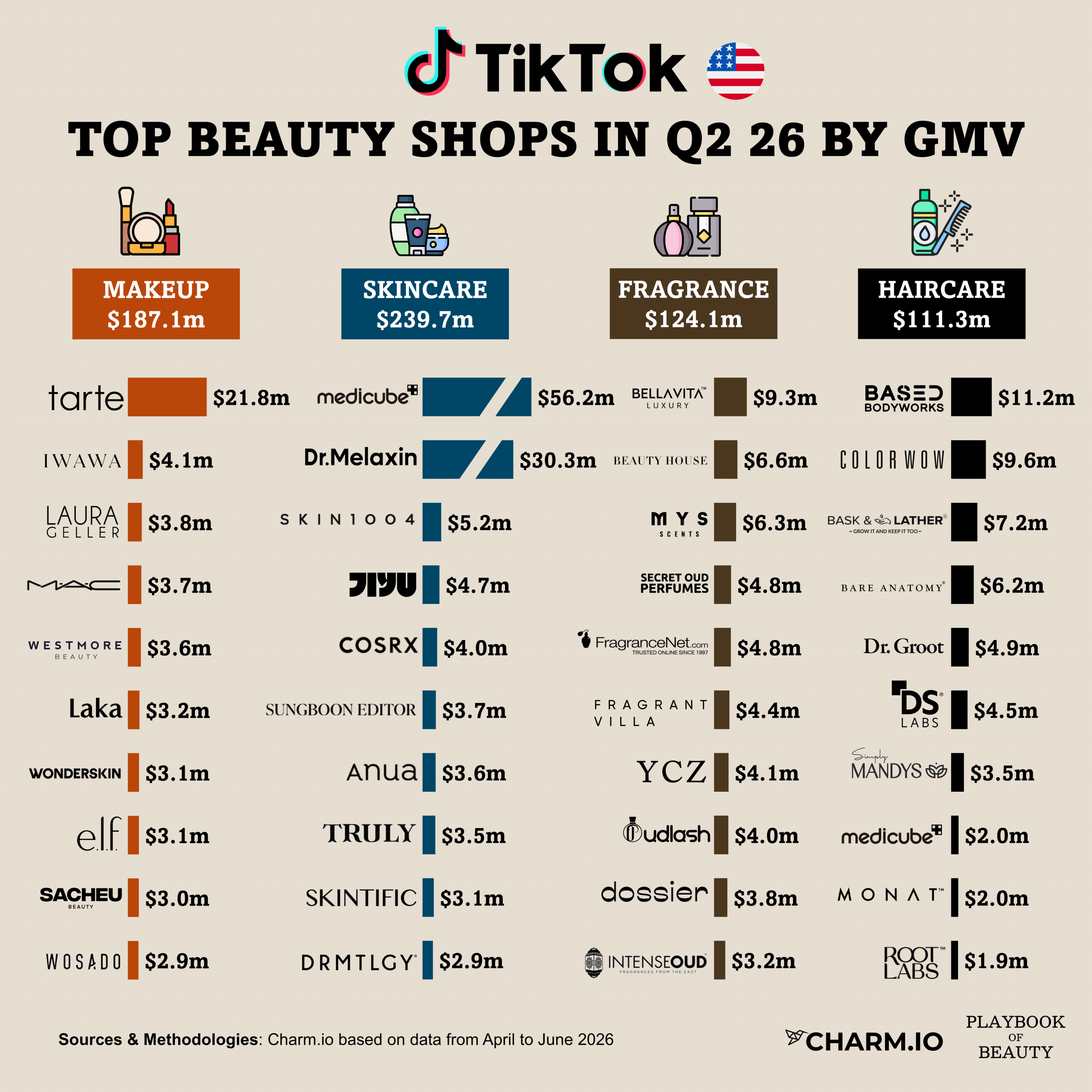
The second force is social commerce. TikTok Shop became the UK’s fourth-largest beauty retailer in 2025, growing 60% year-on-year with Charm.io putting TikTok’s UK beauty sales at $523m in 2025. Brands like The Beauty Crop and Ghost Fragrances have used the platform not just as a marketing channel but as a primary growth engine, validating a model that works from startup through to IPO. Looking at e-commerce more generally, nearly half of all UK premium beauty sales now complete online, up from 28% in 2019.
The third pillar is a consumer pivot toward efficacy and simplicity. Sixty-eight percent of consumers actively seek clean-ingredient formulations, 72% want scientific explanations for what those ingredients do, and 52% will pay a premium for products that save them time rising to 62% among Gen Z.
I believe what the data describes, taken together, is a market in the middle of a quiet re-architecture. The counter, the catalogue, and the TV spot are giving way to the algorithm, the biometric scan, and the TikTok feed. Brands that understand this shift as a change in the underlying rules of competition and not just a new set of channels to manage, are the ones likely to still be growing five years from now.