Data published by BeautyMatter and Beautyworld’s 2026 GCC in Focus report, based on Euromonitor estimates, forecasts the beauty market across the six GCC countries to grow from $10.5bn in 2025 to $15.9bn in 2030, an 8.6% CAGR.
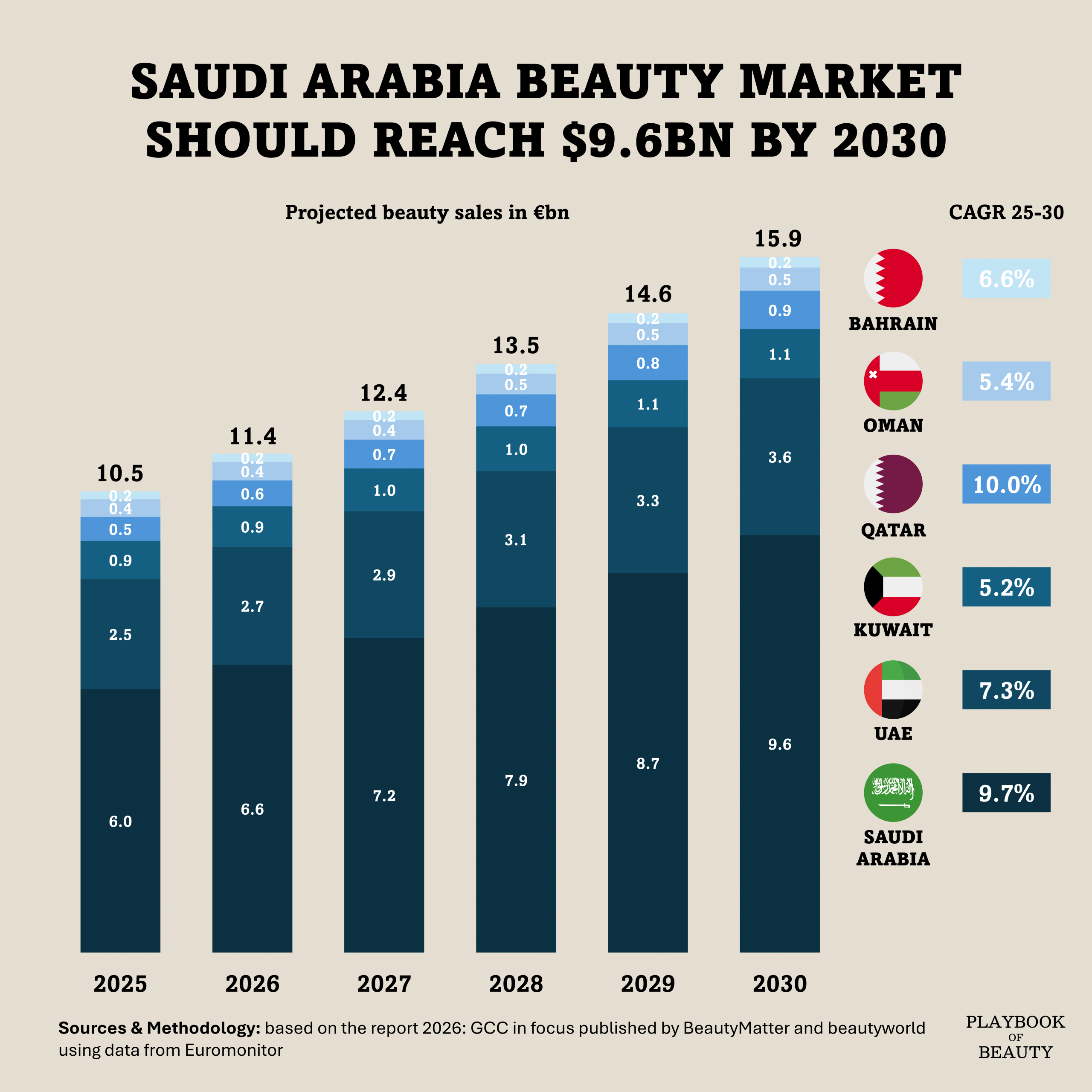
Saudi Arabia is by far the largest market in the region, and is expected to growing from $6.0bn to $9.6bn at 9.7% per year, the second fastest growth in the region. It will generate around two-thirds of the GCC’s additional sales between 2025 and 2030. The Saudi market is driven by its population scale, young consumers, rising disposable incomes and the expansion of tourism, entertainment and retail under government program Vision 2030. Fragrance is the main driver, growing 13.8% per year and accounting for 75% of Saudi Arabia’s additional sales.
The UAE is the second-largest market and is expected to increase from $2.5bn to $3.6bn at 7.3%. It is a more mature and international market, supported by tourism, expatriate consumers, premium retail and e-commerce. Dubai recorded 19.6 million overnight visitors in 2025. Growth in the UAE is also more balanced than in Saudi Arabia. Fragrance is expected to grow 8.0% per year between 2025 and 2030, makeup 7.6%, skincare 6.8% and haircare 6.1%.
Qatar is the fastest-growing market, and should grow from $0.55bn to $0.88bn at 10.0% per year. The market is smaller, but high purchasing power, international events and tourism investment are supporting demand with Qatar Tourism having set a target of more than six million visitors a year by 2030. Fragrance is expected to grow 13.3% by year between 2025 and 2030 and makeup 10.6%, the fastest makeup growth in the GCC.
Kuwait is larger than Qatar today but will grow more slowly, from $0.88bn to $1.13bn at 5.2% per year. Its affluent consumer base and Vision 2035 plans to develop Kuwait as a commercial and financial hub are supporting the growth. Fragrance and makeup are the fastest-growing categories, at 6.4% and 6.2%.
Oman should grow from $0.41bn to $0.53bn at 5.4% as Vision 2040 is bringing more investment into tourism, logistics and economic diversification. Fragrance accounts for more than half of the country’s additional sales, helped by Oman’s own perfumery heritage.
Bahrain is the smallest market in the region and is expected to grow from $178m to $244m at 6.6%. Fragrance is the strongest category expected to grow 9.7% per year.
Of all six markets, Saudi Arabia not only is the biggest and one of the fastest growing but it also looks best placed to remain resilient despite the current conflict. Its economy was less disturbed thanks to its pipeline and it relies more on domestic consumption than on tourism and expatriate demand giving it a stronger buffer than the smaller, more visitor-dependent countries.