At around €203 billion each, L’Oréal and LVMH are once again close in market value. This is less about L’Oréal suddenly accelerating in value than LVMH being repriced as the luxury market slows.
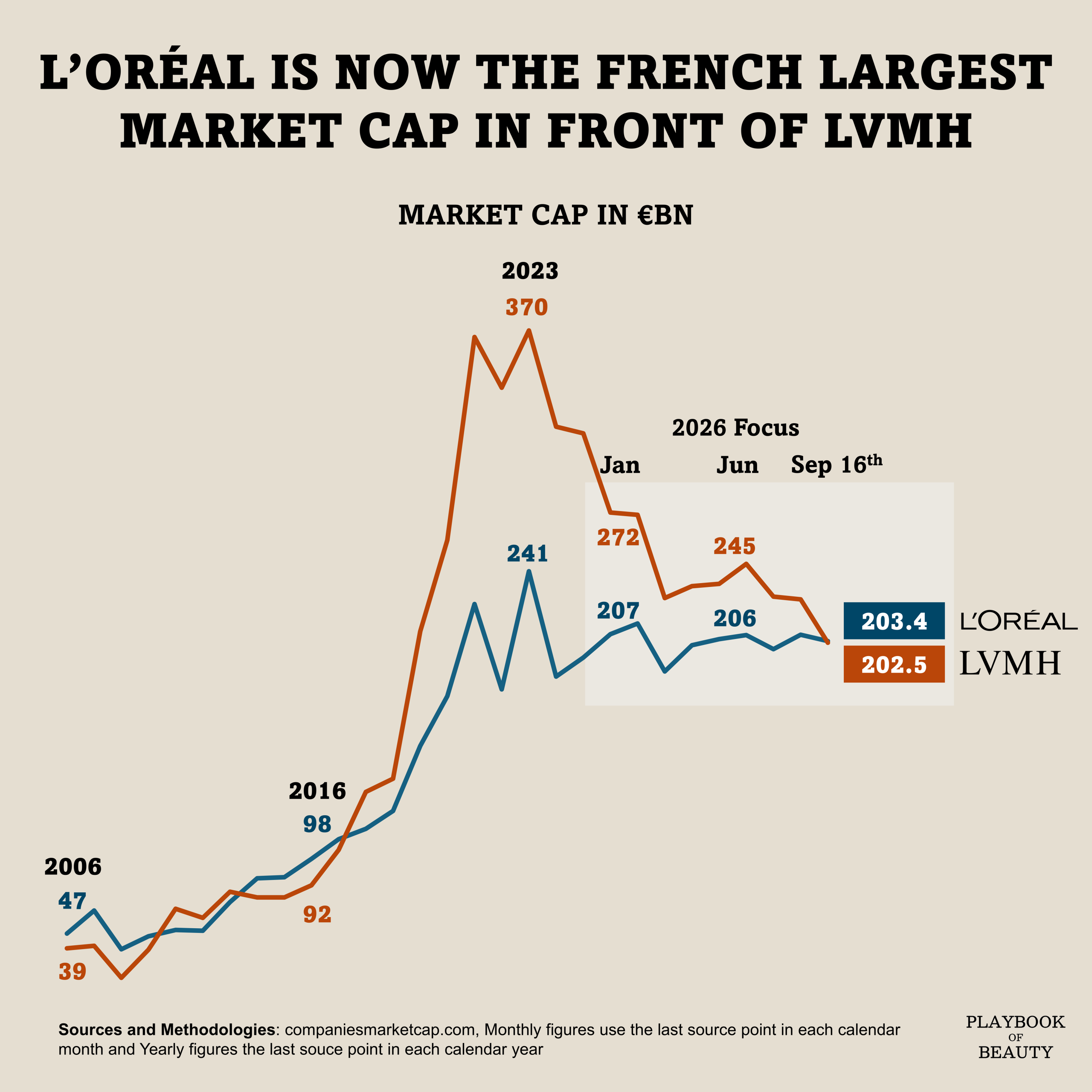
Between 2006 and 2016 the two groups remained relatively close. L’Oréal ended 2006 at €47.1 billion and LVMH at €39.2 billion. As late as 2016, their respective valuations were €97.5 billion and €91.8 billion.
The gap began in 2017, when LVMH reached €122.8 billion against €103.0 billion for L’Oréal. It then widened sharply during the post-Covid luxury boom. By the end of 2021, LVMH was valued at €366.0 billion, compared with €223.2 billion for L’Oréal. The difference exceeded €160 billion in 2022, and LVMH ended 2023 at €369.5 billion, against €240.8 billion for L’Oréal.
But that premium has now disappeared. As of 16 September 2026, L’Oréal was valued €203.4 billion and LVMH €202.6 billion. LVMH has lost around 45% of its value since the end of 2023 and 36% since the end of 2025. L’Oréal is also below its 2023 valuation, but the decline is much smaller, and its market cap is up around 5% since the end of 2025.
Bain & Company estimates that luxury lost 20 million consumers between 2024 and 2025, after losing 50 million in the preceding years. Strong price increases pushed many aspirational consumers out of the market, while weaker Chinese demand and pressure on international luxury tourism have affected high-ticket categories.
The two business models also respond differently to weaker consumption. LVMH is heavily exposed to fashion, leather goods, watches, jewellery and wines and spirits. These are expensive, discretionary purchases. L’Oréal combines prestige beauty with mass-market products, professional haircare and dermatological beauty, categories bought more frequently and at more accessible prices.
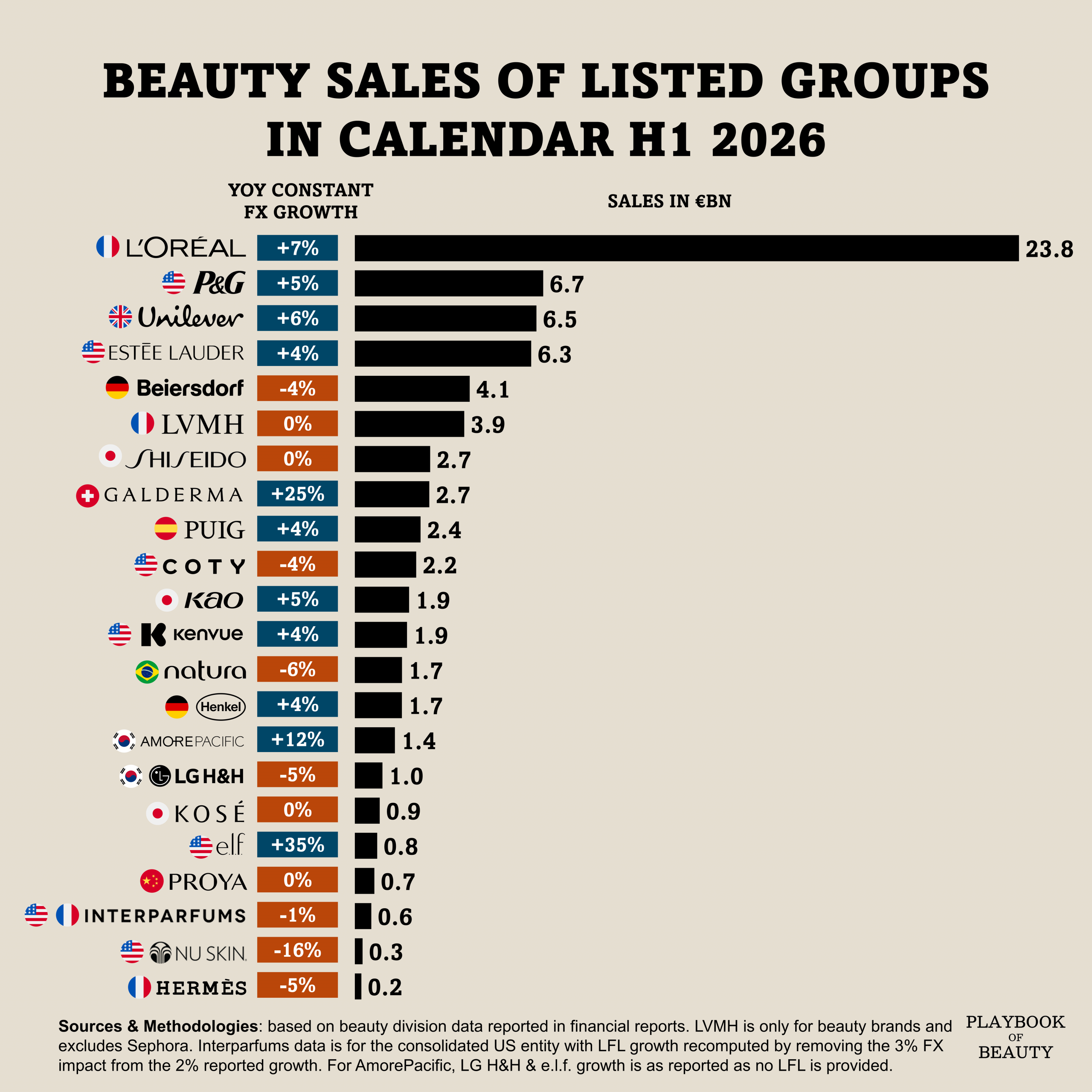
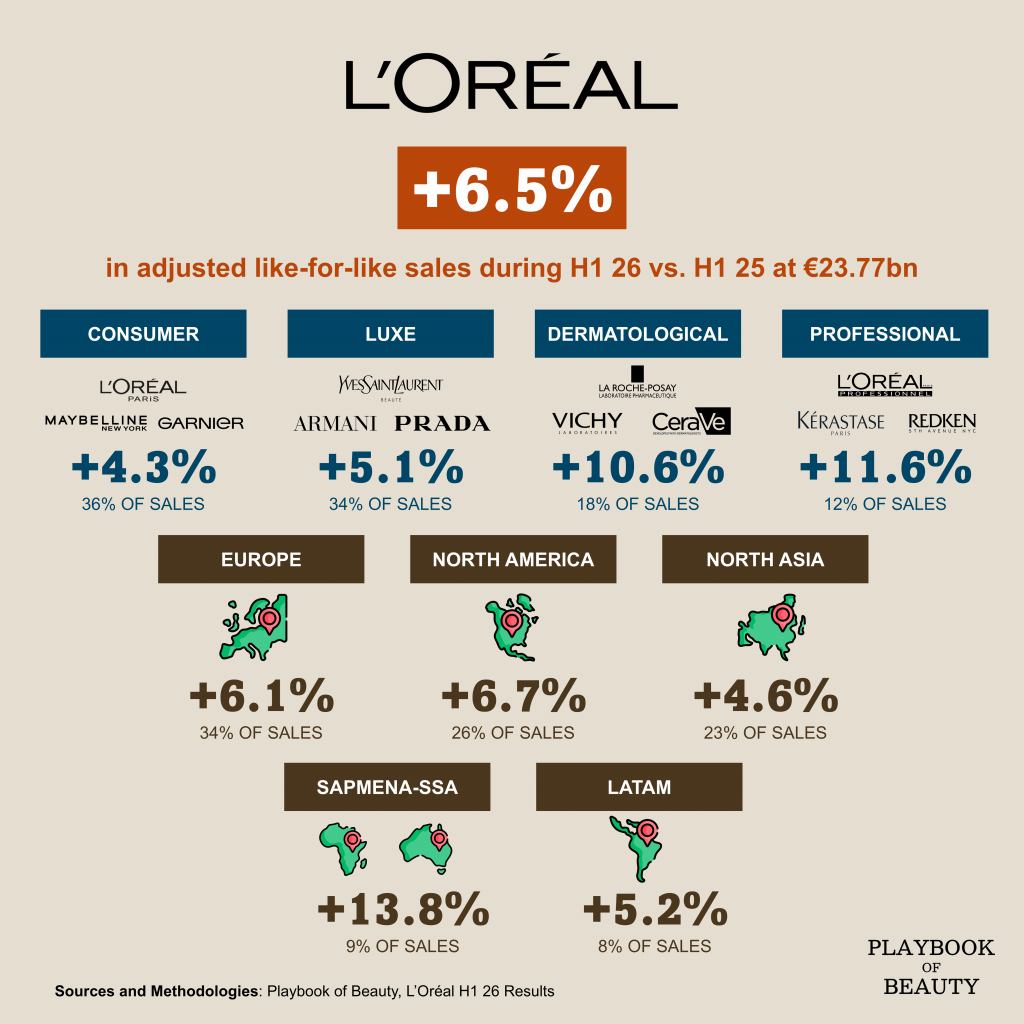
H1 26 sales also put that difference into perspective. L’Oréal generated €23.77 billion, with adjusted like-for-like growth of 6.5%. LVMH remained the much larger group at €38.6 billion, but organic growth was 2% and reported sales declined 3%.
Market capitalisation is not a ranking of current sales. It is a judgment on future growth, earnings and risk and the return to parity in market capitalization suggests investors currently place more value on L’Oréal’s recurring and diversified beauty demand than on a rapid rebound in high-end luxury.