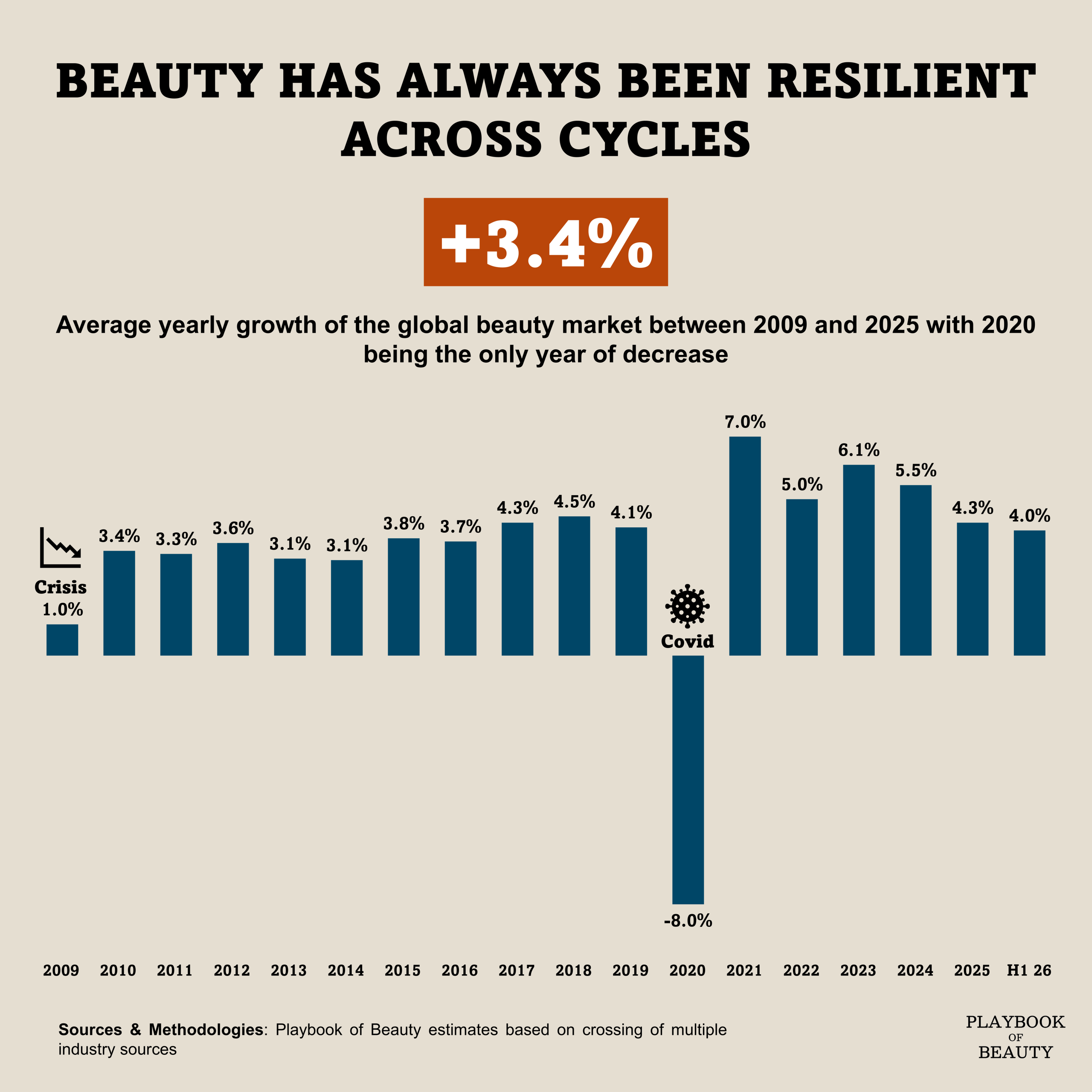
Between 2009 and 2025, the global beauty market grew by an average of 3.4% a year. After the subprime crisis, it continued to grow every year from 2010 to 2019. Covid was the only down year, with the market falling 8.0% in 2020. It then rebounded by 7.0% in 2021 and continued to expand until today.
What makes beauty so resilient?
The first answer is the “lipstick effect”. When consumers postpone larger purchases, beauty products with a lower absolute price can still provide pleasure and confidence.
Beauty has also moved beyond simple ornamentation and indulgence. Skincare and sun protection are increasingly treated as daily health and wellness routines. These products are purchased repeatedly, which makes the category less discretionary than it may appear.
The market also works across income levels. Premium fragrances, luxury cosmetics and high-efficacy treatments continue to attract affluent consumers and offer accessible entry points into luxury. At the same time, drugstore brands, affordable innovation and dupes allow shoppers to trade down.
Furthermore, high margins give beauty companies room to absorb part of the pressure from inflation while continuing to invest in innovation and marketing. Fast product cycles, e-commerce, virtual try-ons and creator-led marketing have also helped the industry move quickly when consumer behaviour or retail channels change.
Beauty is not entirely recession-proof. Colour cosmetics fell sharply during Covid, when masks reduced usage. But demand moved into skincare, fragrance, bath, body and wellness rather than disappearing altogether.
The real source of resilience of beauty is that it can shift across categories, price points and channels while remaining part of consumers routines.