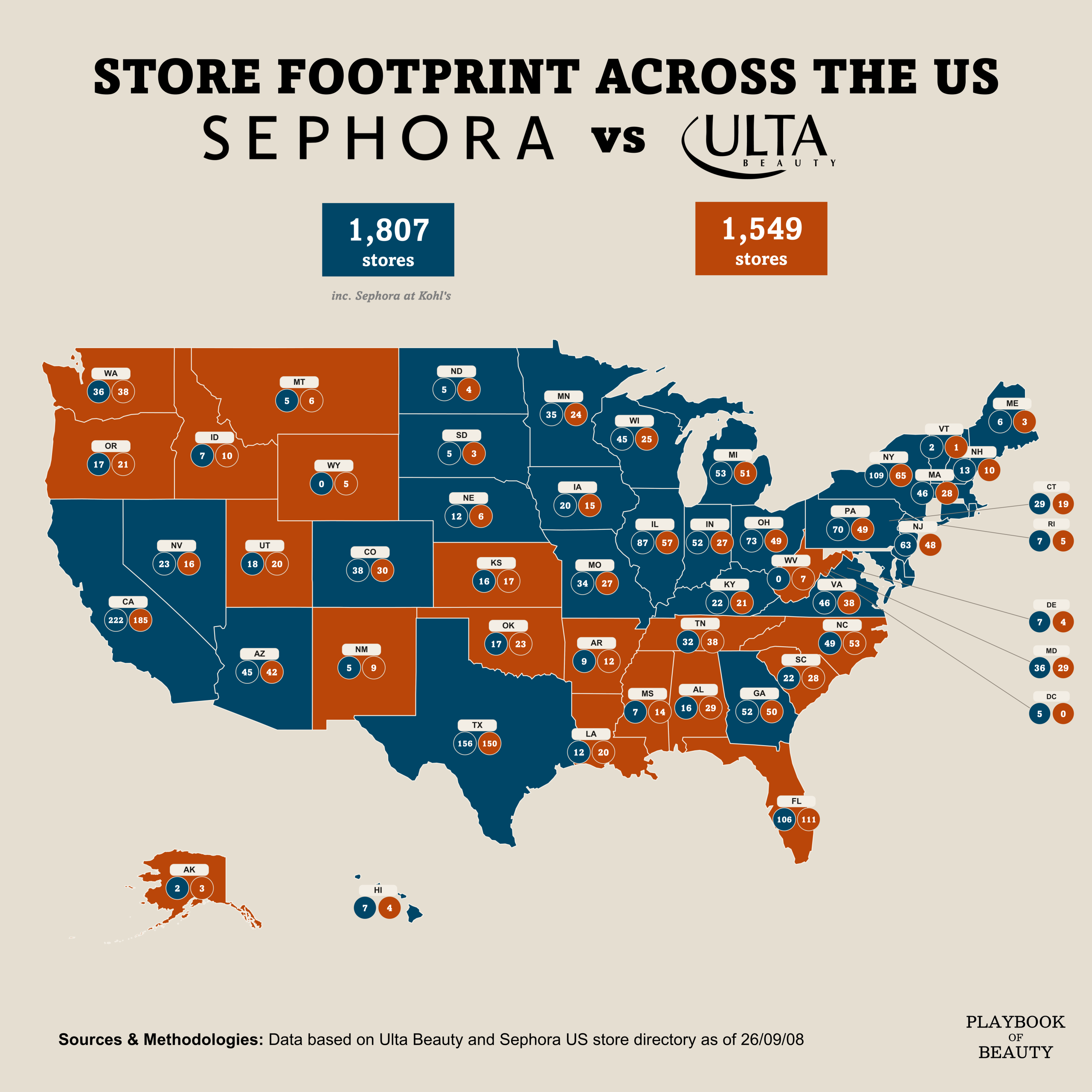
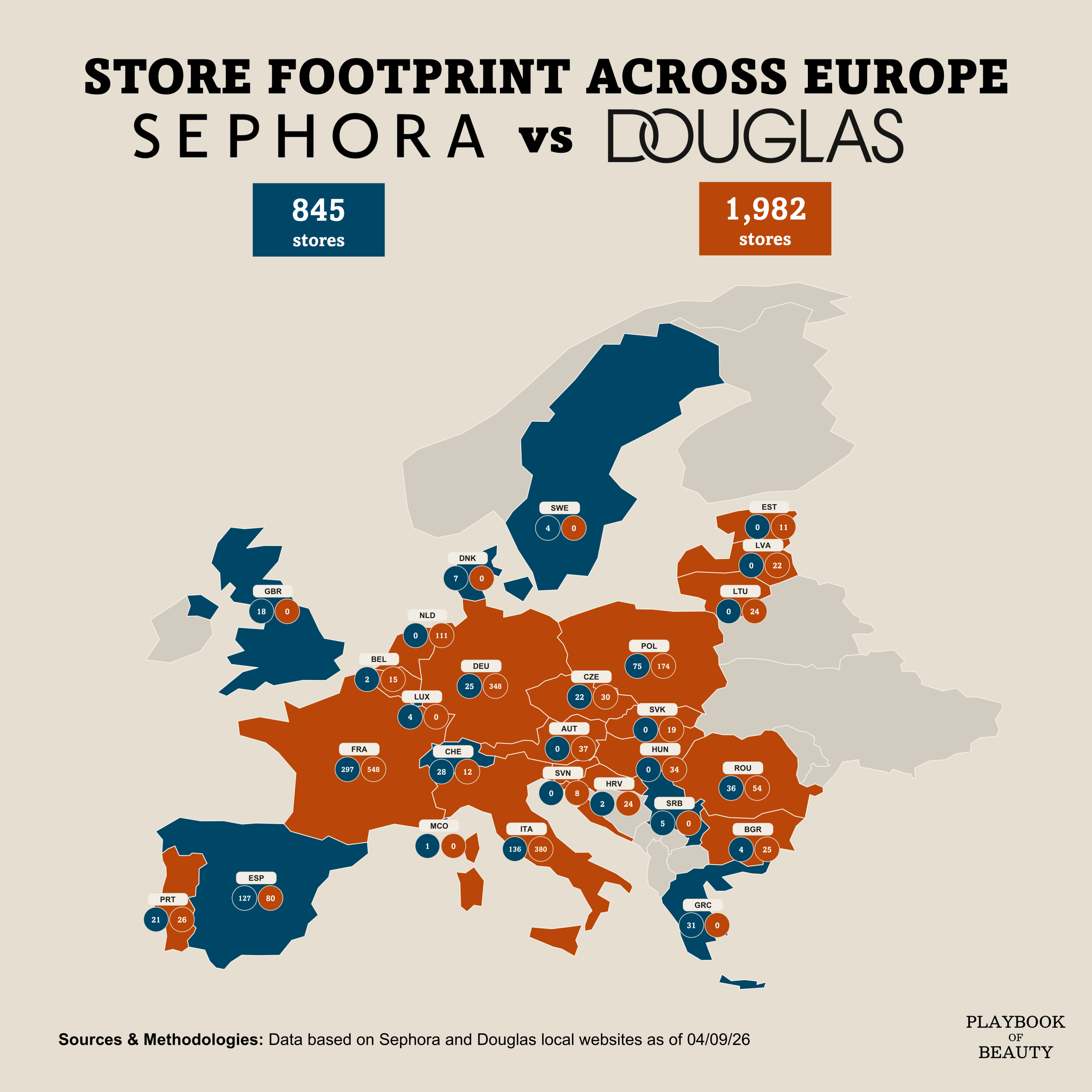
With €2.62bn ($3.04bn) in sales, Ulta outpaces every other listed pure-play beauty retailer by a factor of nearly three, its 9% growth driven by a 3.8% comparable sales gain, the Space NK acquisition, and sales from new stores. Douglas, Europe’s largest beauty chain, reached €988m but declined 2%, with like-for-like sales falling 4.5% in the quarter, and the decline concentrating in DACHNL (-2.8%) and France (-2.1%), while E-Com sales fell 1%.
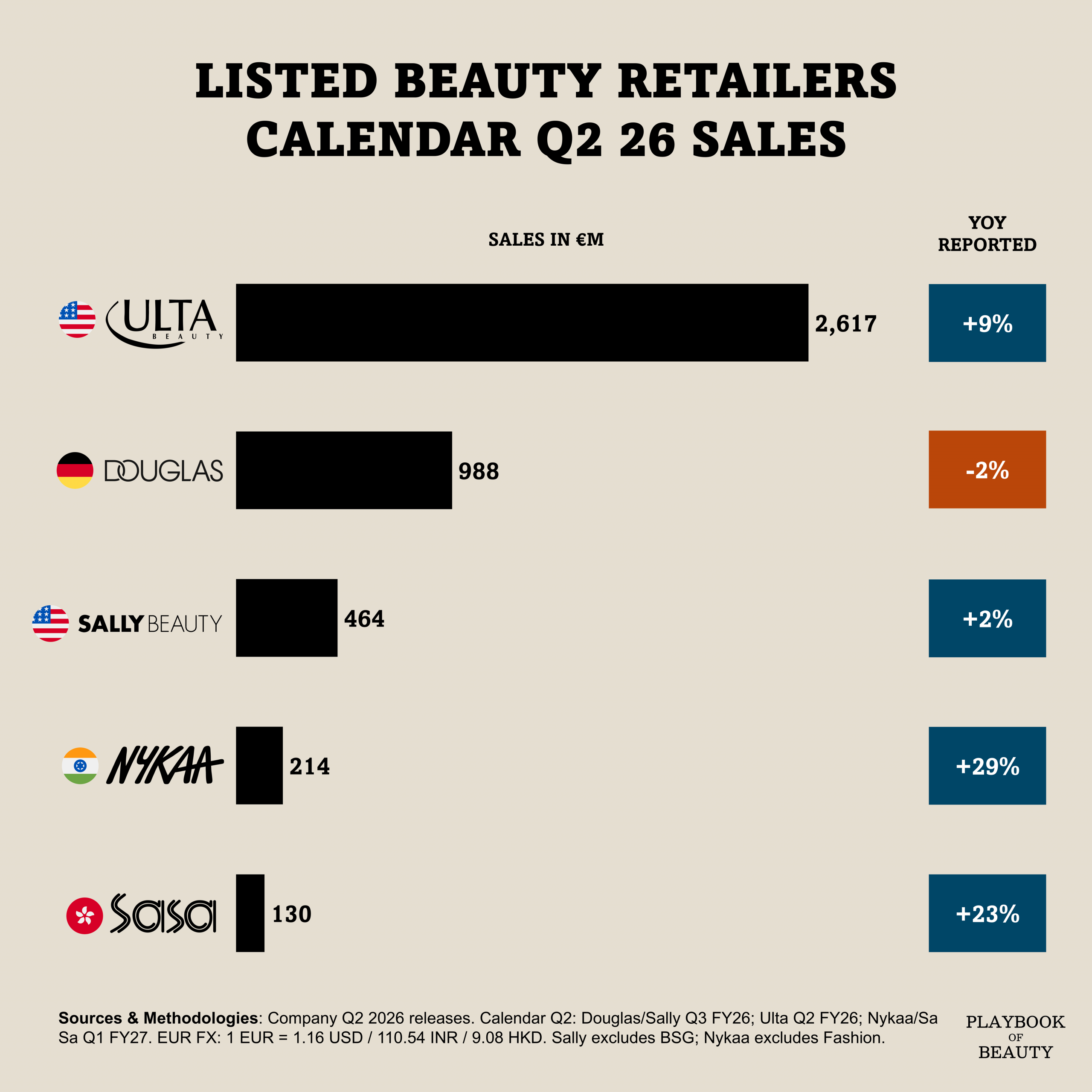
Sally Beauty consumer-facing division grew 2% reaching €464m ($539m) with a 1.6% increase in comparable sales while gross margin expanded 60 basis points to 61.5% and operating earnings increased 7.3%, suggesting a retail model slowly but credibly reshaping itself.
The real growth however is in Asia. Nykaa’s Beauty NSV grew 29% in calendar Q2 2026 at €214m(₹2,371 Cr) while Beauty GMV grew 28% and Beauty EBITDA margin reached 10.3%. Sa Sa grew 23% to €130m (HK$1,179.3m) with same-store sales in Hong Kong and Macao rose 30.1%, driven by offline sales grew 31.0%, while online sales fell 2.9% as the group reduced lower-margin B2B orders.
I reckon those results reflect entirely different consumer dynamics: in the US, Ulta is notably winning on scale, newness and the contribution from Space NK. In India, Nykaa benefits from a rapidly premiumising consumer base with limited incumbent competition. In Hong Kong, Sa Sa is recovering volume structurally suppressed for years. But Douglas’s situation is the most instructive: in mature European markets where price competition is intensifying, even a large store network and a credible omnichannel transformation cannot fully offset a consumer who is spending more selectively and shifting more of the purchase online.