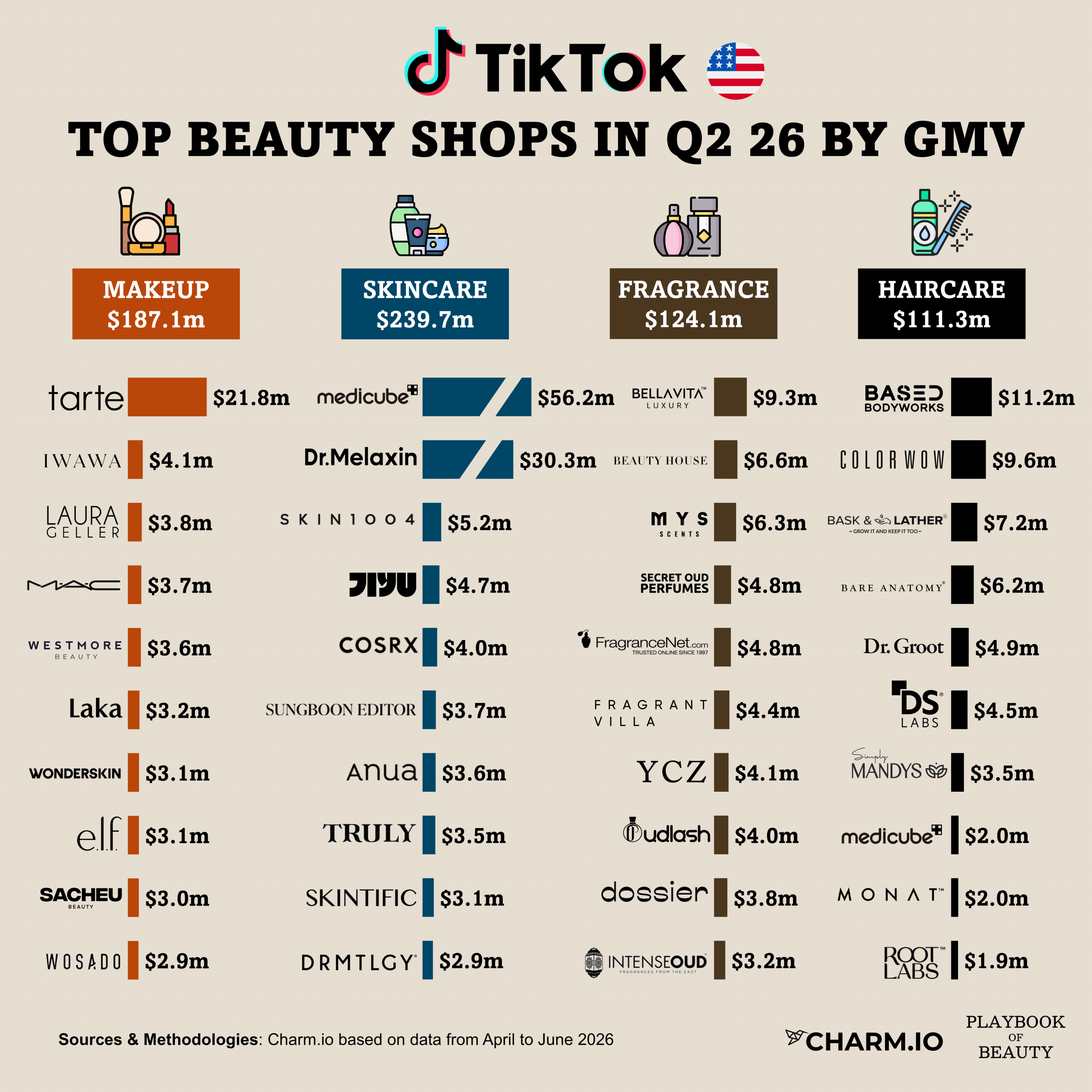
The traditional eCommerce landscape in the United States is witnessing a significant structural shift as social discovery begins to outpace conventional search-based retail. According to data from Charm.io TikTok Shop has generated $2.7bn in sales in 2025 in the US, securing its position as the fourth-largest eCommerce retailer in the category nationwide according to Nielsen.
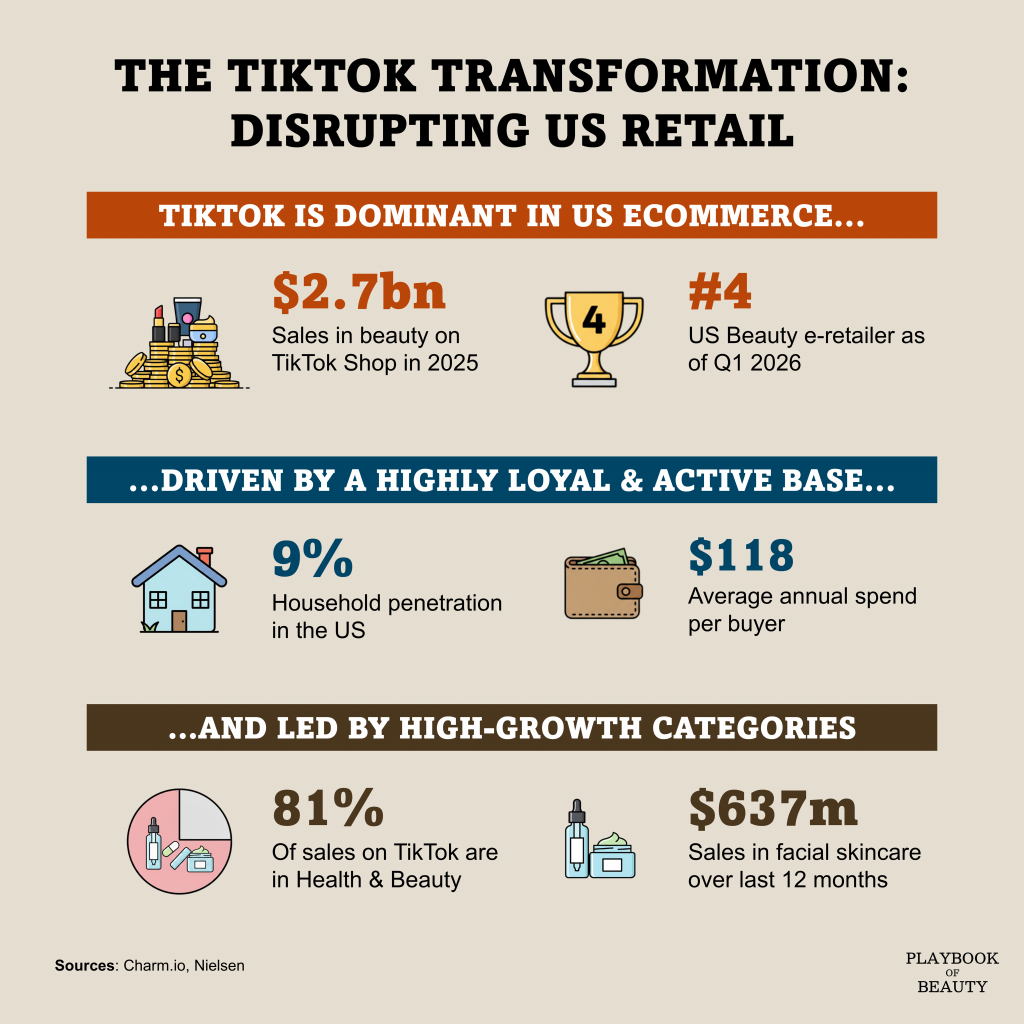
This growth is not a byproduct of viral trends but is increasingly rooted in dailyconsumption. With an 80% growth rate and 9% household penetration, the platform has successfully converted a casual audience into a loyal customer base. The average buyer now spends $118 annually and returns to purchase 3.5 times per year.
The composition of sales shows that TikTok Shop is becoming a destination for high-intent wellness categories. Health and Beauty accounts for 81% of the platform’s total online sales. Within this vertical, Vitamins and Supplements lead the market at $784 million, followed by Facial Skin Care at $637 million. This shows that consumers are now trusting social platforms for “science-first” categories that were previously the domain of specialized pharmacies and premium department stores.
Perhaps most significant is the platform’s resilience in the face of structural volatility. Despite high-profile changes in TikTok’s US ownership, consumer sentiment remains largely unaffected. 53% of users report that the change has had no impact on their trust in the platform, while 26% actually report an increase in trust.
I reckon the barrier between entertainment and transaction has dissolved, and the window for brands to secure a first-mover advantage in social commerce is closing.