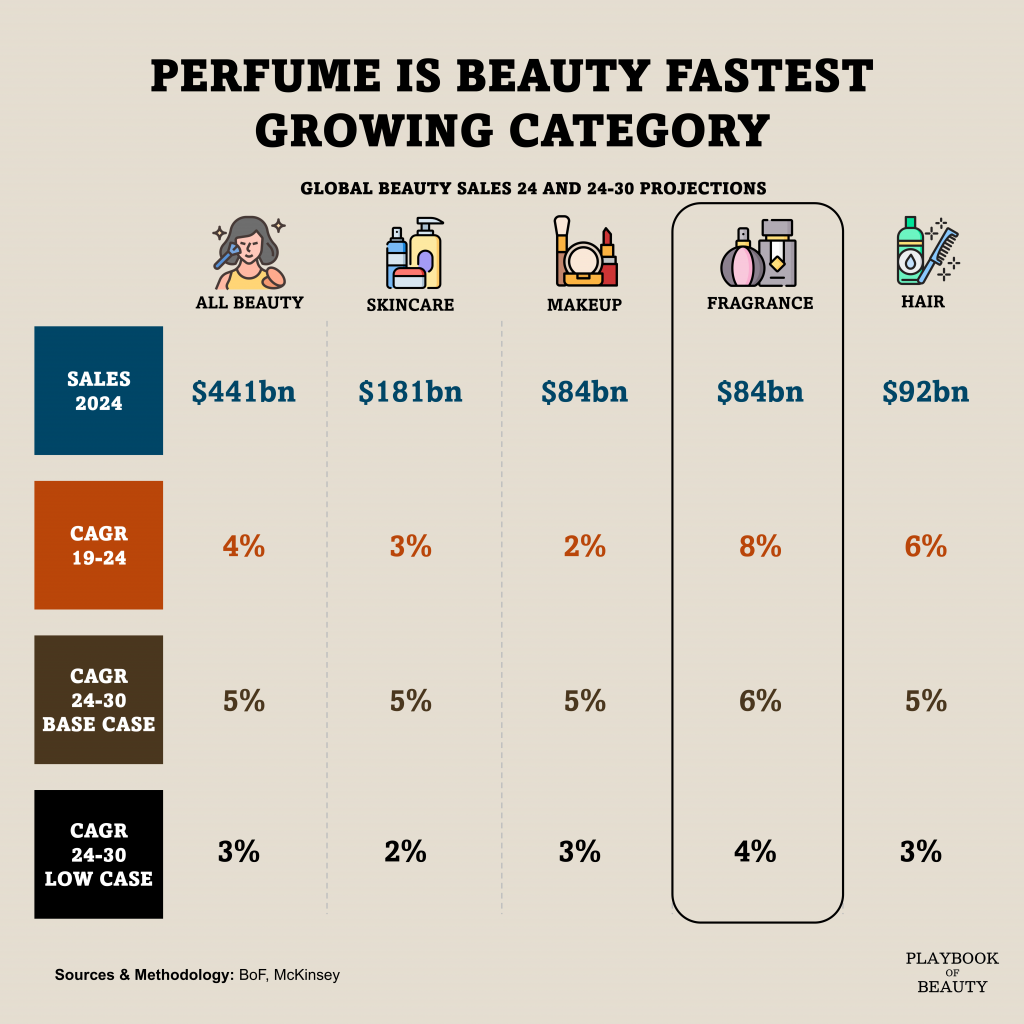
Fragrance represents 20% of the beauty industry at $84bn. Between 19 and 24, the category grew 8% annually, twice the pace of the market, and McKinsey expects it to keep outperforming with 4–6% growth to 2030 vs. 3–5% for beauty.
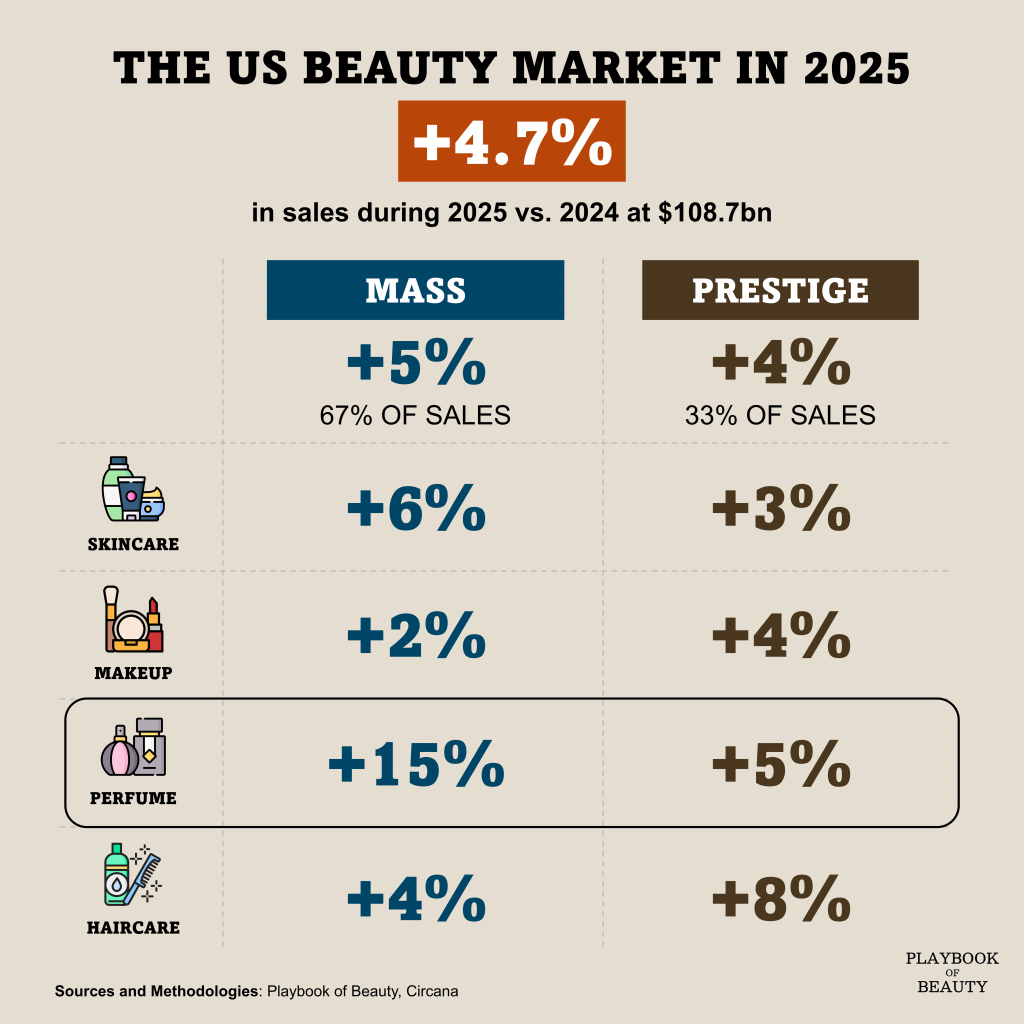
The USA illustrates momentum and maturation: prestige fragrance rose 5% in 25, second only to hair are, though the holiday quarter saw other categories accelerate faster, a sign the segment is normalising. Meanwhile, mass-market jumped 15%, fuelled by accessible formats like travel sprays, or hair and body mists.
I believe four structural forces have been driving this fragrance boom.
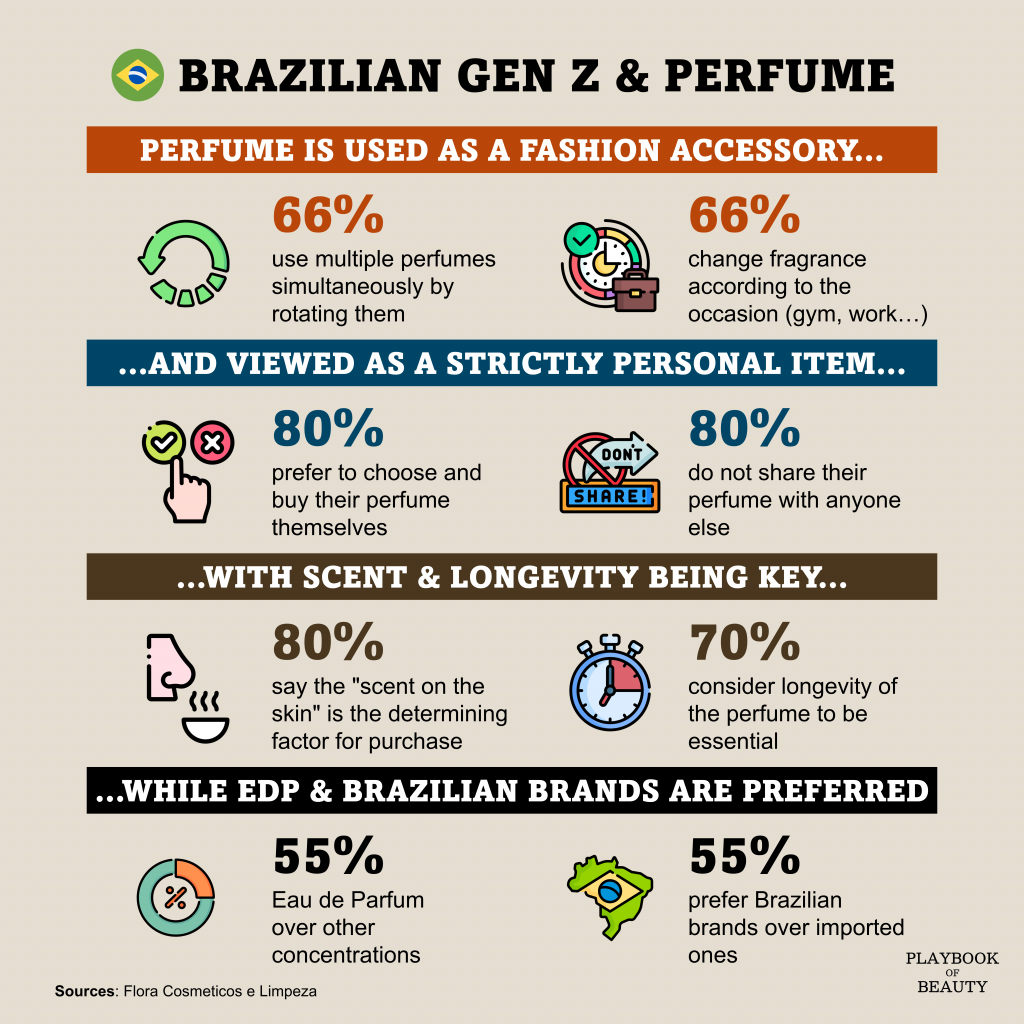
The first is a generational reset in how people buy and wear scent. Gen Z treats fragrance as an identity tool: 66% rotate between multiple bottles depending on the occasion, and 80% prefer to choose their own perfume. Tenacity is a key purchase criterion for 70% of them, yet 55% still prefer EdP over higher concentrations likely a price consideration.
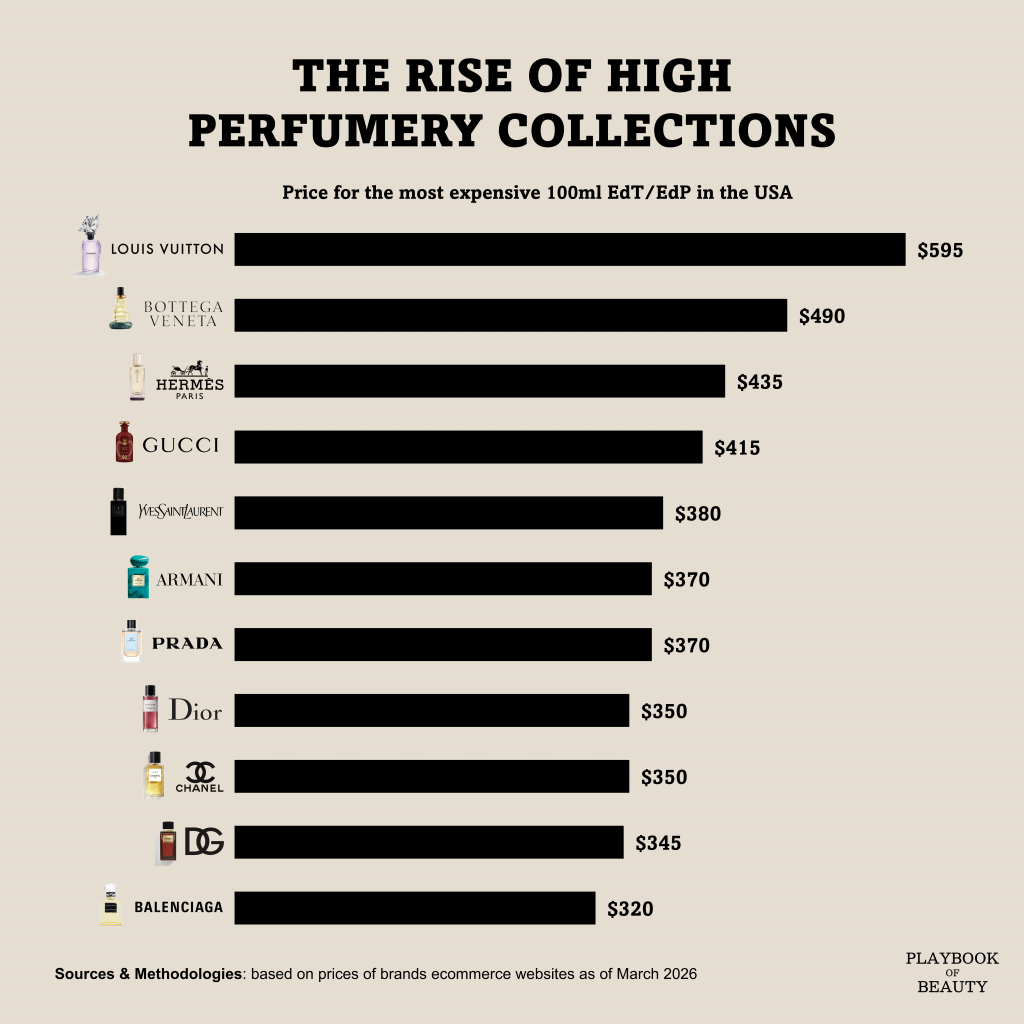
Speaking of prices, the second driver is premiumisation. All major luxury brands launched haute parfumerie collections, with 100ml EdT easily exceeding $300. They also raised prices on existing lines: perfume inflation in the US averaged 6% per year from 20 to 25, above a 4.2% general inflation rate and nearly double the 3.5% for the rest of beauty.
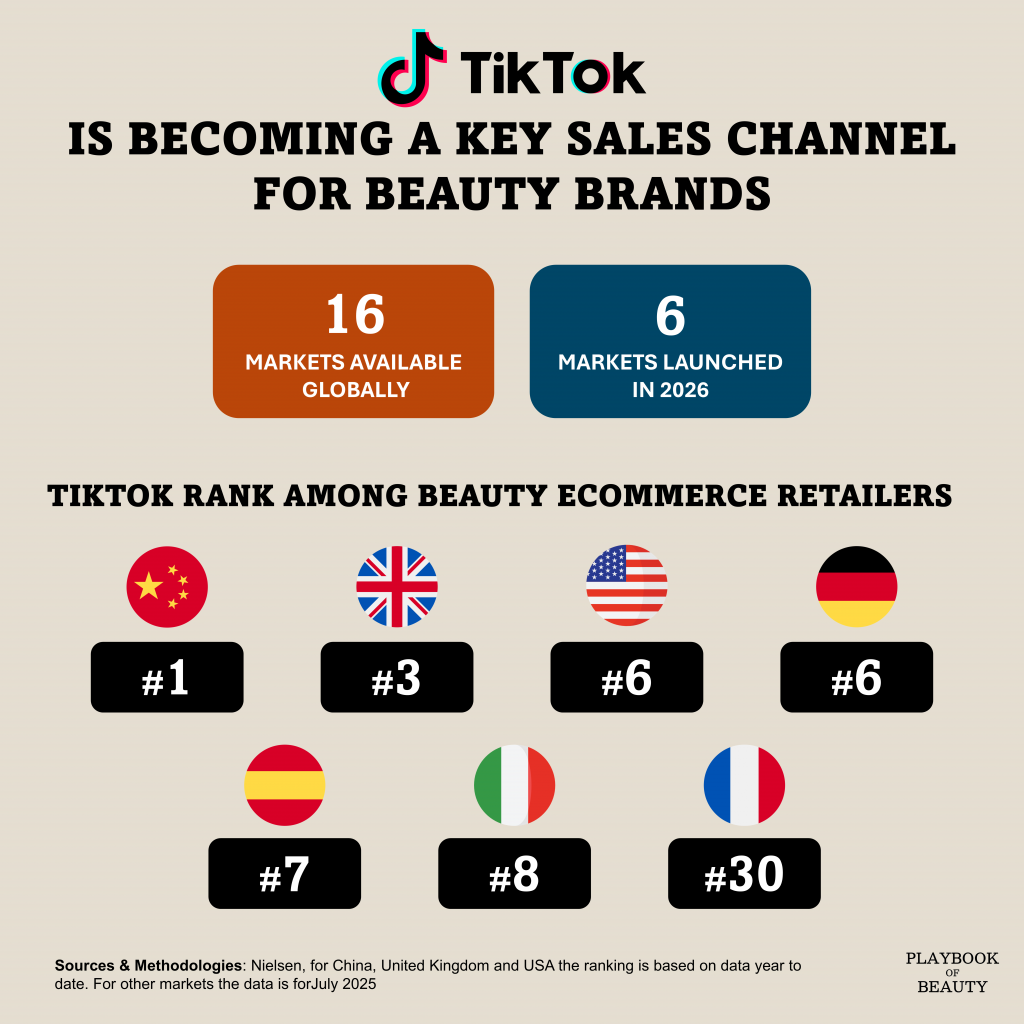
Digital is the third driver. Nielsen reports that 55% of US fragrance sales happen online while globally Euromonitor tracked a 17% jump in e-commerce for perfume in 2024, three times the growth of physical retail. TikTok has notably become a conversion engine, ranking as the third online beauty retailer in the UK.
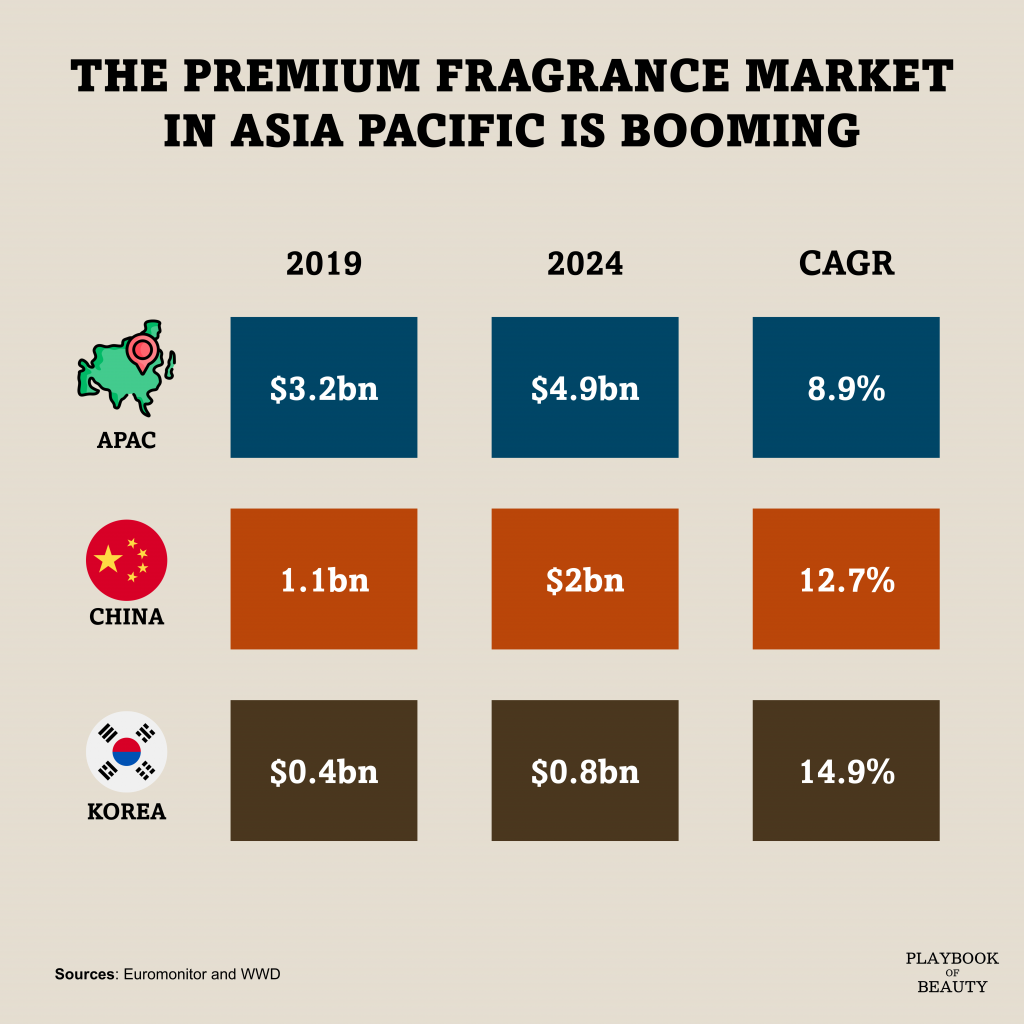
The fourth shift is the rise of APAC. Fragrance accounts for only 2% of the Chinese beauty market, yet the country posted a 13% CAGR between 19 and 24. Global brands like Byredo expanded alongside local players such as Borntostandout and Documents, both attracting investment from L’Oréal.
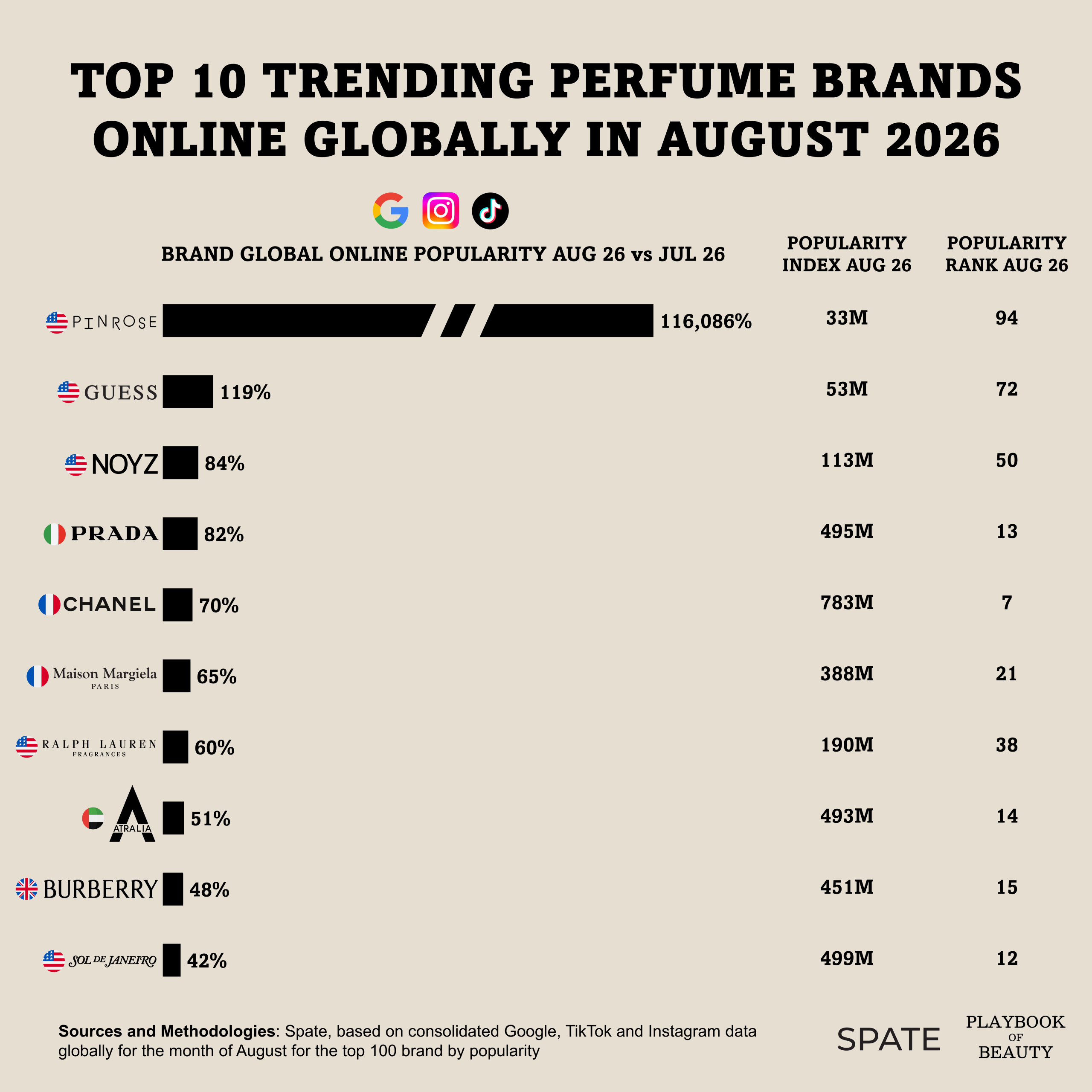
To finish, I see three major perfume brands that will continue to lead in 2026. First, the global emergence of oriental perfume: the UAE climbed from tenth to third place among global exporters, shipping nearly $3bn, behind only France and Spain. Mass brand Lattafa was the best seller on Amazon in Q1 26, while Kayali led at Sephora US in 25. The second trend is the boom of entry products like hair and body mists driving the mass-market acceleration already mentioned.
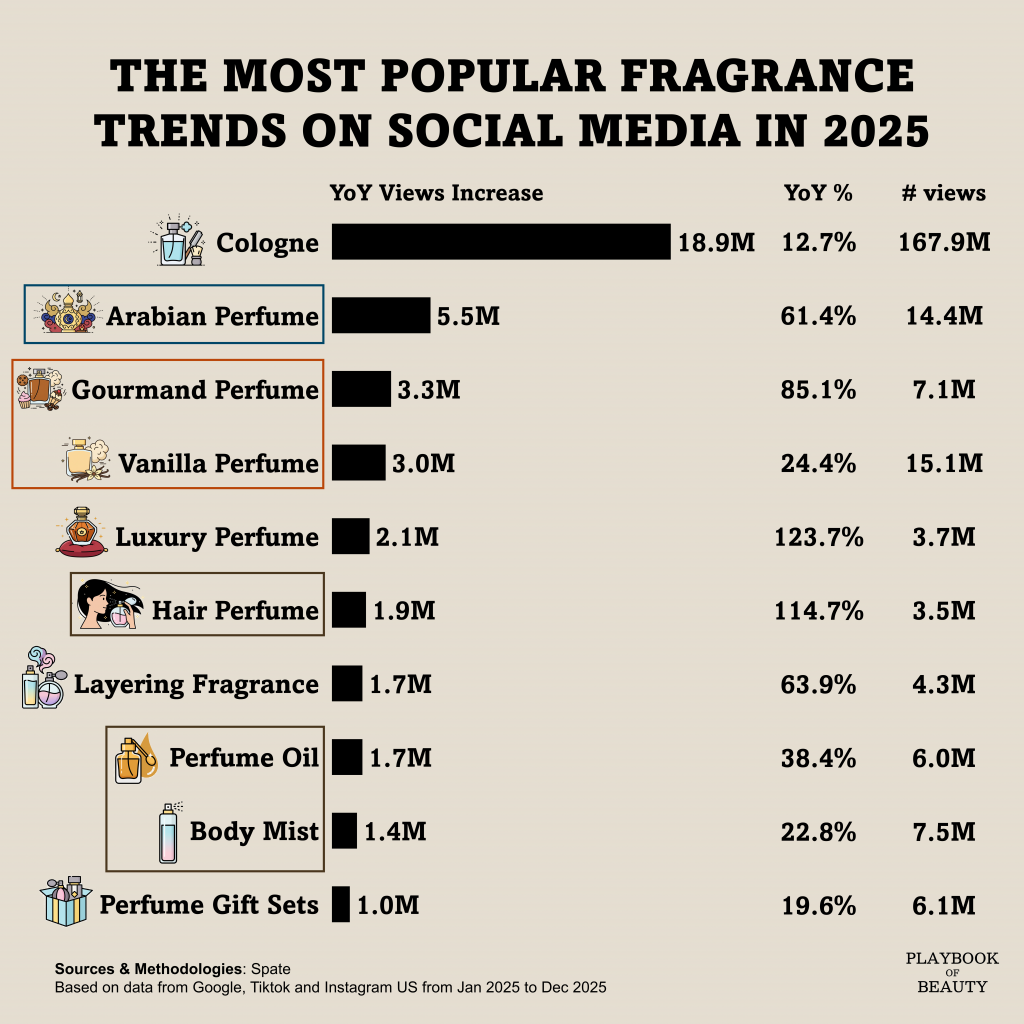
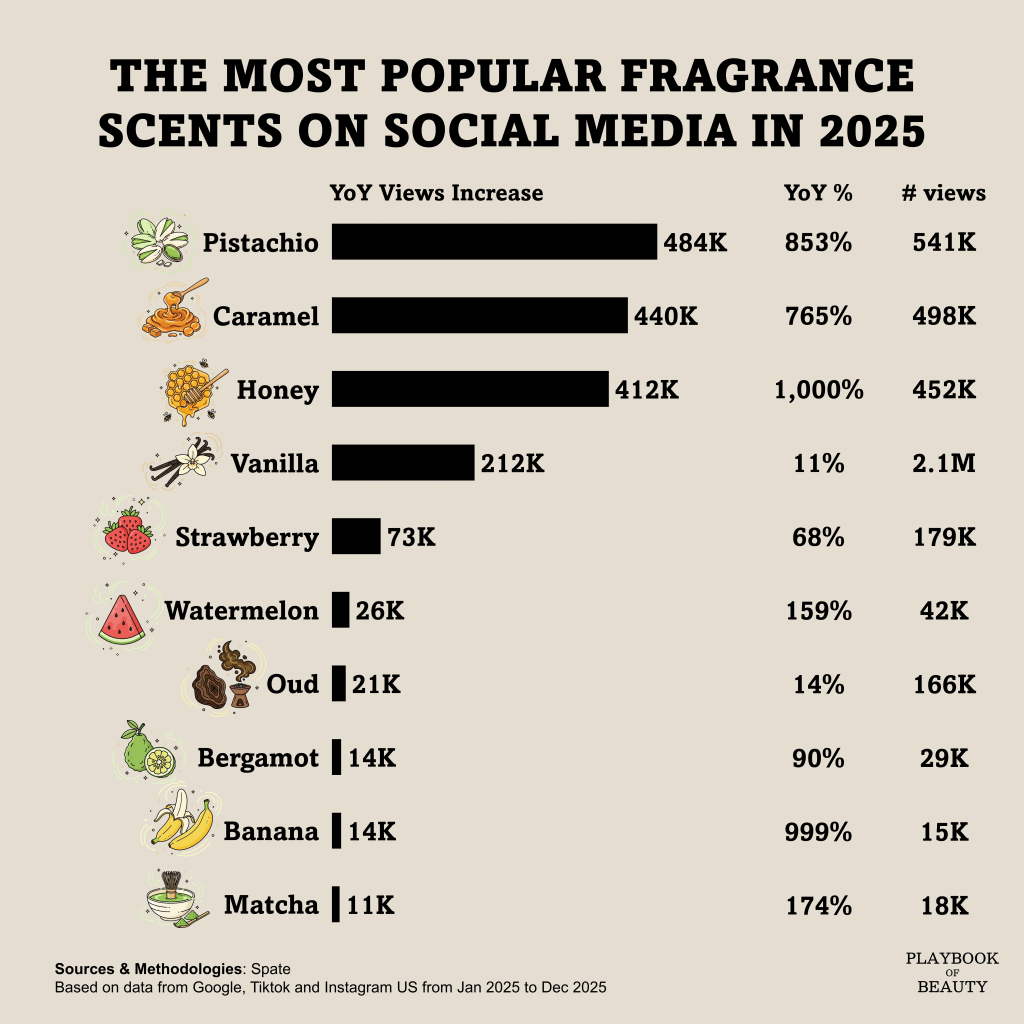
The third is the surge of gourmand scents: nine of the ten most viral notes on social media in 2025 were sweet, edible profiles, a trend linked to the spread of GLP-1 as consumers seek the comfort of food without consumption.
Driven by new rituals and new geographies, fragrance has been, is, and will remain one of the most powerful growth engines in global beauty.
To learn more about this topic you can listen to my recent interview with Wilfried Klucsar produced by Dix Sept Paris.