The global beauty market grew between 4 and 5 percent a year from 2019 to 2025, and McKinsey expects that pace to hold through 2030, with the market reaching an estimated $590bn, up from $360 billion in 2019. However, beauty categories are definitely not growing at the same rate, and we have seen their hierarchy shuffle over the last 6 years.
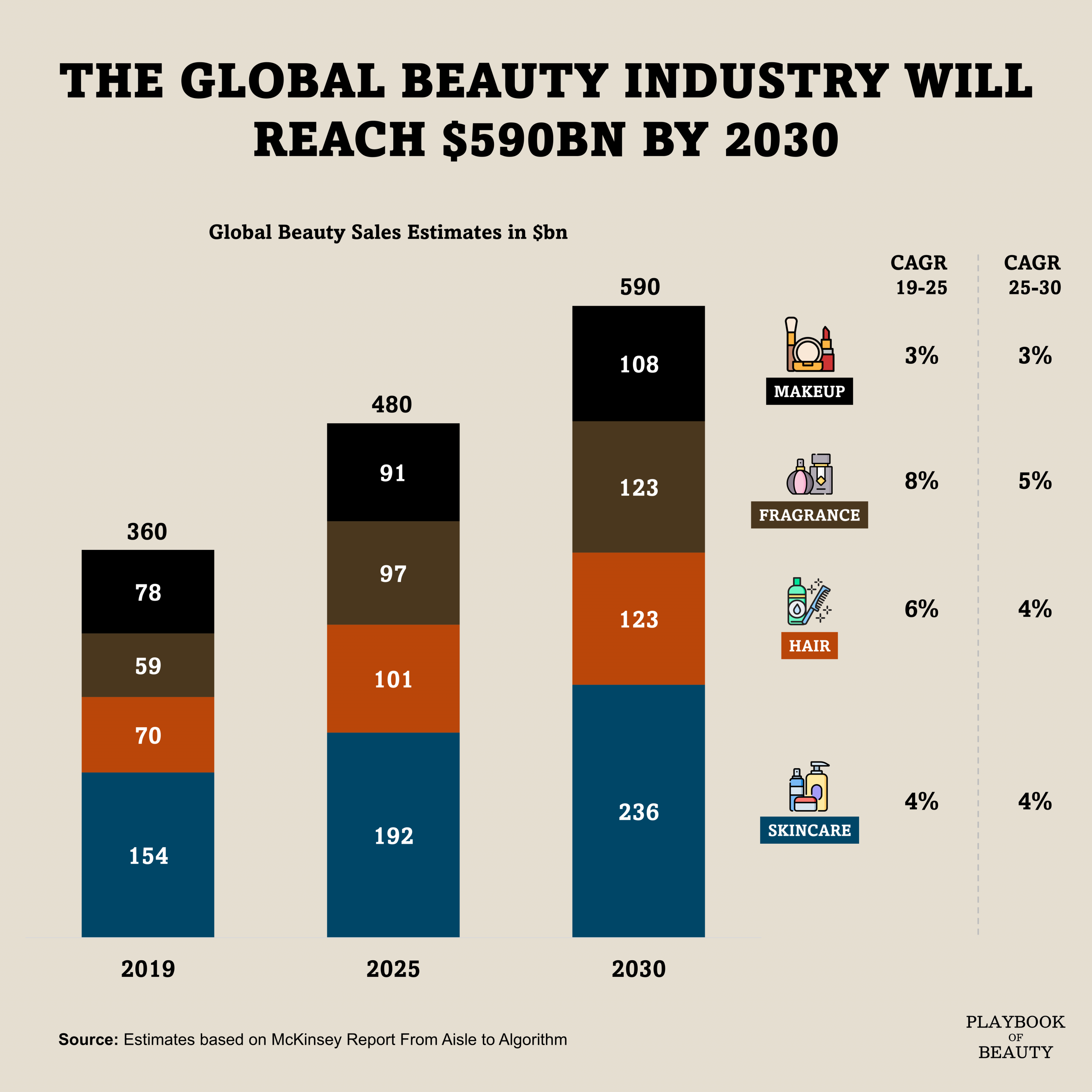
Makeup was the second-largest beauty category in 2019, worth $7bn. It is now the smallest of the four a direct consequence of the pandemic. With fewer people leaving the house or appearing on camera in person, makeup routines were abandoned, and the habit didn’t fully return once offices and social life reopened. Coty’s decision to sell its mass color cosmetics division, home to CoverGirl and Rimmel, reflects the same pressure. McKinsey projects makeup growth of 3% a year through 2030, the slowest of the four categories.
Fragrance moved in the opposite direction. It grew 8% annually between 2019 and 2025 and has overtaken makeup to become the third-largest category and should reach the same size as haircare by 2030. Growth came from both ends of the price spectrum. In the niche and luxury segment Amouage grew 32.8 percent a year between 2020 and 2025. At the mass end, brands including Armaf and Lattafa helped push US mass perfume sales up 15 percent in 2025. McKinsey expects fragrance growth to slow as the category matures, settling closer to 5 percent a year through 2030, still the fastest of the four segments.
Hair care was the second-fastest-growing category over the same period, driven largely by what the industry calls the skinification of hair: treating scalp and hair with the same clinical language and active ingredients used in skin care. L’Oréal’s Professional Haircare division is a good example of the performance of the category posting 13.1 percent growth in the first quarter of 2026.
Finally, skincare remains the largest category and is set to reach $236 billion by 2030. Clinical brands, especially Korean, have driven much of its recent growth. Medicube’s parent company grew 56 percent a year between 2021 and 2025, reaching $1 billion in sales.