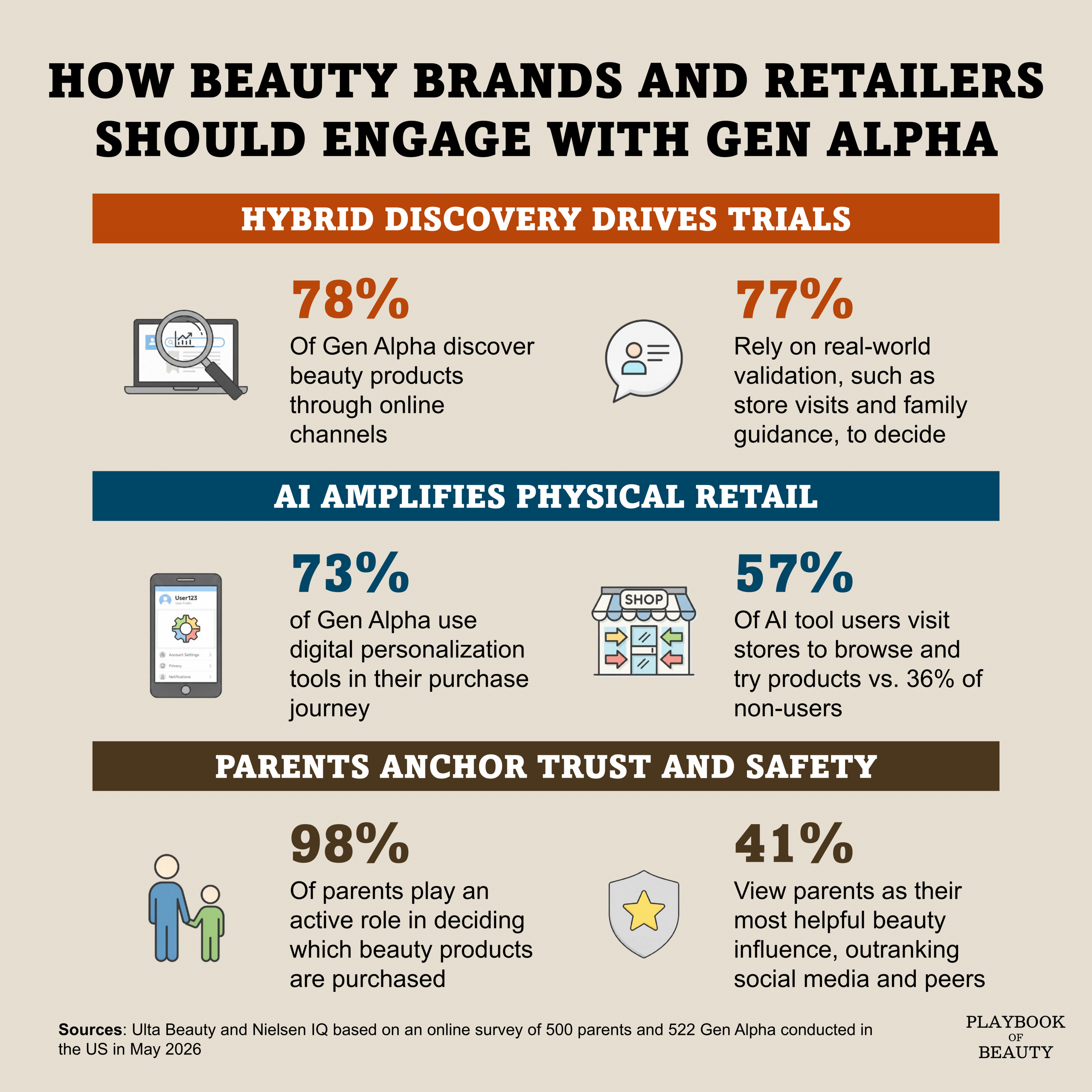
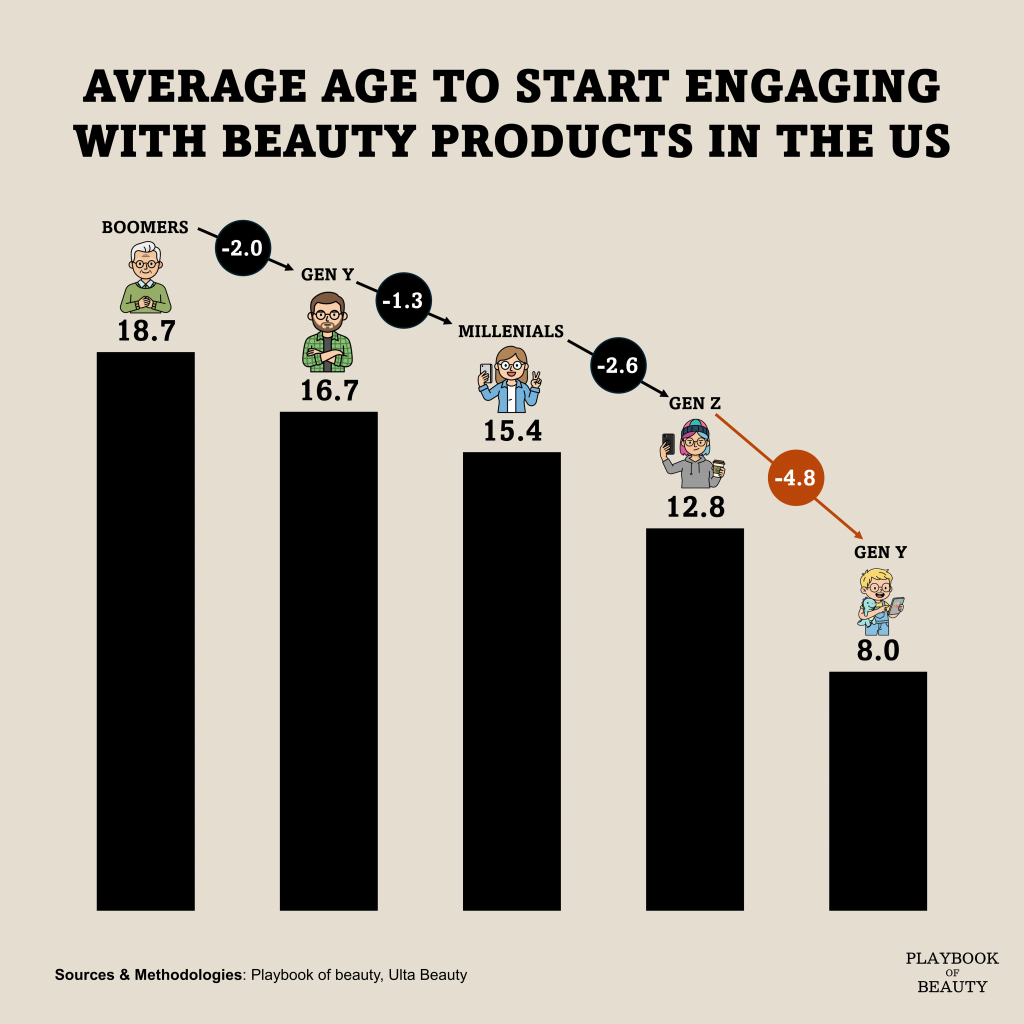
The beauty industry is witnessing a radical shift in the consumer lifecycle. While Millennials typically initiated their beauty and skincare rituals at age 15, recent findings from Ulta Beauty indicate that Generation Alpha is entering the category as early as age eight. This is fundamentally altering the traditional brand influence within households.
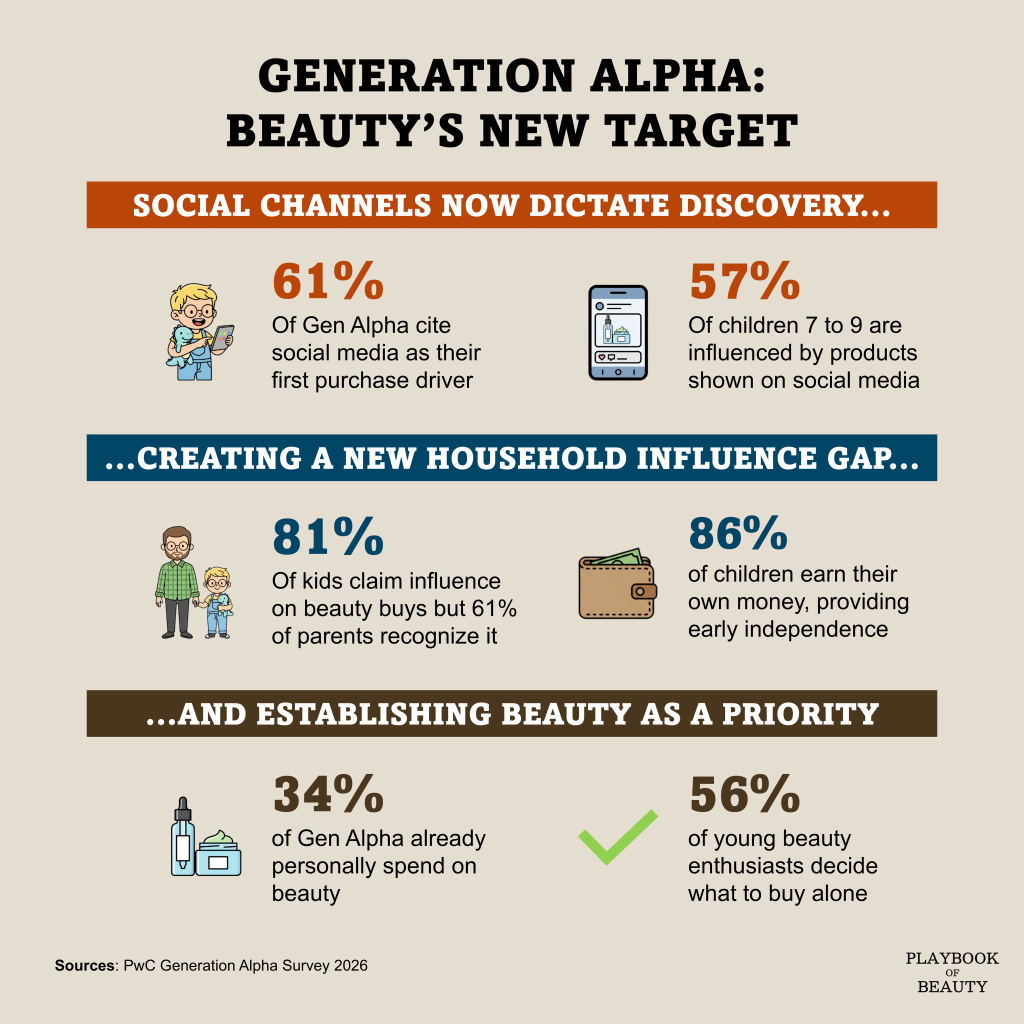
Data from the PwC 2026 Generation Alpha Survey confirms that this demographic is no longer a peripheral consumer segment but a real market driver. The transition to digital commerce is occurring earlier than anticipated, with 61% of children citing social media as their main purchase driver, outpacing both peer influence and traditional television advertising. By age nine, a majority of these consumers are already influenced by algorithms with 57% reporting that social content directly shapes their desire to acquire specific products.
A critical element for brands is the asymmetric influence gap within families. While 81% of children report having a decisive say in the skincare and beauty products entering the household, only 61% of parents recognize this level of influence. This is further strenghtened by increased “financial independence” with 86% of Gen Alpha earning their own money by helping on chores, allowing them to bypass traditional parental “gatekeeping.” The result is a cohort that increasingly prioritise beauty with 34% of Gen Alpha already spending on the category.
I reckon that to be succesful, beauty brands must go beyond “kiddie” aesthetics to engage a cohort that possesses high product literacy and established brand preferences nearly a decade earlier than previous generations. The window for securing brand loyalty has moved, and the age of the “Chief Influence Officer” in the household has arrived.