Givaudan, DSM-Firmenich, IFF and Symrise together posted a weighted average organic growth of 4.2% in their fragrance and beauty divisions in Q1 26 a solid result in a quarter marked by Middle East disruption, supply chain uncertainty and tough prior-year comparables.

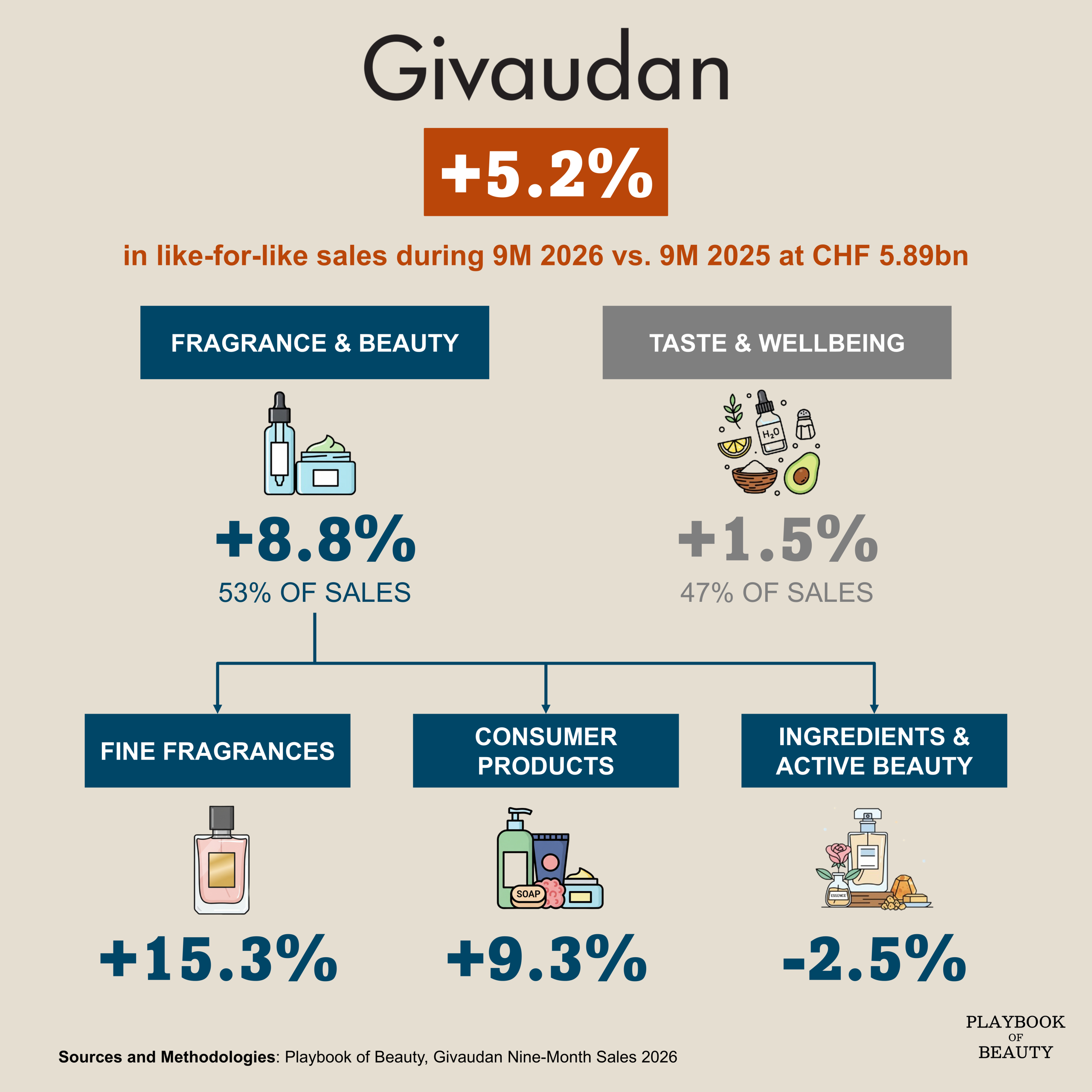
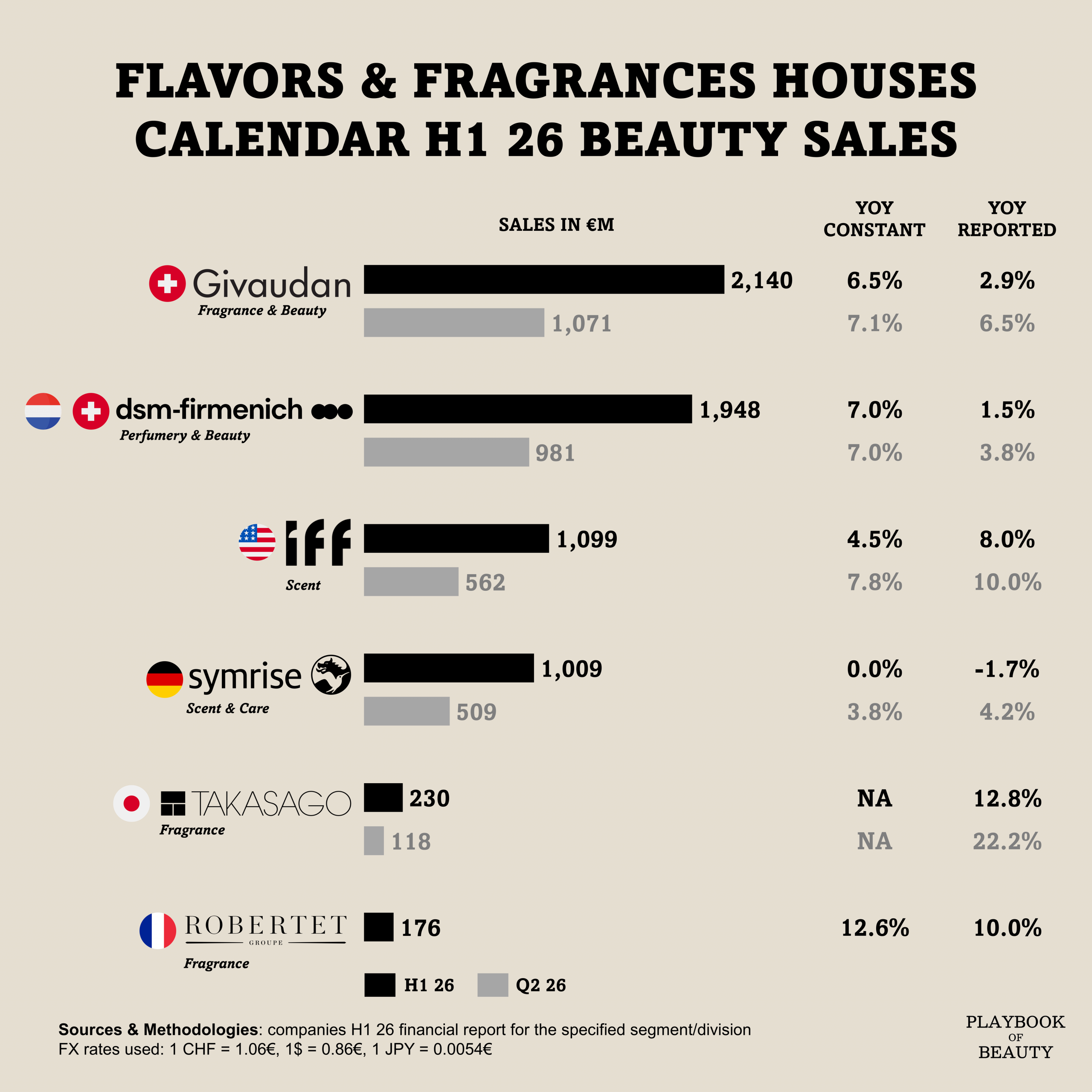
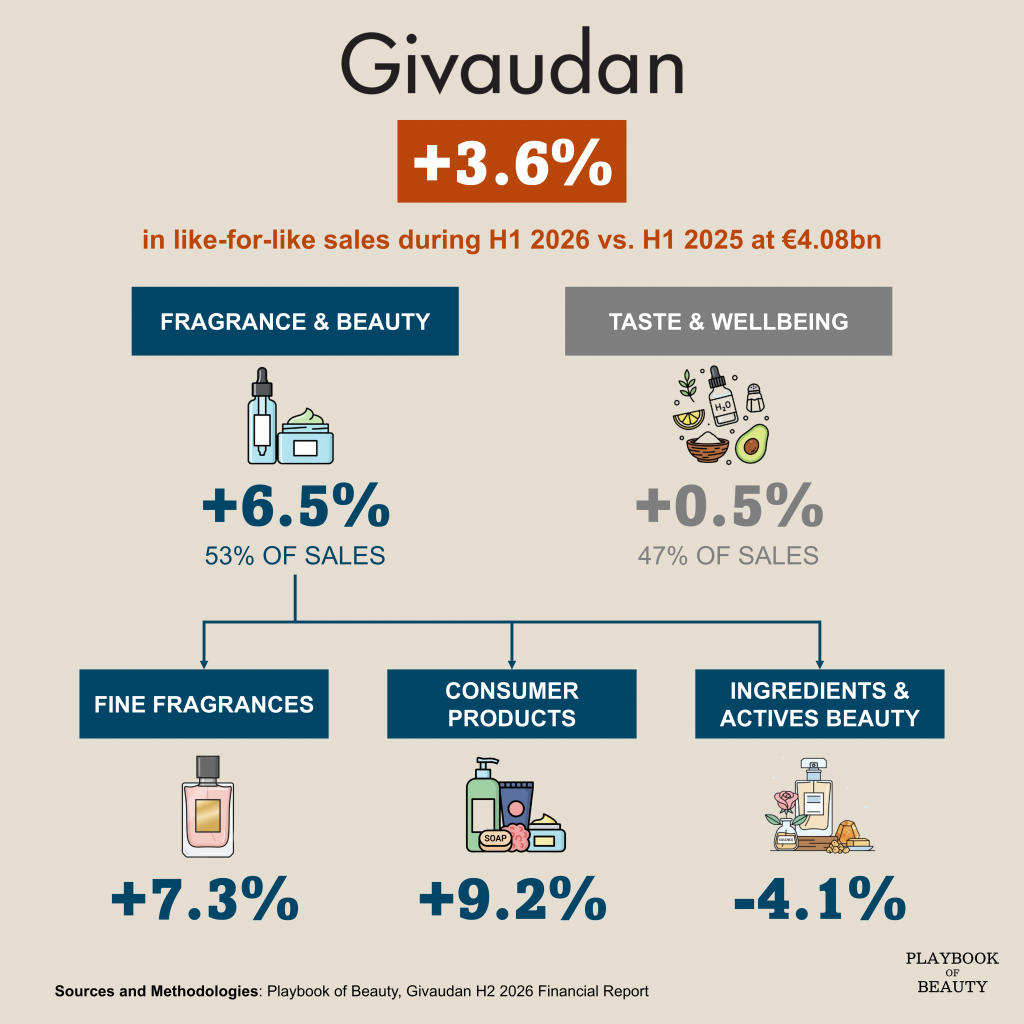
Givaudan Fragrance & Beauty division grew 5.9% organically to €1.1bn, driven by Fine Fragrance up 9.6% organic and Consumer Products up 7.8% organic. The drag came from Fragrance Ingredients and Active Beauty, down 5.9% organic, partly reflecting an inventory correction cycle following a strong 2025.
DSM-Firmenich was the standout performer at 8% organic growth in Perfumery & Beauty sales reaching €967m, fully volume-driven, with Fine Fragrances posting strong organic double-digit growth and Consumer Fragrances high single-digits. This performance was partly attributed to customers front-loading orders in March ahead of anticipated Middle East supply disruptions.
IFF’s Scent segment grew only 1% on an organic basis to €561m, with Consumer and Fine Fragrances growing but offset by a decline in Fragrance Ingredients and unfavorable price-to-input-cost dynamics compressing adjusted EBITDA margin to 22.7%.
Symrise was the weakest, with its Scent & Care segment down 3.4% organically to €500m, as a low-double-digit decline in UV filters and a mid-single-digit drop in Aroma Molecules more than offset low-single-digit growth in its Fragrance Division.
Takasago, the Japanese house whose fiscal year ends in March, reported 4.2% growth on a reported basis for calendar Q1 2026, though organic growth was likely lower given the meaningful depreciation of the yen over the period making it difficult to draw a clean read-across to the rest of the peer group.
For me three patterns stand out across the results. First, Fine Fragrance is consistently the fastest-growing subcategory at every house that reports it: Givaudan at +9.6%, DSM-Firmenich at double-digit which mirrors what brands like Amouage (+66% full year 2025) and the broader prestige fragrance market reported through Q1. Second, Fragrance Ingredients is a weak spot across the board, suggesting that the inventory overhang from the post-pandemic restocking cycle has not fully cleared. Third, the Middle East situation introduced a variable that distorted the quarter in both directions: Symrise flagged it as a headwind via supply chain costs, while DSM-Firmenich benefited from accelerated ordering ahead of expected disruptions. For the remainder of 2026, the fragrance ingredient weakness is the clearest risk: if brands pull back on new launches in response to geopolitical uncertainty, order flow to the ingredient houses will feel it before the retail numbers do.