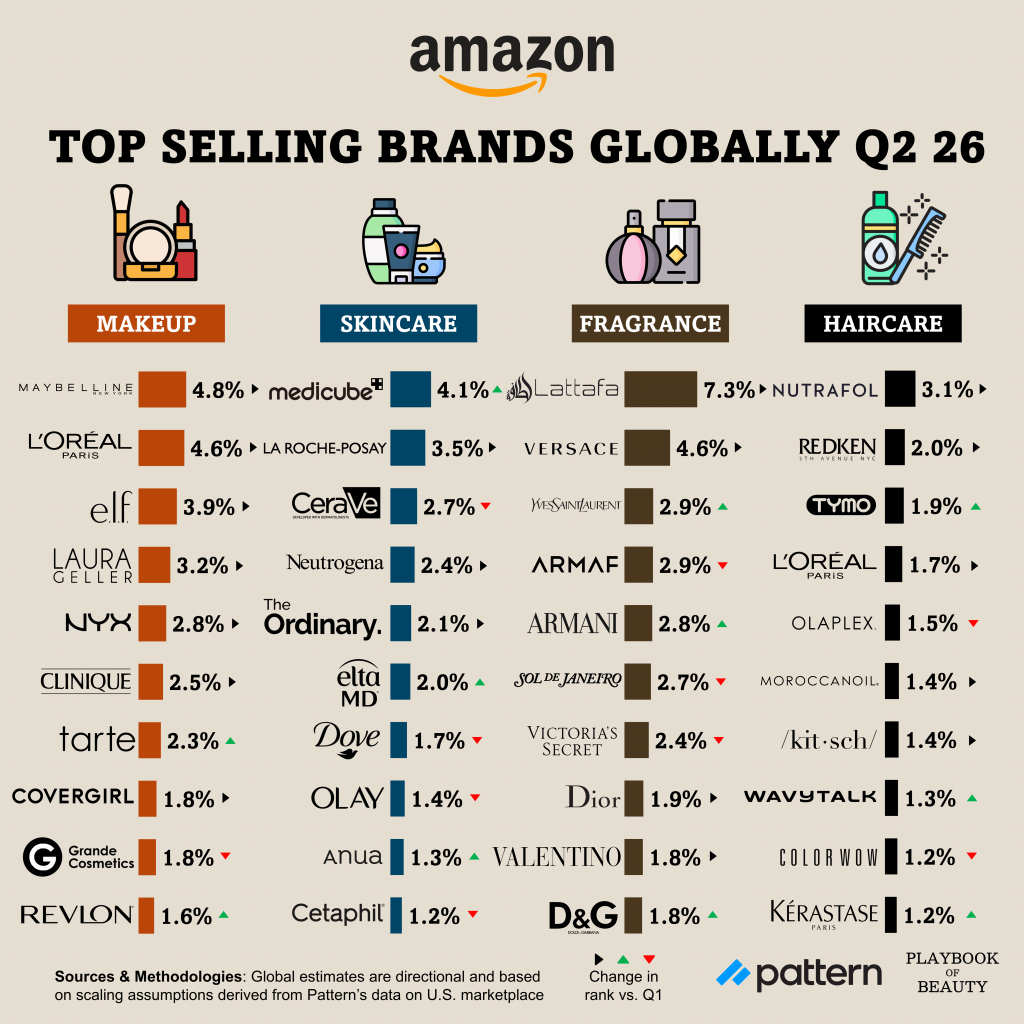
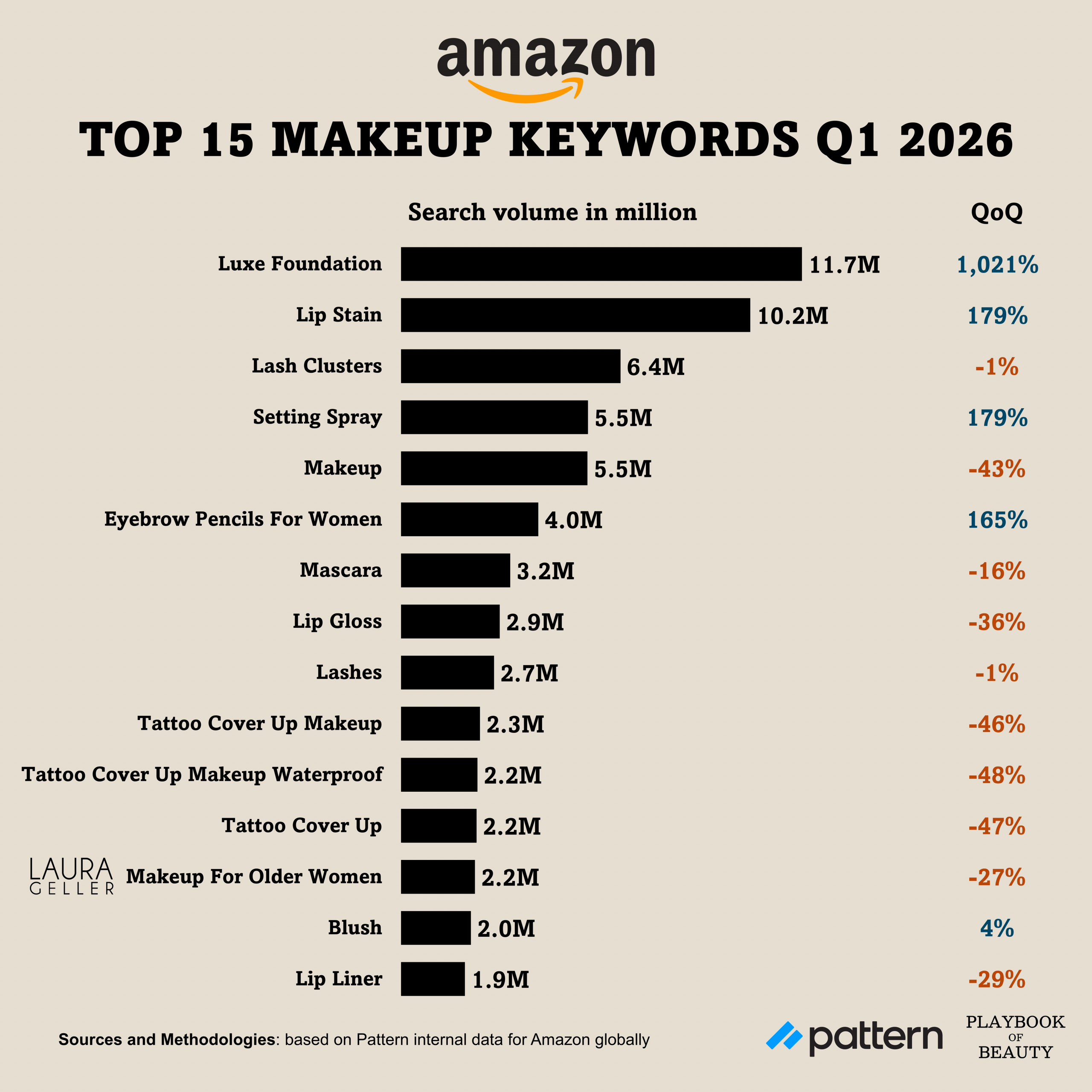
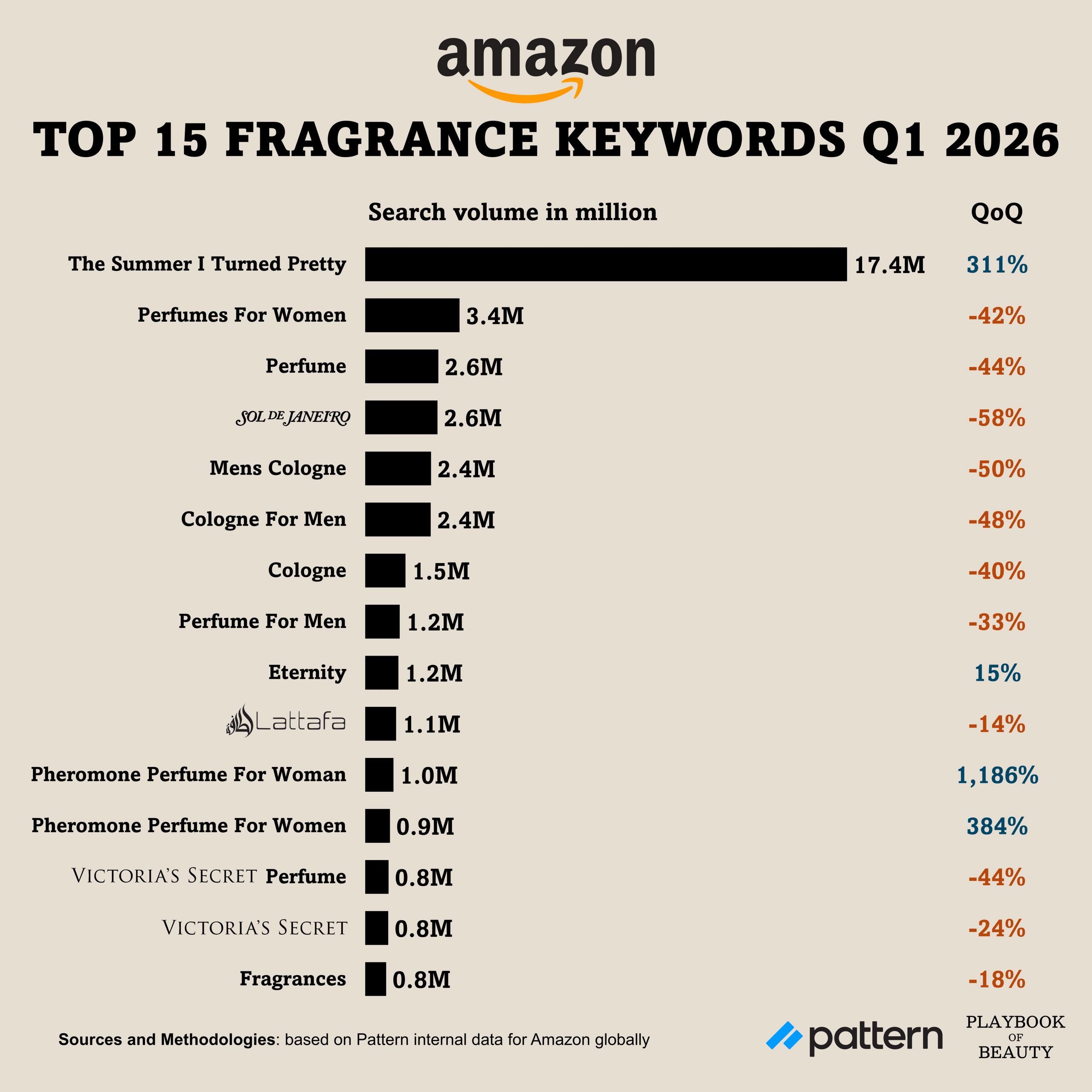
Data from Pattern®, the leading global e-commerce accelerator, provides a comprehensive view of the top selling beauty brands on Amazon in the first quarter of 2026. My findings, derived from Pattern’s data, reveal a period defined by significant consolidation in cosmetics and a strategic pivot toward clinical efficacy and value-driven alternatives in skincare and fragrance.
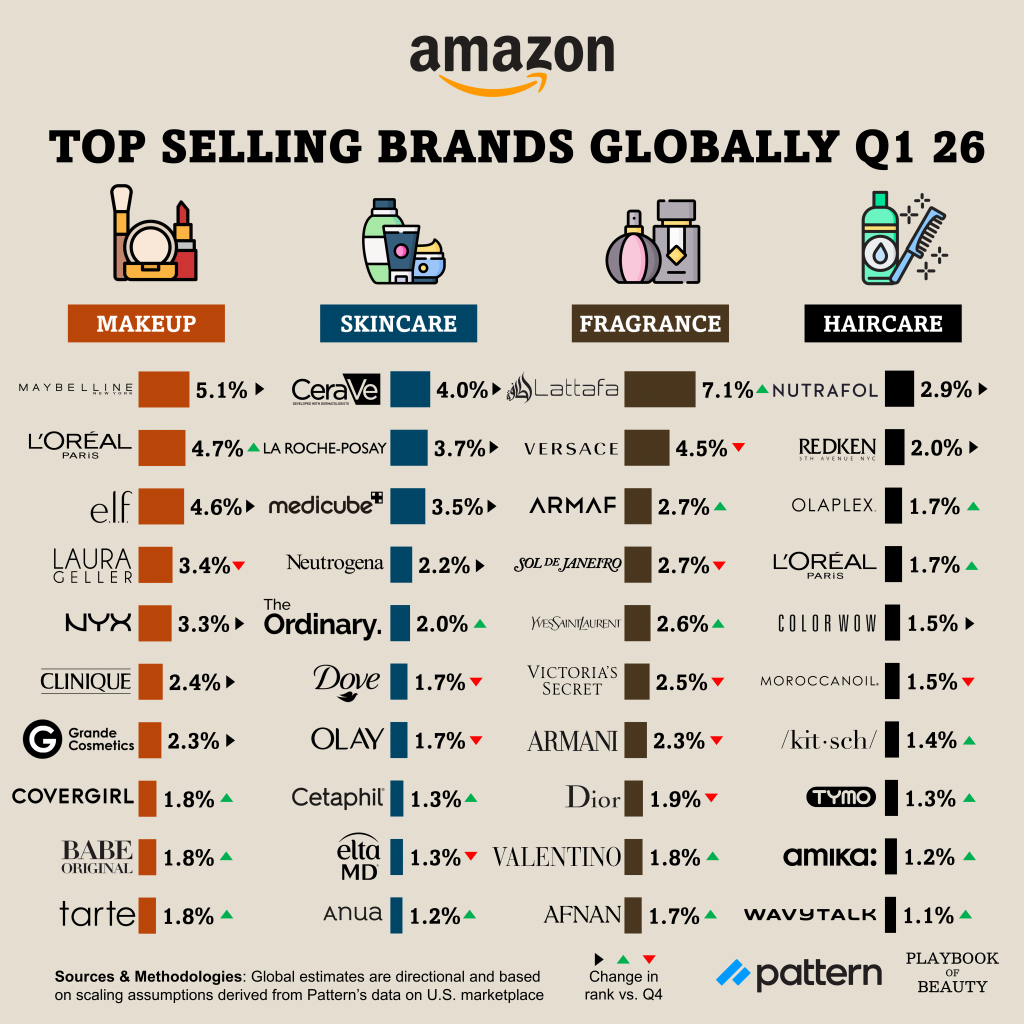
In makeup, the top ten brands concentrated 31.4% of category sales, up from 21.8% in Q4 2025. Every top eight player expanded its share. L’Oréal Paris nearly doubled its share versus the prior quarter, displacing Laura Geller for second place. At the bottom, tarte and Babe Original entered the top ten, replacing Revlon and Grande Cosmetics.
Skincare’s top three remained unchanged, but growth rates signal a coming shift. Medicube gained 1.2 percentage points of market share, far outpacing La Roche-Posay (+0.5 pts) and CeraVe (+0.1 pt). As such, I believe that Medicube is on track to become Amazon’s top skincare brand by mid-2026.
The Ordinary gained 0.6 pts, while most other brands held steady. Finally Anua entered the ranking, replacing Eos, reinforcing the continued appeal of Korean clinical skincare.
Fragrance saw the most striking change. Middle Eastern dupe brands surged: Lataffa gained 2.4 pts in market share, moving from second to first, Armaf added 0.7 pts, climbing from sixth to third while Afnan entered the top ten. Nearly all legacy luxury brands lost share, with two exceptions: Saint Laurent (+0.6 pts) and Valentino (new entrant). Sol de Janeiro dropped 1.1 pts, falling from third to fourth. This shift can be attributed to an elevated comparison base: prestige fragrance overperformed in Q4 due to holiday gifting, and Q1 brought a normalisation toward value alternatives.
In haircare, Nutrafol and Redken held the top two positions despite Nutrafol losing 0.5 pts in market share. Olaplex posted the largest gain, up 0.6 pts, replacing Moroccanoil as number 3. Wavytalk, Amika and Tymo entered the top ten, displacing Shark, Dyson and Kérastase. Again, holiday seasonality explains the reversal: premium brands and high-end accessories overindexed in Q4 as gifts, while Q1 buyers switched to more affordable everyday options from Wavytalk and Tymo.