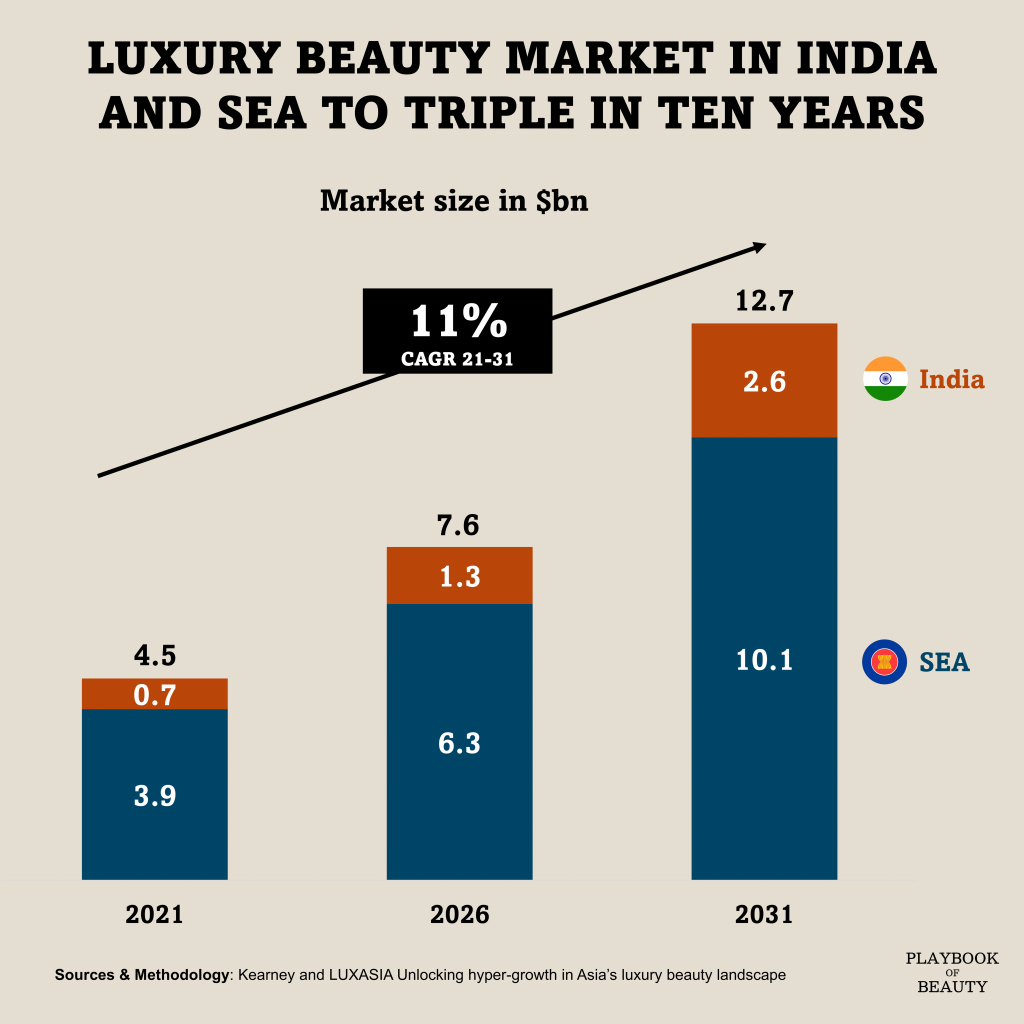
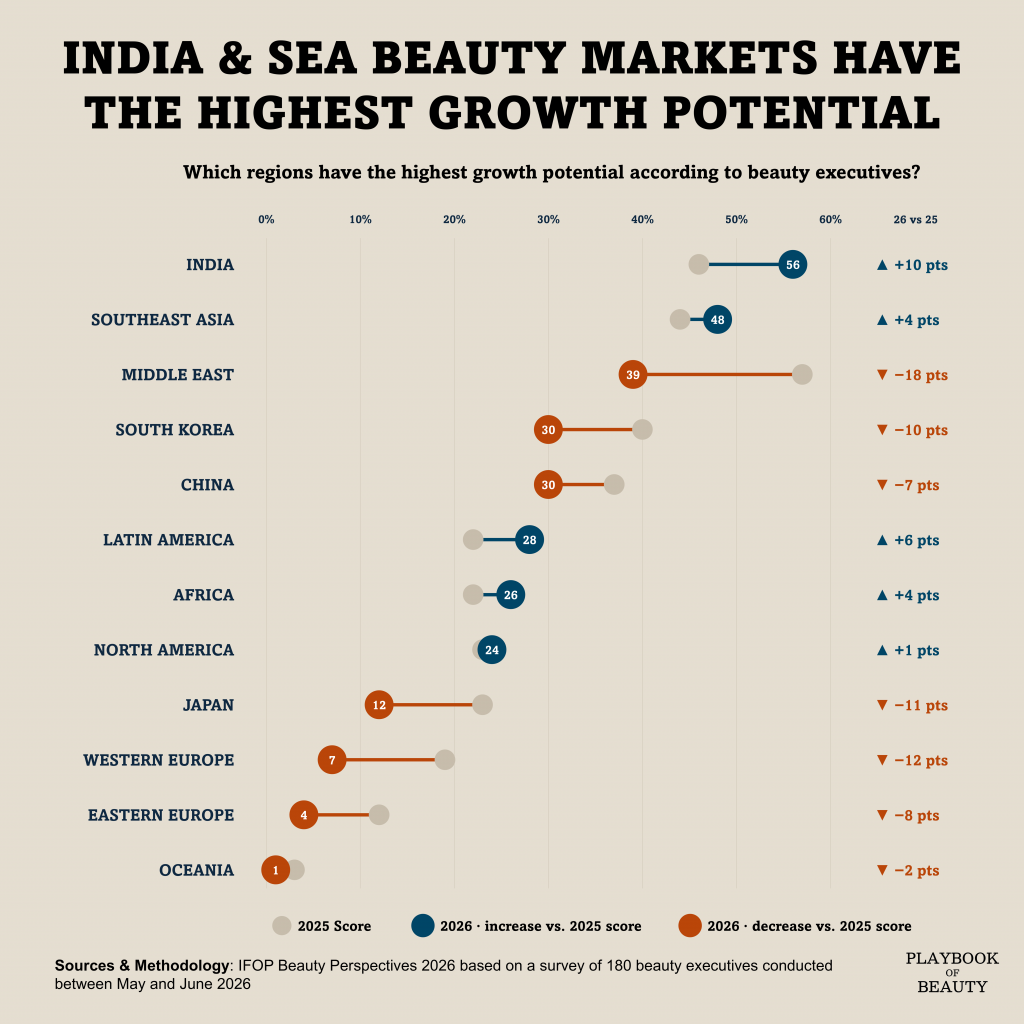
India’s beauty and personal care market is worth $27bn today. Flipkart in its 2026 InsightsOne’s Glam Up report projects it will reach $39bn by 2030, a nearly 10% growth per year making it one of the fastest growing beauty markets in the world. A survey of global beauty professionals published in the same report shows 78% of respondents named India the top global growth market, ahead of the Middle East at 68% and Latin America at 62%.
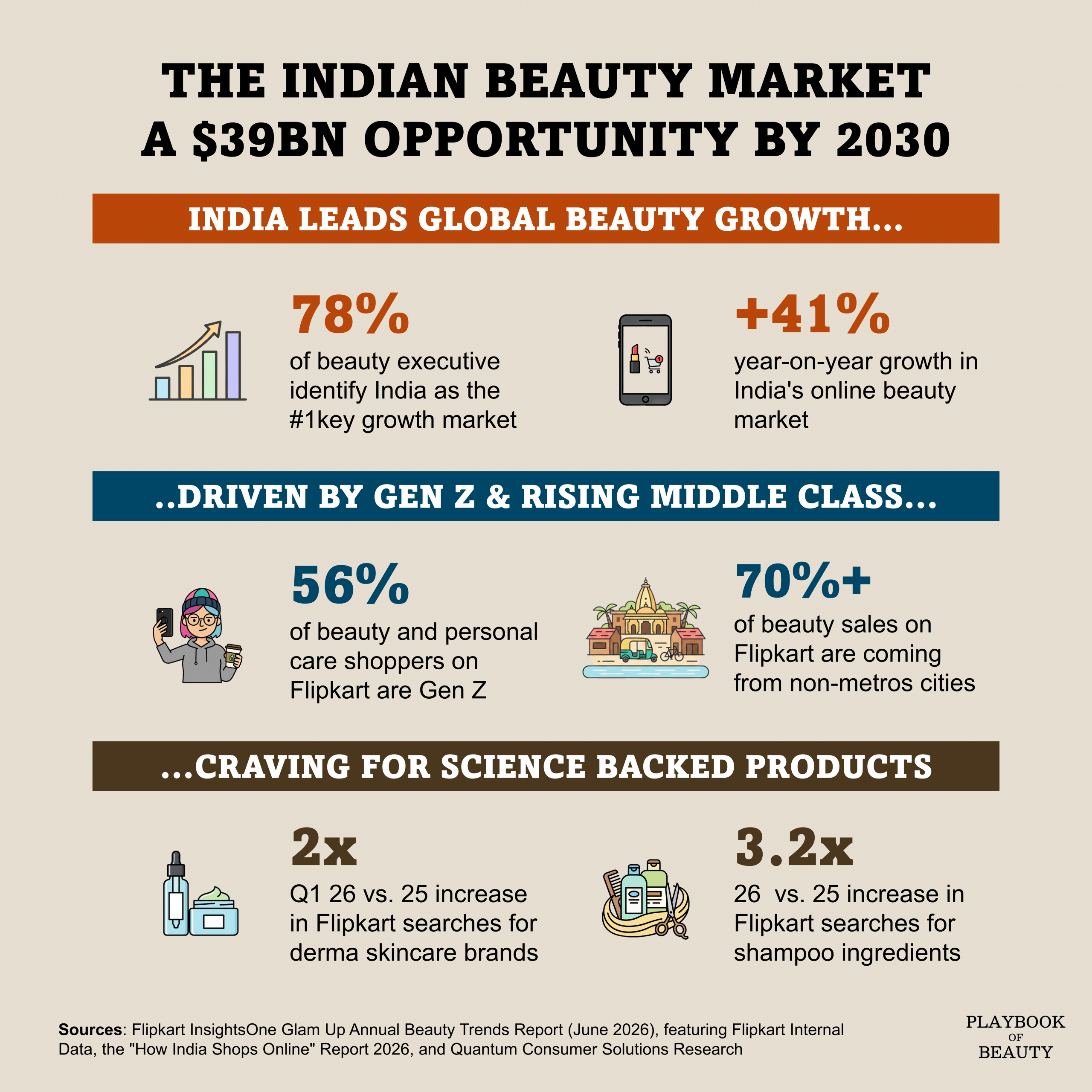
This growth has been driven by e-commerce with India’s e-commerce beauty sales growing 41% in 2025 vs. 18% globally while Indian offline retail sales grew just 5%.
In terms of customers profile, Gen Z accounts for more than half of active beauty and personal care buyers on Flipkart’s platform. At the same time, more than 70% of total sales on Flipkart are coming from customers from tier 2 and tier 3 cities, a sign of the importance of the rising middle class.
These consumers are not buying based on brand recognition alone and are becoming increasingly sophisticated and knowledgeable about ingredients. Searches for derma brands on Flipkart have doubled in Q1 26 vs. Q1 25 while searches for shampoos formulated with Biotin and Redensyl grew 3.2x year-on-year.
Flipkart also found that 97% of consumers are open to trying new brands, including D2C labels addressing specific regional concerns like hard-water damage or humidity. But pricing strategy matters. Trial packs priced between ₹200 ($2) and ₹400 ($4) are an effective lever for reaching middle-income buyers who are willing to experiment but still cautious about spending.
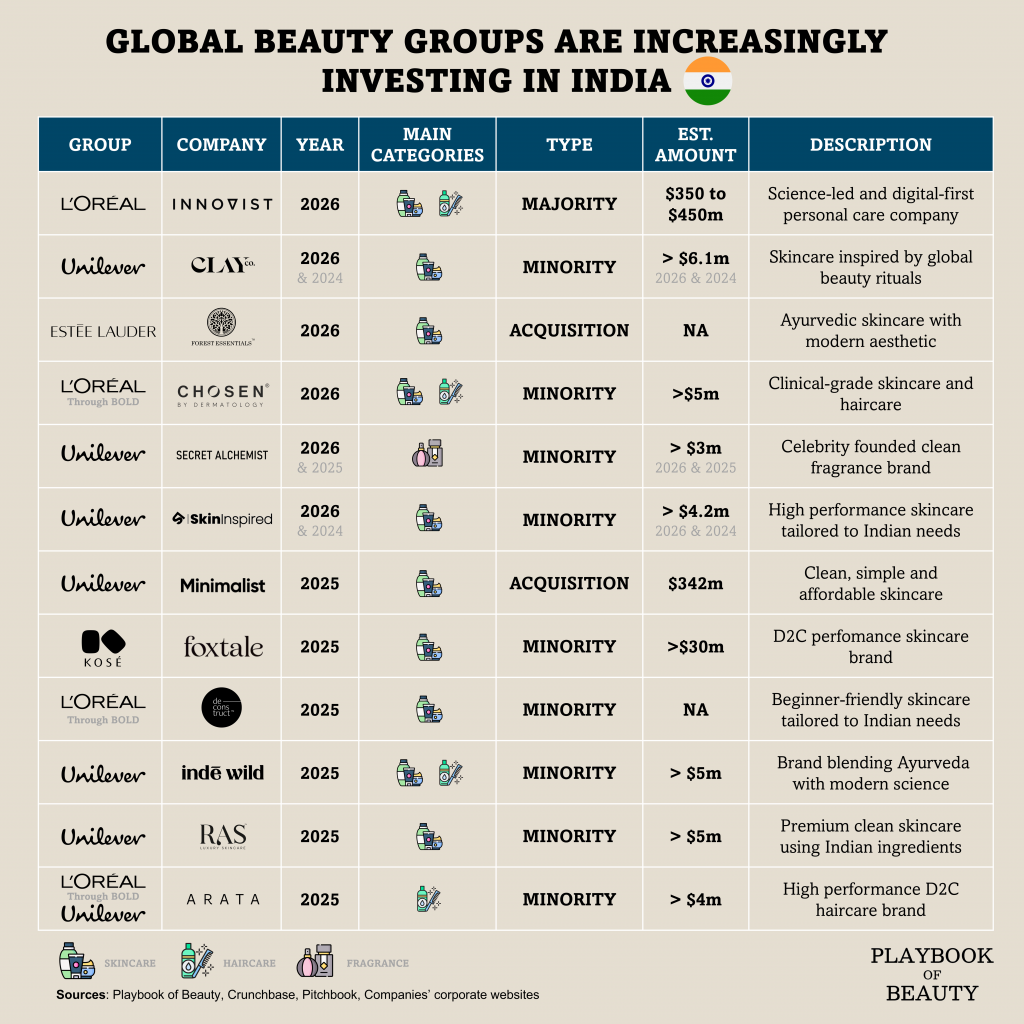
I believe the brands that will win in India are the ones willing to build for a consumer who is digitally native, geographically diverse, and more ingredient-literate than we might think. That’s why beauty groups are increasingly focusing on investing in and acquiring local brands rather than focusing on bringing their legacy brands to the market.