

According to iiMedia Research, the engine of the cosmetics market is the 26-40 demographic, which collectively accounts for 77.8% of consumption. Within this group, the 26-30 segment represents 41.0%, while the 31-40 bracket makes up 36.8%. These consumers prioritise functionality, ingredient safety and brand reputation. They select products that address daily skincare requirements or enhance professional presentation.
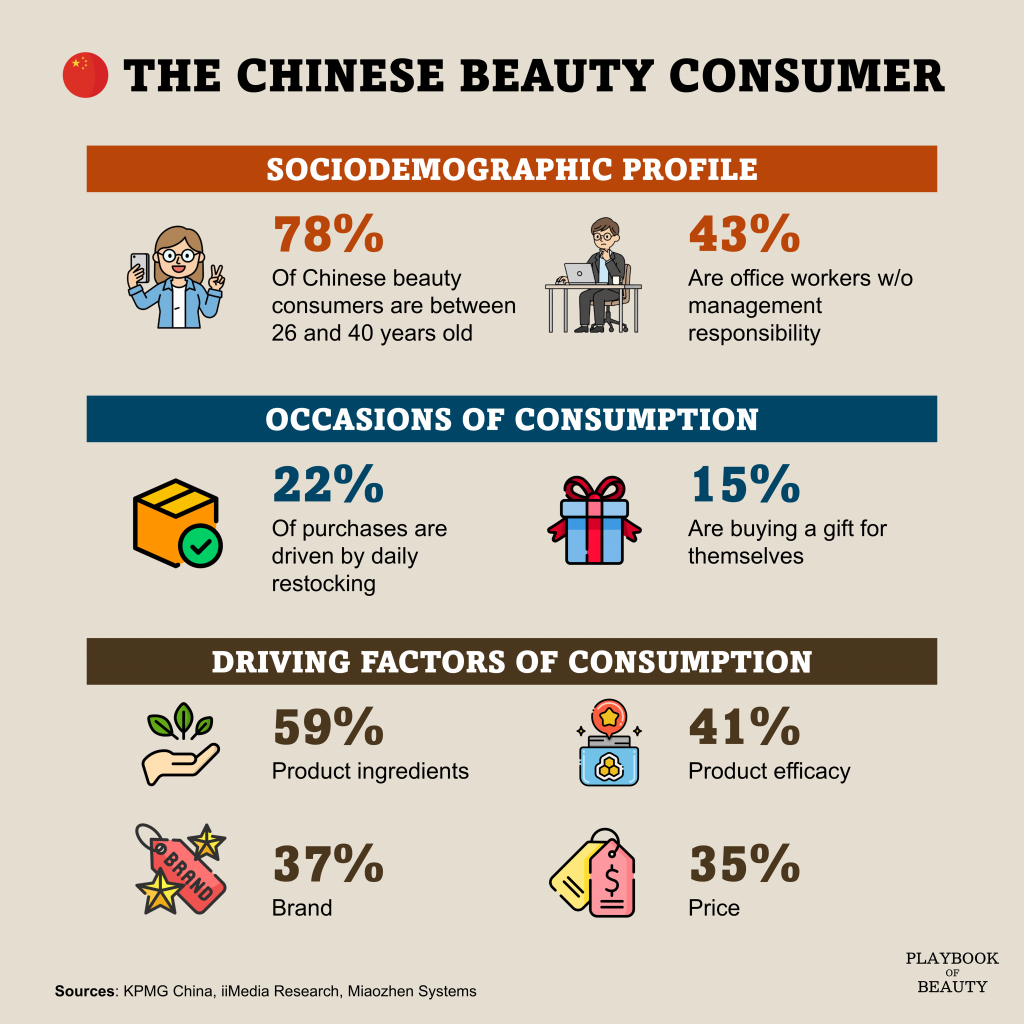
The 19-25 cohort contributes 11.6% of purchases. This younger group gravitates toward fashion-forward designs and emerging brands, valuing social currency and personalisation. At the other end, consumers over 40 account for 9.8% and typically seek established labels with proven anti-ageing or restorative benefits, prioritising long-term results.
Purchase triggers have shifted notably. Data from Miaozhen Systems shows that 78.2% of beauty transactions are now occasion-driven, while routine replenishment accounts for just 21.8%. Leading these triggers is “Buying a gift for myself” at 15.2%, underscoring the rise of self-reward as a motivation. “Workplace needs” follows at 11.4%, reflecting the role of image in professional mobility. Seasonal requirements, skin concerns and brand promotions also feature prominently, indicating that consumption is increasingly episodic rather than habitual.
When selecting products, ingredient composition tops the list of considerations at 58.8%, according to iiMedia Research. Efficacy follows at 41.4%, demonstrating that safety and results are non-negotiable. Brand reputation (37.0%), price (35.4%) and product size (34.2%) form the next tier of priorities, suggesting a balancing act between quality and value. Packaging design (33.0%) and peer reviews (32.1%) provide additional reassurance. Notably, promotions (17.0%) and trial experiences (17.6%) rank lowest, implying that discounts alone no longer drive decisions in this sophisticated market.