
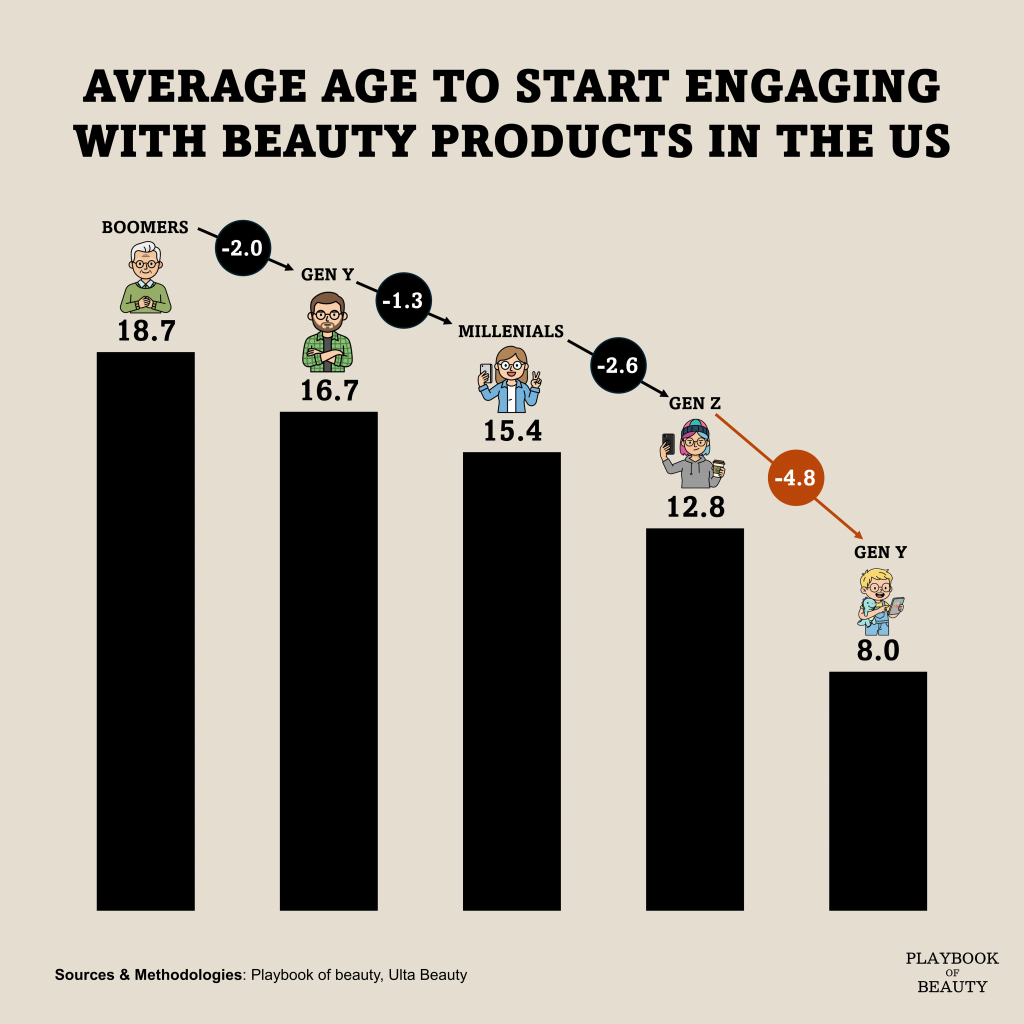
Data published by Ulta reveals consumers are engaging with beauty at an increasingly young age. The average starting age to use beauty products has plummeted from 18.7 for Boomers to just 8 years old for Gen Alpha. This represents a near five-year decline from Gen Z’s starting point of 12.8, a shift largely fuelled by social media.
But Gen Alpha, the demographic born from 2013 onward, are not only adopting beauty routines earlier but are reshaping the consumer landscape and influencing the decisions of their households. Estimates from firms like DKC suggest they already wield significant spending power at $100bn, projected to reach $5.5 trillion globally by 2029.
To conquer this new customer cohort brands need to see them as collaborative partners rather than passive consumers as younger generations expect to participate in marketing and co-create with the brands. Brands like e.l.f. have understood this this by leveraging the game Roblox and product feedback loops, turning engagement into collaboration.
However, brands need to be careful. The same social media engine driving demand has triggered a regulatory and parental backlash against premature commercialization. Governments are proposing age restrictions for social media, while platforms like Pinterest have limited sharing features for teens. Parents, particularly digitally fluent millennials and Gen Z, are enforcing stricter screen-time limits and seeking healthier habits for their children.
But this means that Gen Alpha is also showing a renewed appetite for tangible, sensory experiences and IRL interactions, as seen in data from GWI highlighting a rise in cinema visits and physical toy demand.
I reckon brands who want to capitalize on this market need a dual approach. They must develop age-appropriate, ethically positioned products with clear ingredient transparency. Missteps can lead to significant backlash, as witnessed with earlier “Sephora kids” phenomena. In parralel, marketing must go beyond digital feeds into communal, real-world moments and value-driven narratives. Gen Alpha is growing up immersed in secondhand economies and has a keen eye for brand authenticity and storytelling. The brands that will resonate are those that engage this generation as active participants, building trust within both digital and physical communities they are helping to shape