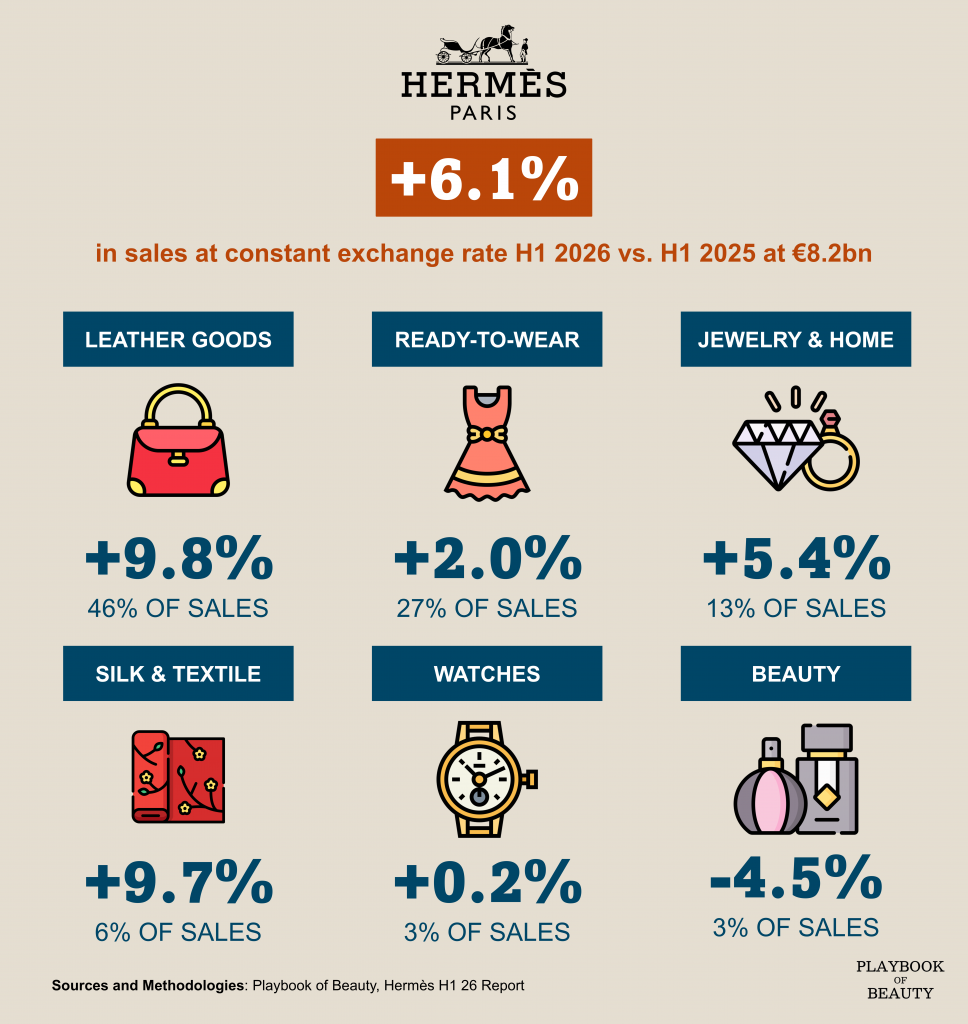
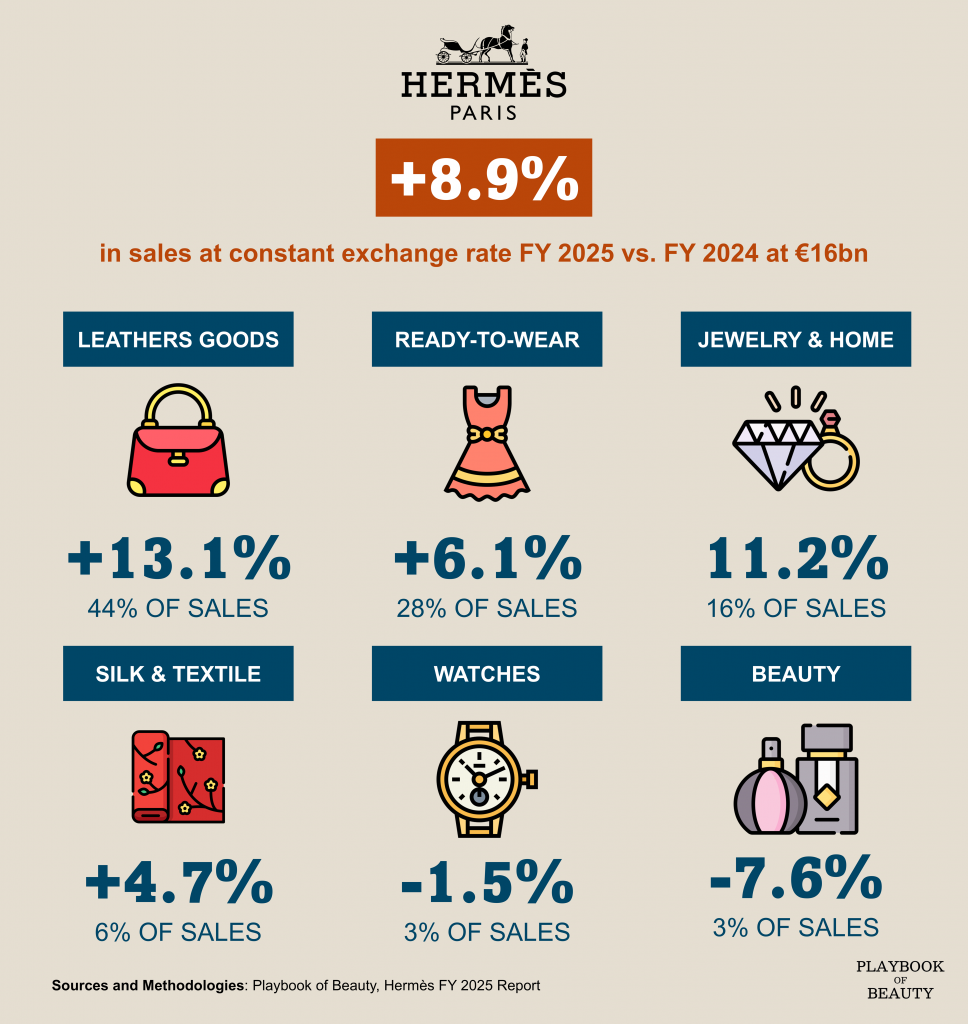
Hermès opened its 2026 fiscal year with a performance that will test the patience of shareholders accustomed to the group’s unassailable trajectory with shares down 14% at the open on April 15th.
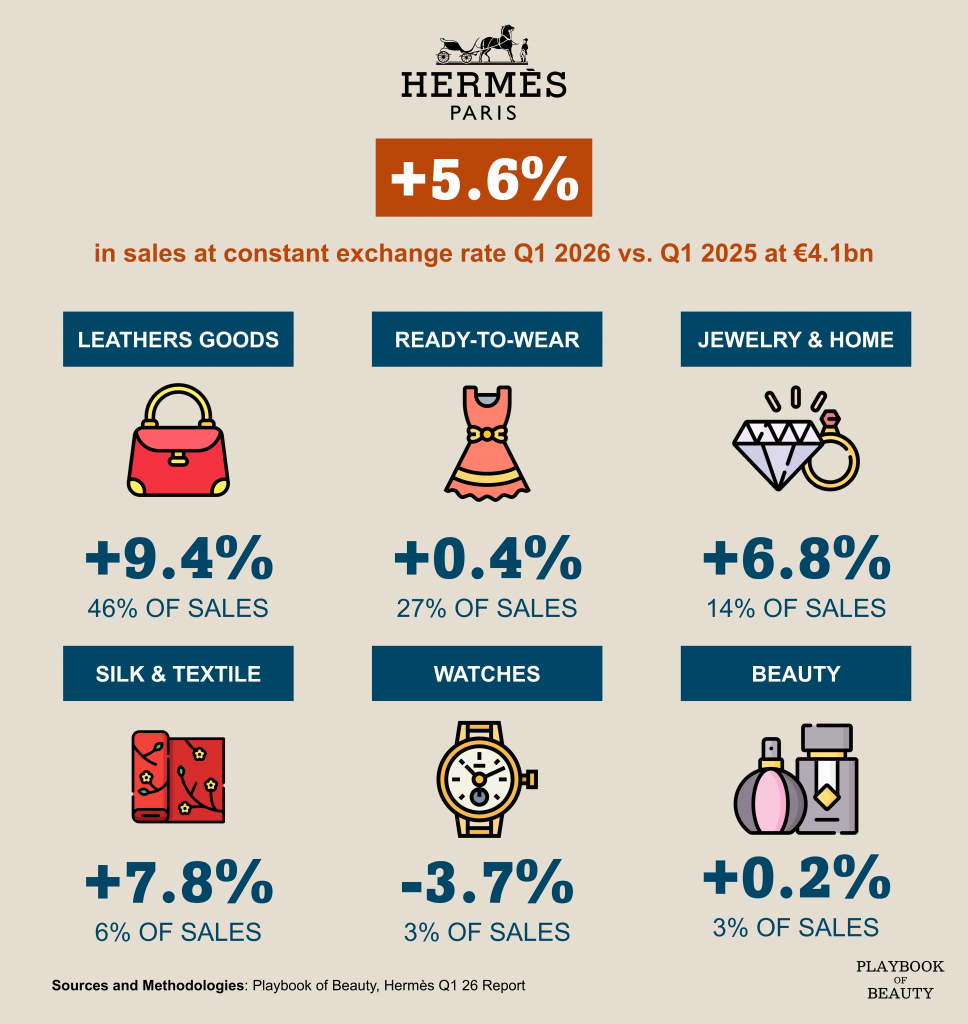
First-quarter revenue landed at €4.07 billion, a contraction of 1.4 % on a reported basis but a growth of 5.6% at constant exchange rates, fueled by double-digit momentum across the Americas, Japan, and Europe excluding France.
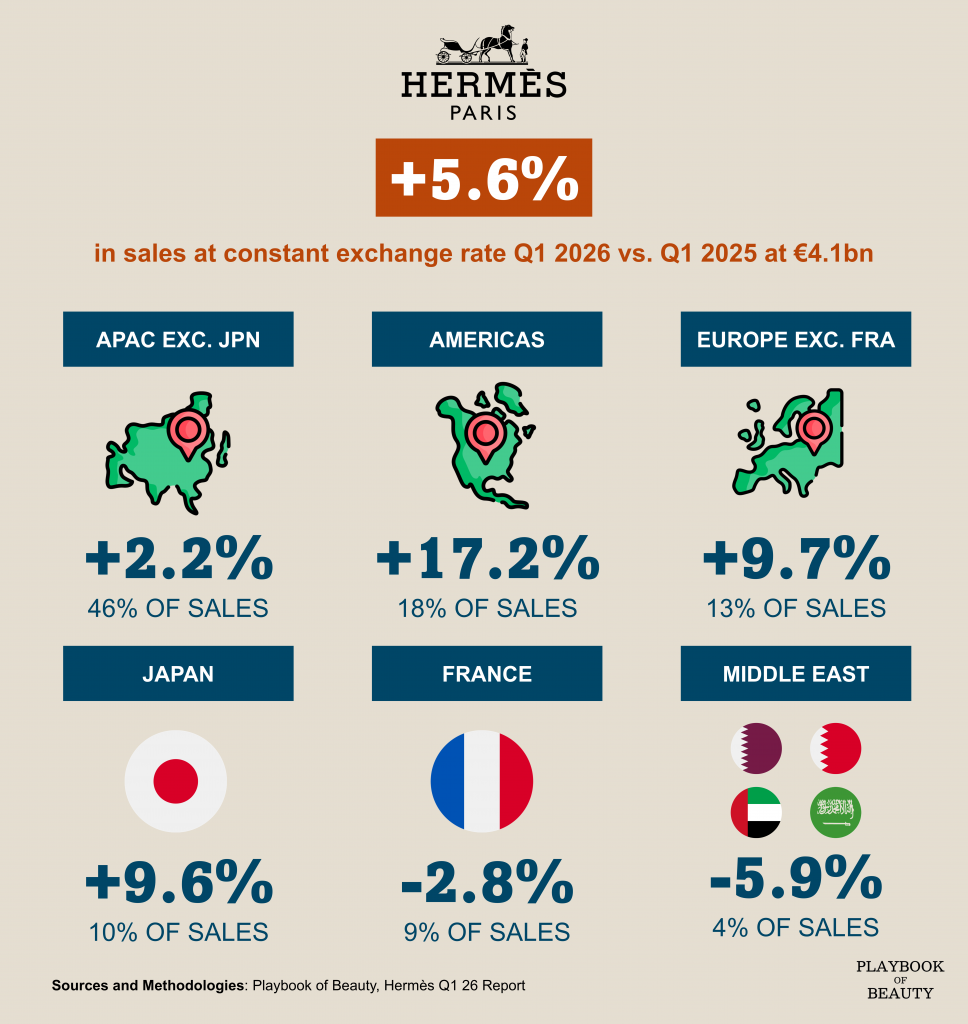
But the Iranian conflict has materially disrupted sales in the Middle East (-5.9%) and dampened luxury footfall in London and Paris, two cities where the absence of high-spending international travelers cannot be easily offset by local demand with sales in France down 2.8%.
The group’s structural reliance on its core métiers still remained a bulwark. The Leather Goods and Saddlery division grew 9.4% at constant rates, a performance not driven by novelty but by the durable desirability of classic shapes and the steady cadence of new production capacity. Silk and Textiles followed with an 7.8% rise, while the broader category encompassing Jewelry and Home posted a 6.8% gain. Ready-to-Wear and Accessories remained flat, whilethe Watch division recorded a 3.7% percent decline, underscoring the vulnerability of secondary categories.
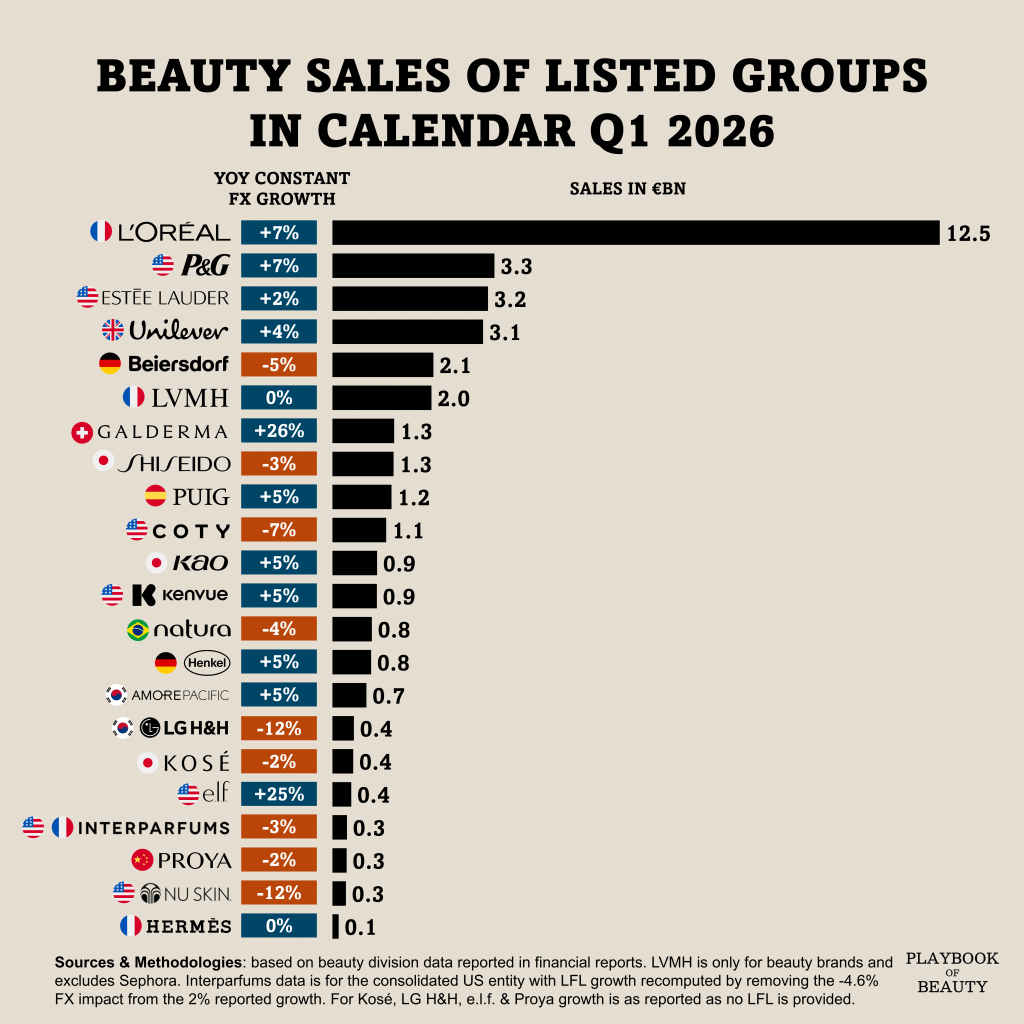
This brings us to the Perfume and Beauty métier, where the top line was stable despite multiple activations. In January, Hermès Beauty introduced Plein Air, its first complexion product, a foundation presented in a nuanced palette of 34 shades. February saw the addition of Musc Pallida to the exclusive Hermessence collection, followed by the expansion of the Jardin line with a seventh iteration: Un Jardin sous la mer. The scent aligns with the house’s annual theme of unexpected discovery, translating aquatic depth into olfactory form without resorting to the obvious clichés of marine fragrance.
While the market fixates on the immediate impact of war and tourism shortfalls, I believe the long arc of Hermès remains one of patient, unyielding endurance.