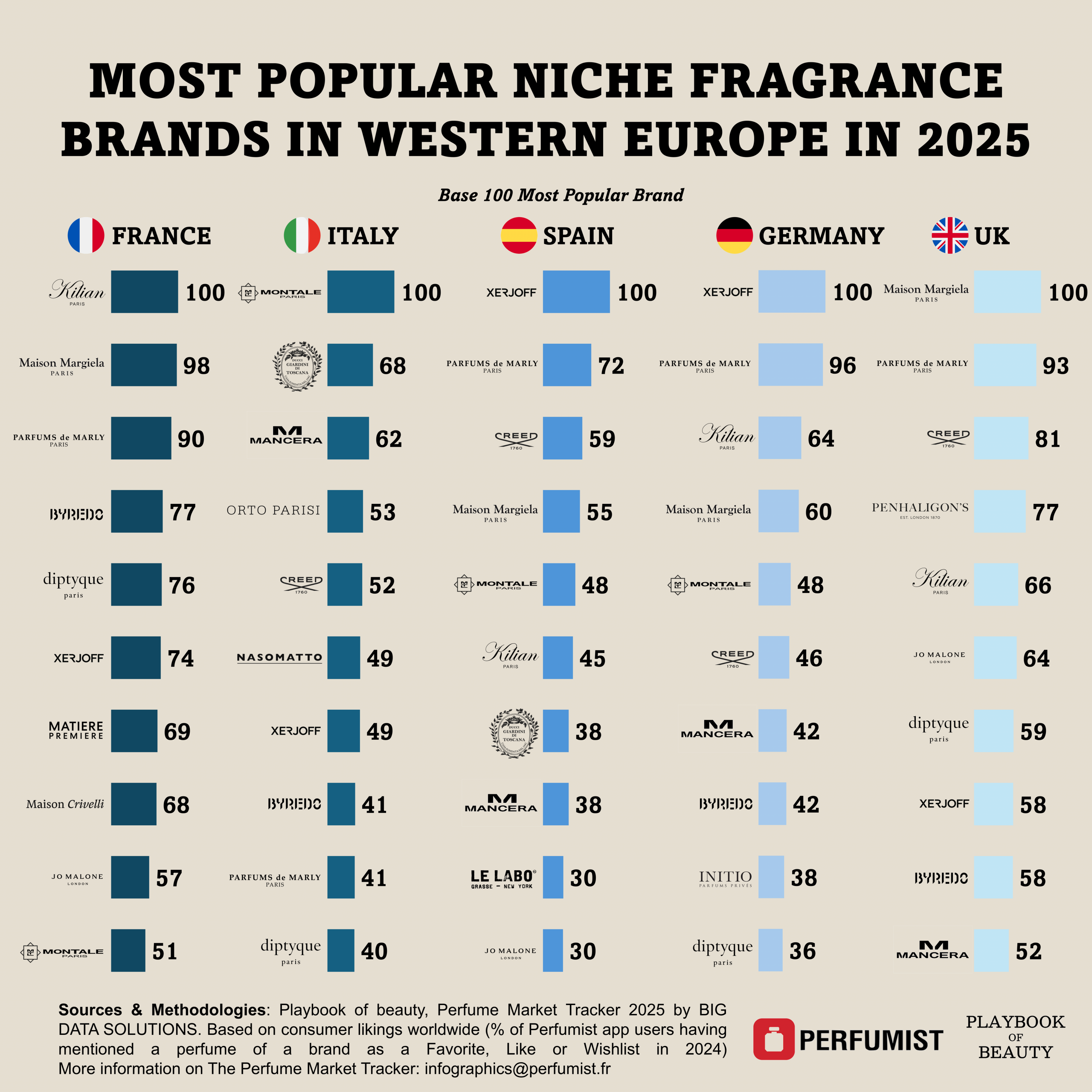
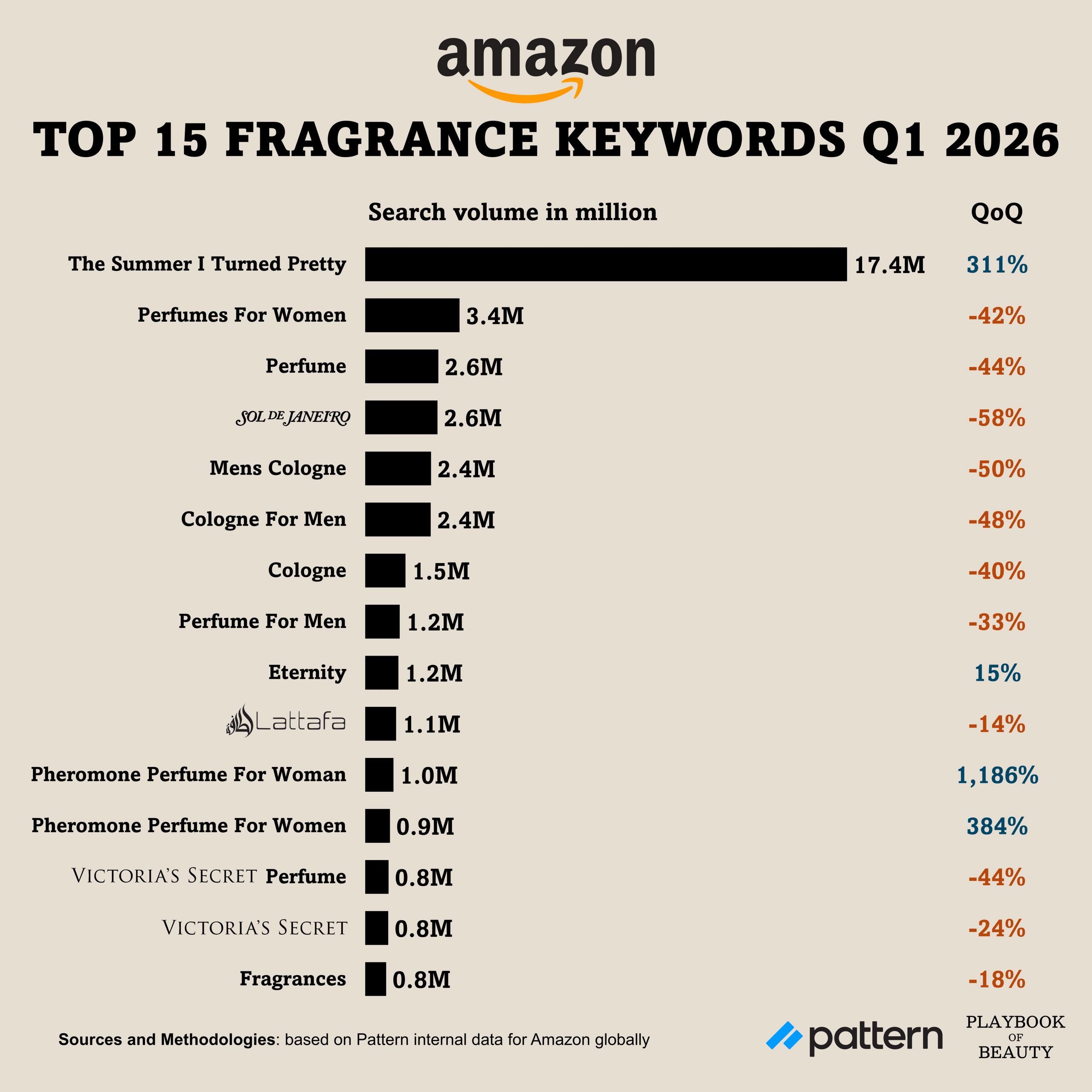
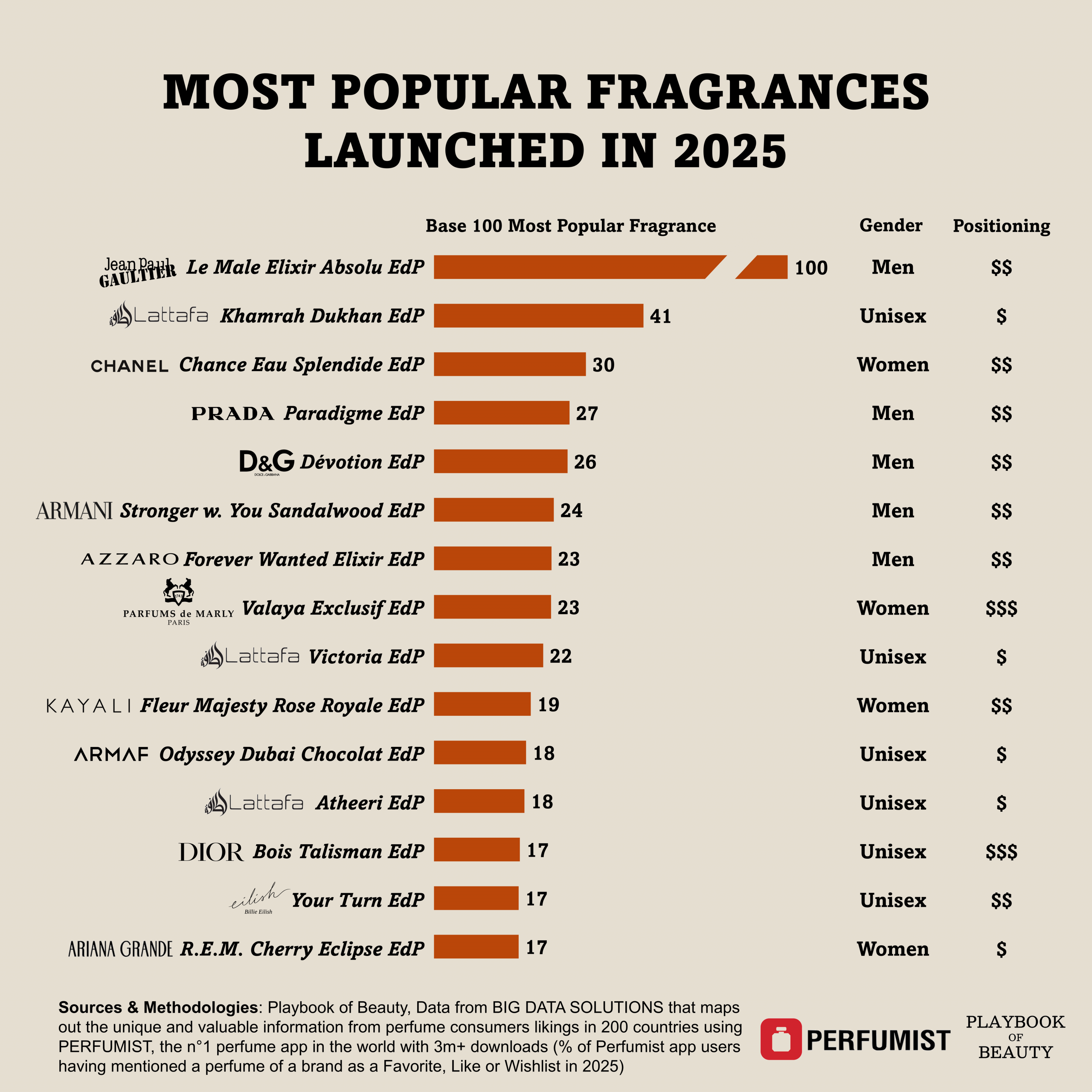
Data from Perfumist, an app tracking perfume preferences more than 3m consumers worldwide, shows which were the favourite perfume brands of Europeans last year. A rapid glance at the ranking could suggest a unified market dominated by legacy brands. Yet, when going deeper into the data across France, Italy, Spain, Germany, and the UK there are some structural differences. We are witnessing a fracturing of brand equity, driven by macroeconomic pressures, digital virality, and a shift in how evolving markets perceive luxury.
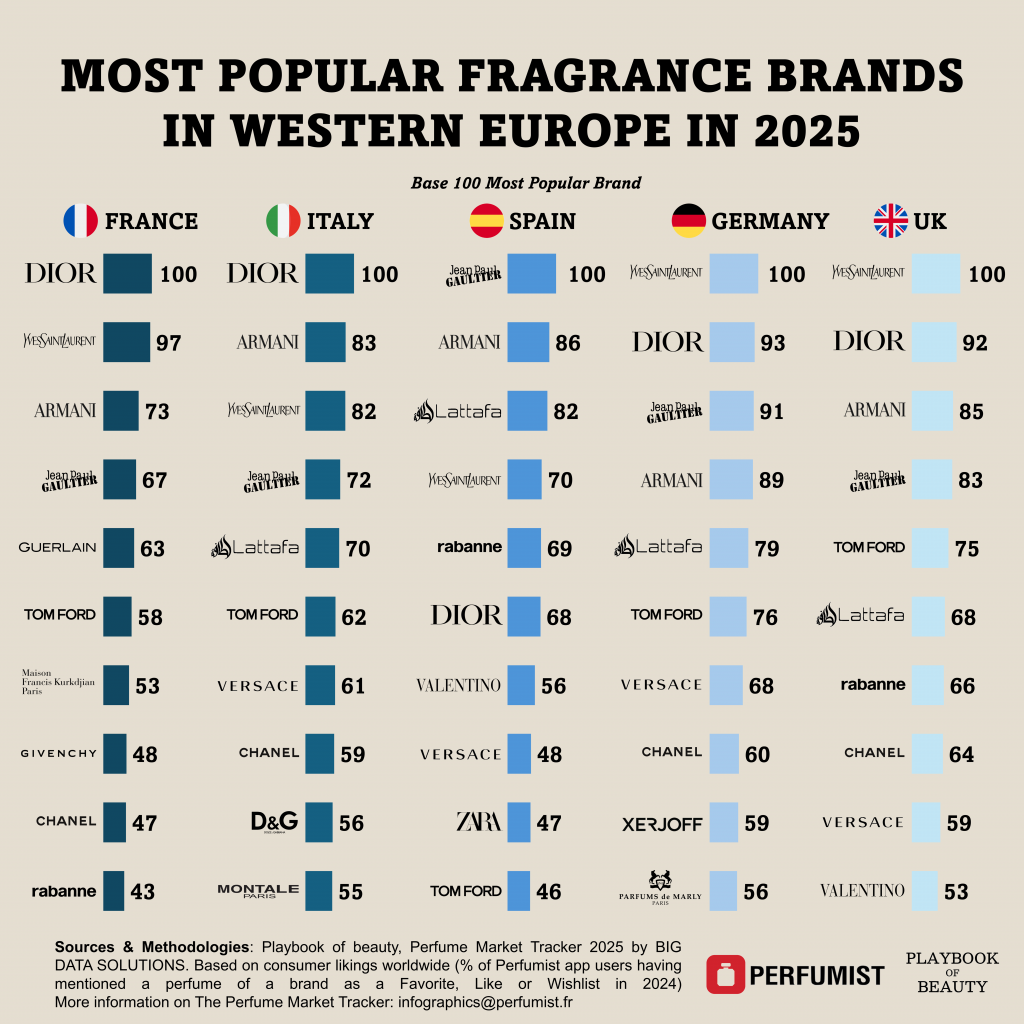
France remains a market of “luxury purist”. Heritage brands like Dior and Yves Saint Laurent command the brand index, while luxury niche perfumes Maison Francis Kurkdjian’s Grand Soir and Kilian’s Angels’ Share were the top two favourite perfumes of consumers in 2025. That signals a consumer base that views fragrance as a high-value, artisanal investment partially immune to mass-market trends.
Conversely in Germany and Spain, consumers are challenging the traditional designer monopoly. Lattafa now ranks as the third most popular brand in Spain, outpacing heritage houses like Rabanne, and Zara ranks number 9. In Germany, while Lattafa ranks number 5 as a brand, Lattafa’s Khamrah was the number one perfume in Germany in 2025. This signals a more pragmatic, value-conscious consumer base.
Italy and the UK are in the middle ground. Italy blends loyalty to the large legacy brends like Dior with a love for local sensations, evidenced by Giardini Di Toscana’s Bianco Latte taking the number one fragrance spot in Italy in 2025. On a macro level, the British market remains a stronghold for legacy brands, with Yves Saint Laurent and Dior occupying the top spots of the ranking. However, product-level data reveals a consumer base influenced by social media momentum. Giorgio Armani’s Stronger With You Intensely, holds the number one position while the broader top ten is composed of brands that have been relying on social media virality like Carolina Herrera’s Good Girl or Lattafa’s Khamrah which holds the fourth position.
Despite this fragmentation in brand loyalty, there is a relative homogenization in scent preferences in the five countries with a “gourmandization” and warming of the European scent profile heavily favoring sweet, resinous, and tenacious compositions. Vanilla and Musk are the top notes in all markets, while Woody and Oriental fragrance families have dethroned traditional Florals in Italy, Spain, and Germany.