Spate recently published data about the most popular fragrance trends on social media in 2025 and there are for me three key insights that emerge.
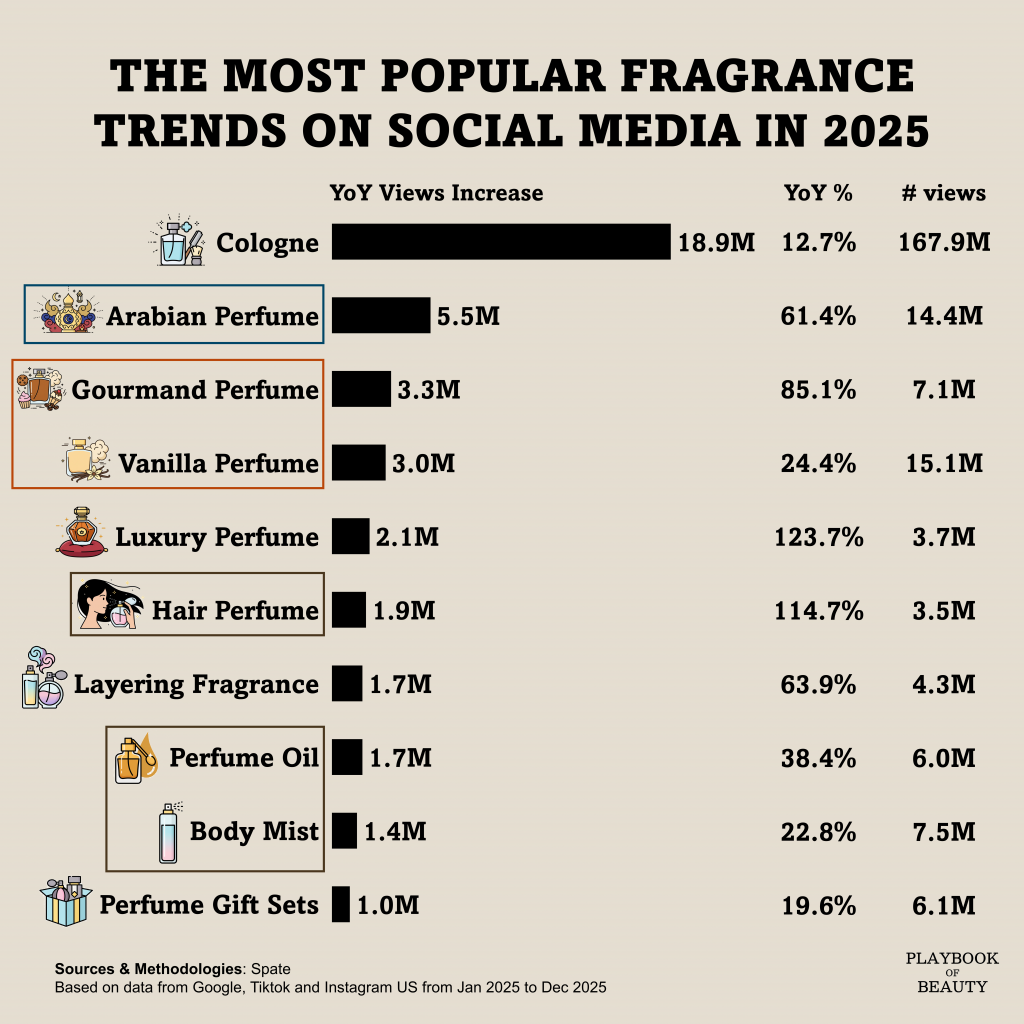
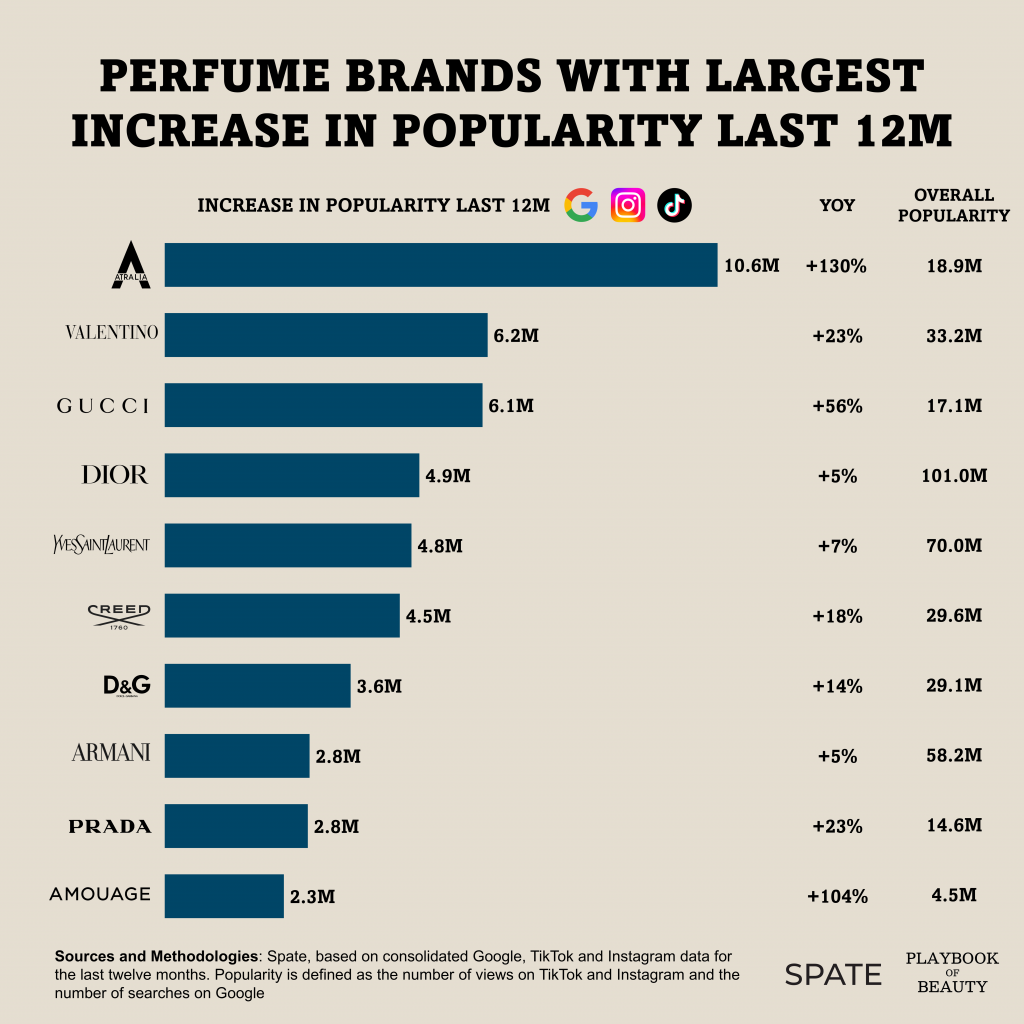
The first is the rise of Middle Eastern perfume. The Middle East has transformed from a major consumer of fragrance to a global exporter. Between 2014 and 2025, the UAE went from the tenth to the third largest perfume exporter in the world, behind only France and Spain, with exports reaching nearly $3bn. And this success spans all price points. In the mass market, Latafa was the number two best-selling brand on Amazon in Q4 according to data from Pattern®. In the premium space, Huda Beauty was the number one brand at Sephora in the US based on customer review data from customer reviews analytic firm rAIviews. And in luxury, the Omani brand Amouage has seen a staggering 30% annual growth over the last five years.
The second trend is the rise of the gourmand category that has gone from a niche that began with Mugler’s Angel three decades ago to the top trending scent profile. The scent palette has expanded beyond European patisserie references to include rice, sesame, and tropical. This broadening coincides with a curious cultural shift: the rise of ‘scent snacking,’ where consumers use sweet fragrances to satisfy cravings without calories. The parallel adoption of GLP-1 medications may be accelerating this behaviour, as these drugs alter reward pathways and intensify scent perception. Gourmand has thus transformed from simple indulgence into a coping mechanism.
Finally, the third trend is a boom in fragrance ‘entry points’: hair perfumes, perfume oils, and body mists. These products are becoming incredibly popular as a more accessible way for consumers, especially younger ones, to engage with the category. This helped drive 15% growth in the US mass-market fragrance segment last year, according to Circana, a trend that should continue in 2026.