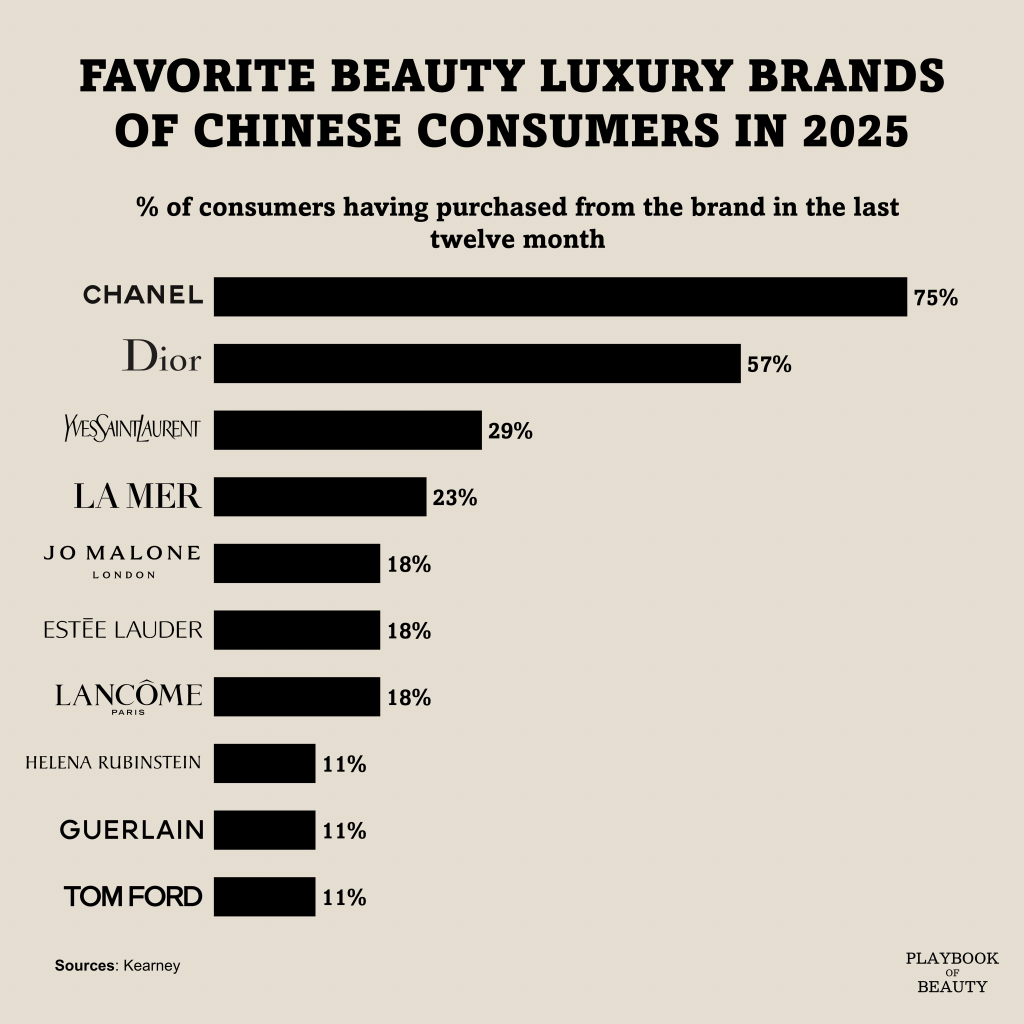
After two years of contraction, Chinese consumption of luxury goods appears to be recovering. According to Oliver Wyman, a net 31% of Chinese consumers are willing to spend more on personal luxury goods in 2026, compared to a net contraction of -6% in 2025 and -2% in 2024. This evolution comes improving consumer confidence, favorable domestic policies, and a growing middle class directing more spending back to the mainland. Major luxury houses are already betting on China recovery with LVMH opening flagships for Louis Vuitton, Dior, and Tiffany & Co. in Beijing’s Sanlitun, and Hermès preparing new locations in Chengdu and Beijing.
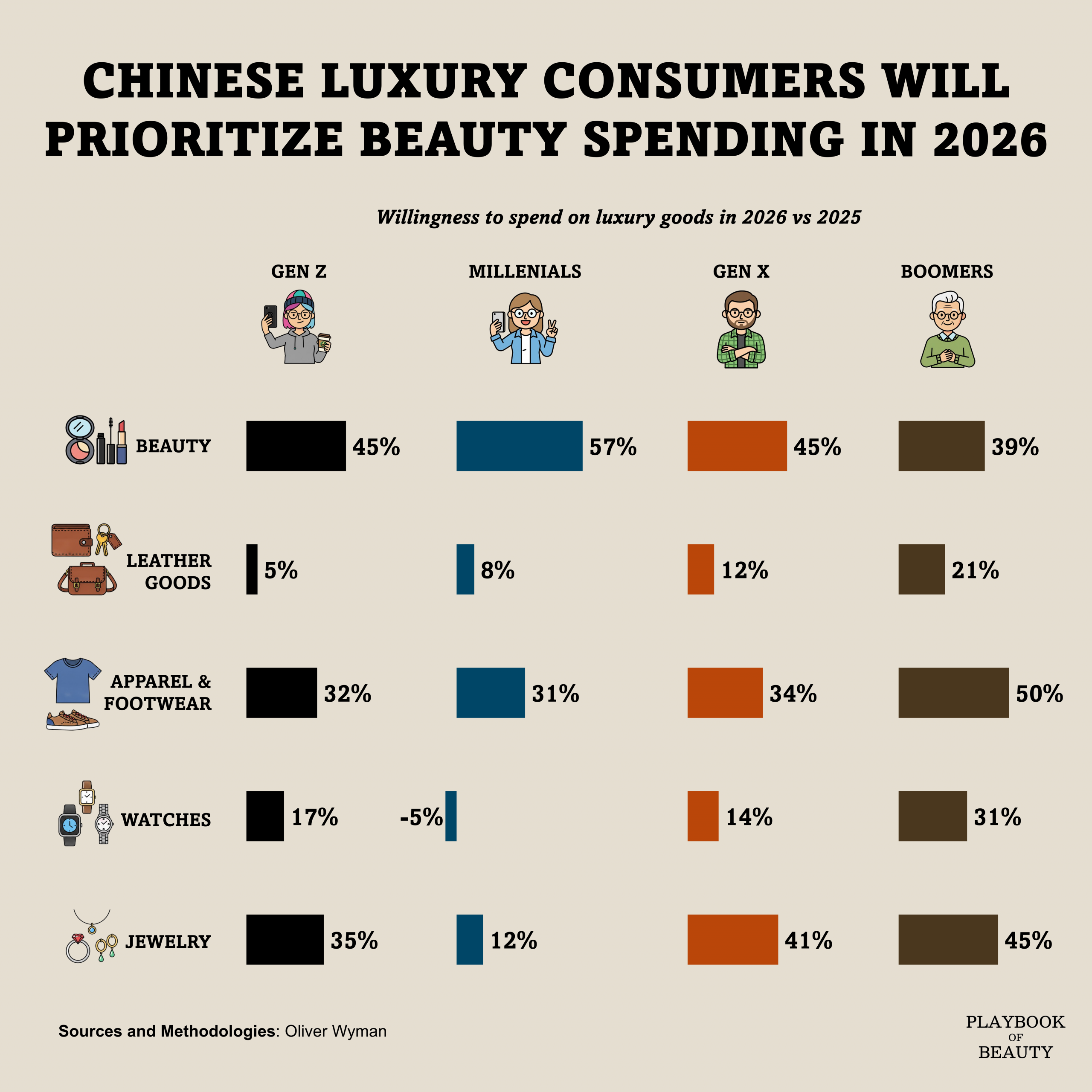
But a category has been clearly leading the recovery. Oliver Wyman’s figures show beauty is where Chinese consumers across generations are most willing to spend more, averaging 46.5% ahead of jewelry at 33%, apparel and footwear at 37%, and watches, where Millennials even actually plan to spend less (-5%). Millennials have the highest increase in luxury beauty spending intent at 57%, followed by Gen X and Gen Z at 45%, and Boomers at 39%.
There are however some interesting nuances across generations. Baby Boomers are the generation most willing to increase their luxury spending overall with increase of at least 20% in all categories yet they rank last on beauty. Boomers are prioritizing apparel and footwear (50%) as well as jewelry (45%), which are more directly tied to social recognition and asset value. Millennials have different priorities: beauty first, watches last. Among younger Chinese consumers, the goal of luxury spending has shifted from social validation to what Chinese culture now calls 悦己 “pleasing the self” with beauty products being mainly intented for self-care and wellness rather than markers of status.
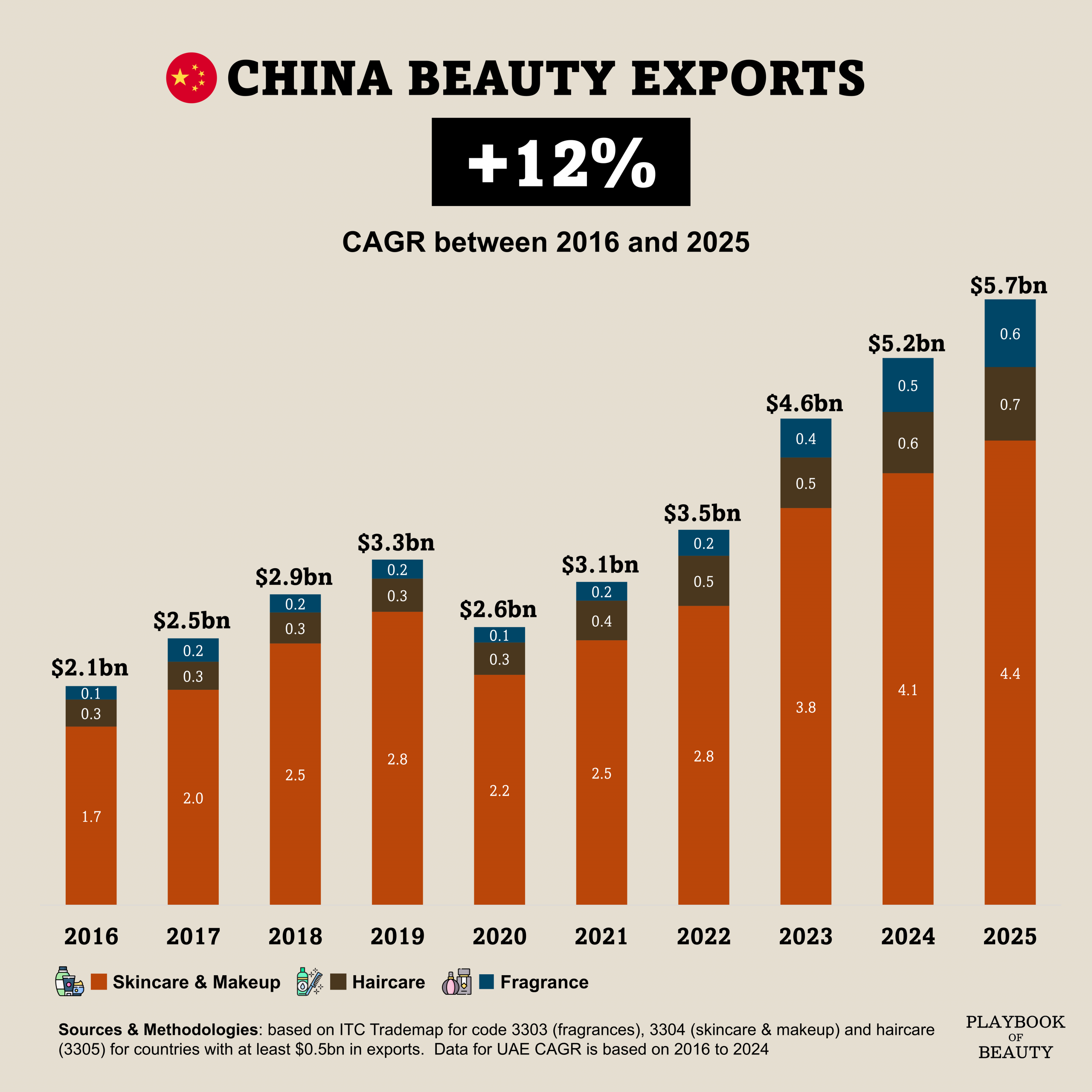
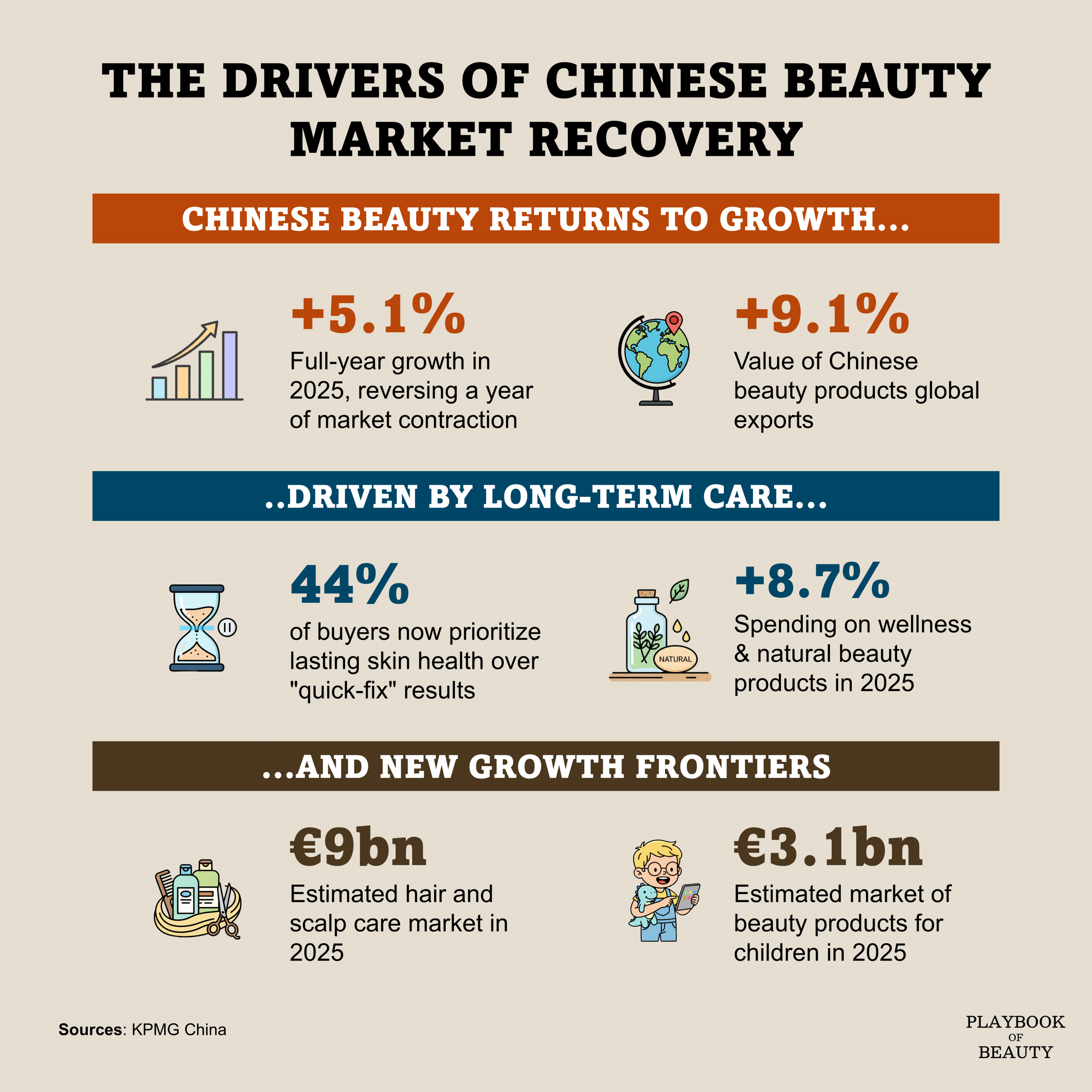
Overall Chinese consumers are investing more and more in wellness routines supported by AI diagnostics, skin scoring, and personalized approaches. Medical aesthetics, men’s grooming, and fragrances are expected to see double-digit growth over the next few years, with fragrance emerging as the fastest-growing segment in the Chinese beauty market growing 11.3% per year between 2019 and 2024 and representing today around 3% of the Chinese beauty market.
I reckon that the broader luxury recovery in China is both real and uneven but beauty definitely is where the recovery is clearest.